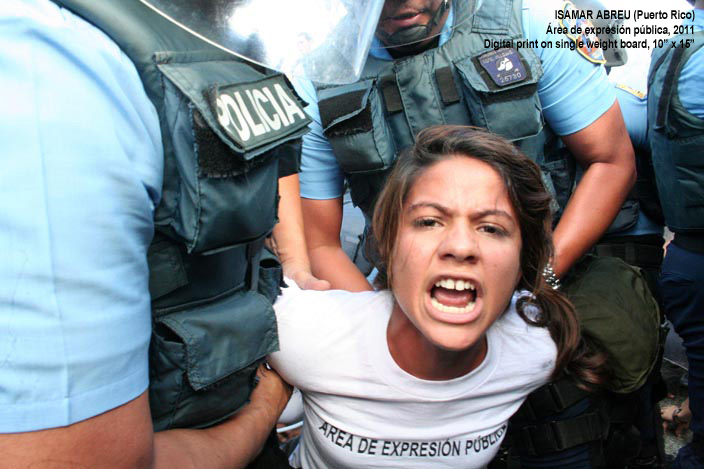
Because the manifesto was written to spark a dialogue rather than advance a particular program, we have chosen to present it here as part of a dossier of interrelated documents produced by youth-oriented communities struggling against global systems of exploitation and oppression. Whether produced in the barricades of Río Piedras or the reclaimed streets of Cairo, these calls to action and understanding critique intersecting systems of exploitation and gesture to points of solidarity and coalition-formation. In doing so, they open up spaces for imagining new futures and they create the conditions in which such a future may indeed come to pass.
Keyword: activism
Postcool
Francesco Salvini asks what it means to translate the categories of postcolonial thought in the practices of organisation of a subaltern neighbourhood trapped in the hurricane of valorisation and abstraction of urban space. Salvini presents an analysis of what he calls an ‘audio-visual inquiry’ conducted by a collective of political activists organising in the Raval in Barcelona. The laboratory of Postcool sought to find ways to learn about the subaltern histories of the Raval that are made invisible. Salvini discusses the ways in which the collective investigated how these subaltern histories of the Raval inscribe themselves in the urban design of the city in their relevance for organising against gentrification in the context of postcolonial capitalism.