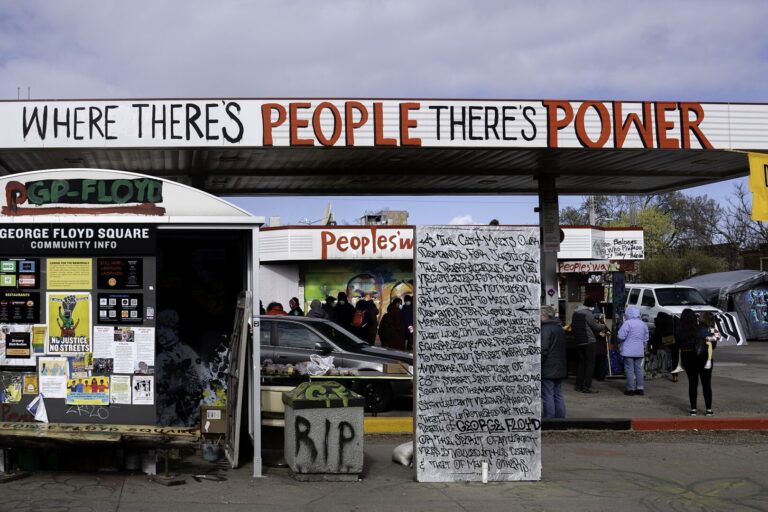
As an introduction to the Years section of Lateral, this essay suggests that the present-day “culture war” offers an opportunity for cultural studies to reflect upon the narration of time, especially through the invocation of important years in history.
Special Sections
Special sections published within or across issues.
A Year of Baking, Building Community, and Developing Divergent Pedagogical Practices During Uncertain Times

During the COVID-19 lockdown, I joined a Facebook group of scholars with a non-scholarly focus called “Baking in Uncertain Times.” The online community offered participants a series of weekly baking challenges, intended in part to allow those who might be feeling alone and unfocused by the pandemic a chance to come together virtually to create food as well as a shared baking experience/memory. While the group wasn’t intended as a pedagogical model or outlet, my participation in this highly distributed baking community has transferred to my teaching, specifically with how I approach learning through doing. Drawing on Annemarie Mol’s concept of doing, which conceptualizes things that should be done by recognizing that “Doing . . . may also be configured as a task . . . creative and adaptive, infused by desire and attuned to the circumstances,” my focus was twofold: doing tasks as a member of the baking group, and doing (or fostering) hope while adapting to pandemic circumstances and uncertainty. Following Jody Shipka, this paper examines how using a “food lens” and “the centering of food-related practices provides ways of reimagining the potentials of our research, scholarship, and teaching, while encouraging us to rethink [cultural concepts] in new ways, such as literacy, collaboration, embodiment, memory, and community.” Additionally, I highlight some of the processes by which I devised responses to the weekly challenges over a year and provide pictures of a few completed challenges. I also detail how the group ended up functioning as a divergent model of composition pedagogy, as a way to tap into joy, curiosity, and creating a stronger sense of community both in the classroom and among colleagues.
Introduction – Space-Making and Practices of Resistance
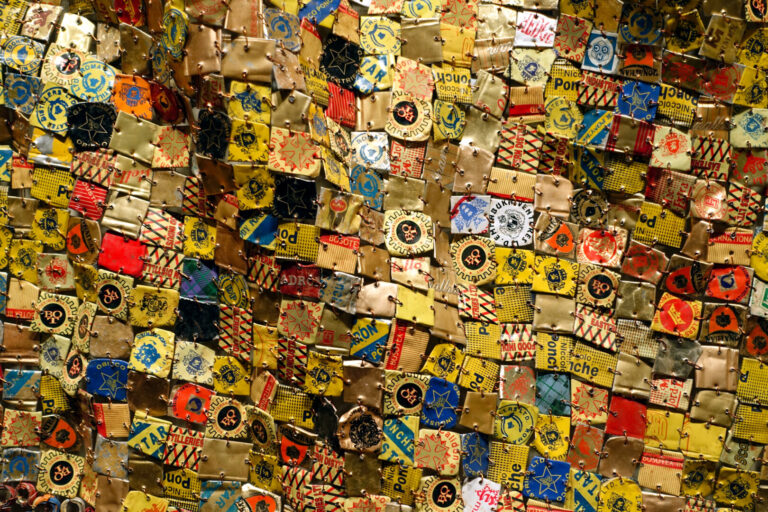
Here, Katerina Paramana introduces the articles in the “Political Economy and the Arts” special section of this issue. In the current climate of geopolitical upheaval (from Ukraine, to Gaza, Iran, Venezuela, and Greenland), the articles illuminate what arts do to produce resistance at a micro level by re-writing problematic narratives, visibilizing marginalized communities, imagining alternative models and futures, and working towards equitable space-making.
The Indigenous Turn, or the Spectacle of Otherness: Cultural Political Economies of the 60th Venice Biennale, Foreigners Everywhere
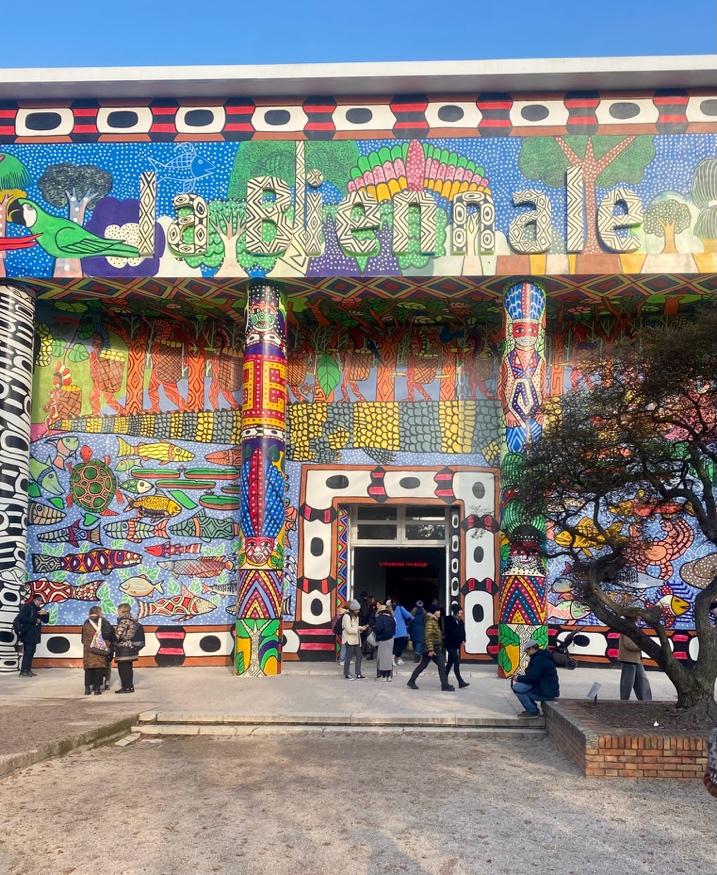
The 60th Venice Biennale, Foreigners Everywhere, placed the figure of the foreigner at its center, drawing on Adriano Pedrosa’s curatorial idea that foreignness is a pervasive condition of human existence. Within a broad spectrum of “minoritarian foreigners,” the “Indigenous” emerged as a particularly charged symbolic figure. This article situates the Biennale as a global institution whose strategies of expansion and rarefication sustain its symbolic power, examining four “framing moments” of Indigenous representation in the 60th edition: cosmologies, objects, alternative modernisms, and memory. These framings variously spiritualize, aestheticize, historicize, and politicize Indigeneity, producing visibility around Indigenous cultures in an exclusive environment where viewership is characterized by cultures of speed. The article argues that the institutional framing of Indigenous artists’ biographies and traditions simultaneously validates and commodifies identity, with “authenticity” serving as symbolic and economic capital. While such visibility can create opportunities for recognition and market access, it also may fetishize and flatten heterogeneous Indigenous histories into a universalized category of “the Indigenous.” The article explores how the Biennale’s pursuit of global relevance depends on the spectacular inclusion of difference, a process in which otherness—and, here, Indigeneity—is made visible but also subject to institutional power and gatekeeping logics. Reading the Indigenous not only through the lens of representation but also as a symbolic actor within the exhibition’s cultural-political economy, the article concludes by reflecting on whether alternative curatorial strategies—slower, more focused, and territorially specific—can create space for Indigenous representation beyond spectacle, enabling forms of knowledge production that better acknowledge the diversity and historicity of Indigenous peoples.
Affective Economies of Freedom in Paradoxical Times
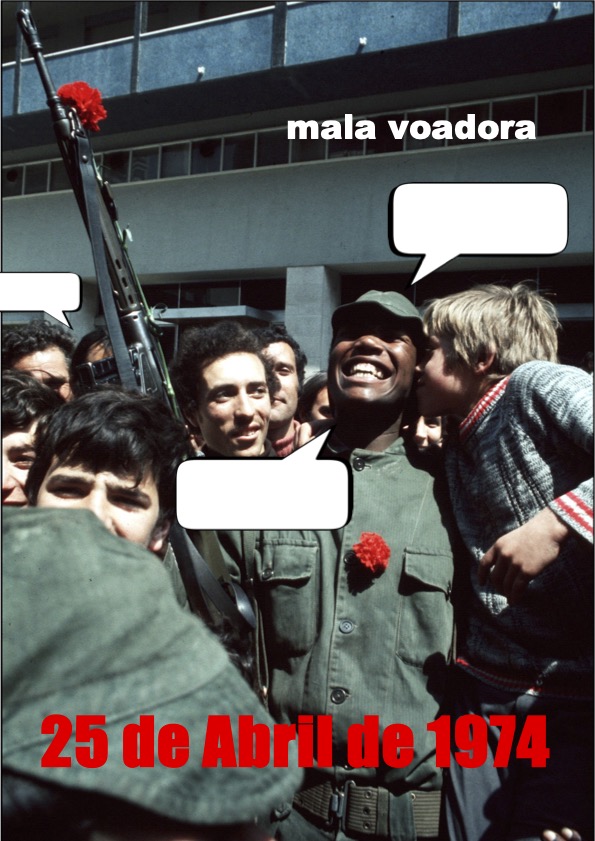
This article proposes the concepts of “brutal” and “gentle” affects as a critical framework to analyze affective economies of freedom in paradoxical times. Drawing on Sara Ahmed’s work on affect, Sruti Bala’s on participation, and Franco Berardi’s on freedom, it argues that freedom emerges not solely as a historical achievement of an inalienable right, but as an embodied experience enhanced by theatrical dispositifs. I consider forms of celebrating, performing, and capturing freedom in paradoxical times, including the staging of the fiftieth anniversary of the Carnation Revolution; the production 25th of April 1974 by Portuguese company Mala Voadora; and The Seagull by Argentinian director Guillermo Cacace. I begin with a discussion of the relationship between populism and notions of freedom, describing the nuanced usage and political capture of the latter to examine its paradoxes in the present. I then examine how these productions critically engage with the paradoxes of freedom and reset the conditions of experience of its affective-sensorium.
Unsettling Political Economies: Instituting, Blurring, and Monstrous Space-Making
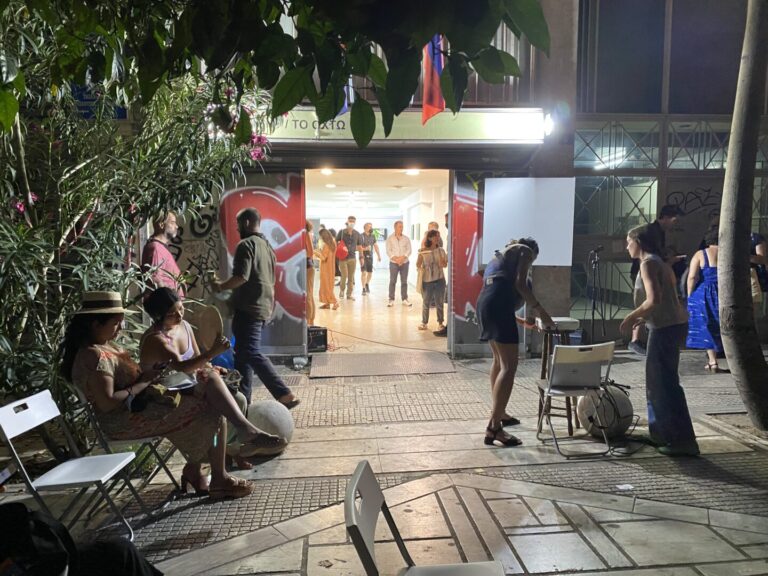
This article explores the ways in which emergent cultural space-making practices—particularly practices of “instituting,” “blurring,” and “monstrous space-making”—challenge and ephemerally unsettle political and economic systems. It focuses on the history of the cultural space, EIGHT Critical Institute for Arts and Politics, in Athens, Greece. The concept of “instituting” is discussed as a form of space-making that refuses structuralization, while “blurring” signifies a process of dissolving boundaries and categories to create fluid, unpredictable spaces that resist fixed identities. The notion of “monstrous space-making” is introduced as a method of excess and refusal, capable of disrupting dominant political economies. The article argues that these practices, rooted in modes of “militant curating” and critical spatial interventions, operate as performative acts of reconfiguration—offering ways to produce new relations, economies, and imaginaries within contested landscapes. It suggests modes of continuous, open-ended spatial interventions that do not seek to fix existing systems but to deform and reimagine them from within.
Cultural Space as Resistance: Racialized and Immigrant Communities’ Artistic Practices and the Political Economy of Urban Development in Canadian Cities
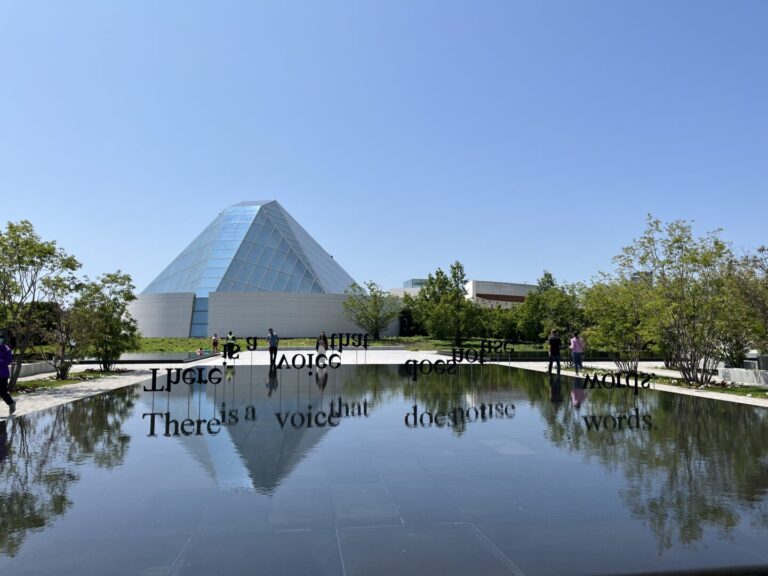
In Canada, Indigenous, racialized, and immigrant communities face systemic challenges in securing and sustaining cultural spaces due to real estate speculation, funding disparities, and exclusionary urban policies. These barriers not only threaten the continuity of cultural expression but also diminish the visibility and influence of marginalized artistic practices. This article explores how these communities resist spatial erasure through artistic interventions, grassroots activism, and alternative funding models, positioning their creative practices as sites of political-economic critique and creating alternative futures. The article emphasizes the connections between colonialism, anti-Black racism, and Islamophobia in contested cultural space dynamics.By mapping sites of artistic resistance and community-led cultural preservation, this article reveals the transformative potential of art as a tool for reimagining urban futures. It argues that sustainable multicultural urbanism requires policies that protect and invest in culturally significant spaces, recognizing them as vital components of both social infrastructure and political resistance. This article emphasizes the importance of recognizing culture as the fourth bottom line as part of urban development projects. The findings offer insights for policymakers, urban planners, and cultural organizations committed to fostering inclusive and equitable urban environments. Ultimately, this article contributes to the conversation on political economy and the arts by demonstrating how racialized and immigrant communities’ creative practices challenge dominant narratives of urban development, asserting their right to cultural sustainability and spatial justice.
What Does Black Protest Appear to Be?
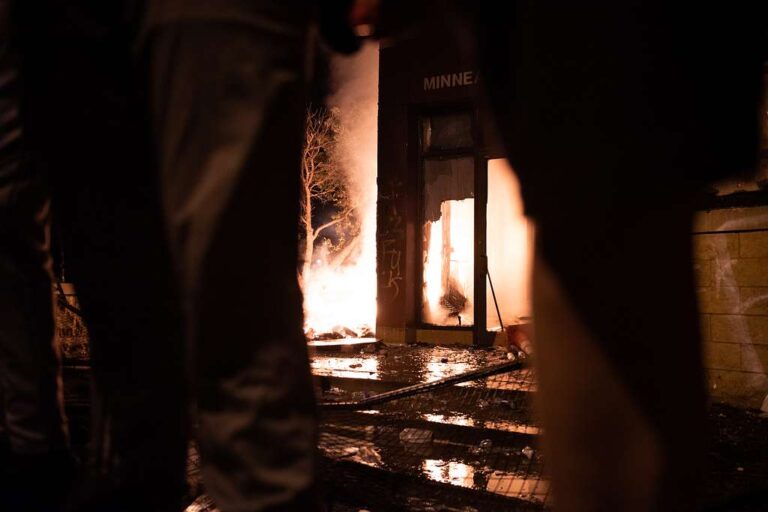
This article interrogates the visual and political logics that make black protest intelligible within modern regimes of political appearance. Focusing on the Black Lives Matter movement and the 2020 Minneapolis uprising, the essay draws on Afropessimist and psychoanalytic theory to examine how the riot unsettles the frameworks that render Blackness legible only through vulnerability, loss, or redemptive spectacle. Against interpretations that recuperate black protest as democratic renewal or moral claim, it theorizes black protest as a site of rupture rather than representation, and as an encounter that exposes the limits of visibility politics and gestures toward a mode of relation unbound from recognition, redemption, or the demand to appear.
Negative Evidence: The Critical-Clinical Diagnosis of Fatigue in Copjec’s Kiarostami

This literary essay examines and rehearses the conceptual challenge fatigue poses to diagnosis in its clinical and critical registers. Taking as its case study Joan Copjec’s essay “Battle Fatigue: Kiarostami and Capitalism”—wherein fatigue, conceptually declined from Levinas’ weariness of existence and the psychoanalytic death drive, is deployed as a theoretical lens through which to read Abbas Kiarostami’s film Taste of Cherry—this essay argues that Copjec’s diagnosis of Badii’s unexplainable suicidality qua fatigue mirrors the clinic’s insofar as both render fatigue into a diagnosis of exclusion predicated on forensic registers of negative evidence. For Copjec, fatigue is a symptom of Badii’s unexplainable suicidality, not its cause—a logic that effectively reproduces the clinic’s diagnosis of myalgic encephalomyelitis / chronic fatigue syndrome (ME/CFS) as the consequence of a suffering without proof. This results in Badii’s erasure as a clinical subject of weariness at the behest of a socio-historico-political metaconcept of fatigue. Acknowledging that this trade-off constitutes the dialectical challenge of theorizing any illness, this essay nevertheless argues that fatigue presents a unique theoretical dilemma, insofar as historically and into the present, warring ideological factions have harmoniously eschewed patho-clinical frameworks for a conceptualization of fatigue as the essential condition of life under capitalist modernity. When fatigue is a symptom of everything—of mere living—it becomes a symptom of nothing: it loses its clinical and critical valence. Copjec’s diagnosis, then, is not so much deficient as it is demonstrative: like Kiarostami’s film(s), it begins with a lack of evidence only to end at an aporetic standstill: the impossibility of shoring up the evidence of lack. Like the slash that separates “ME” from “CFS,” this essay argues that fatigue is not what slips through the crack between pre-existing categories of psyche and soma, but the very cut out of which these categories emerge, and upon whose negativity their fraught relation relies.
Introduction – Digital Platforms and Agency
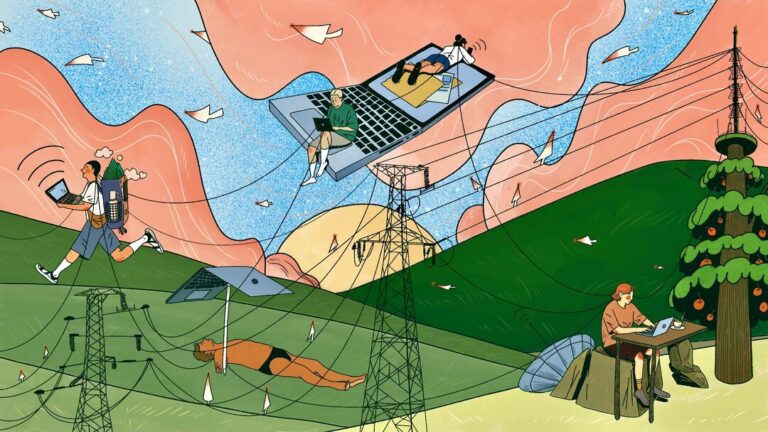
This piece introduces a special section on digital platforms and agency. It unpacks the tension between, on the one hand, the imposition of digital platforms upon cultures by immensely-powerful technology companies, and on the other hand, the emergence of possibilities as people work, play, and express themselves on platforms. Cultural studies, which has always concerned itself with structure, culture, and agency, is well-positioned to work through this tension in order to orient scholars of platform studies toward radical critique and political action. The introduction situates the invited works of “Digital Platforms and Agency” in this context, elaborates upon cultural studies’ charge toward the emerging field of platform studies, and summarizes the individual and collective contributions of the special section authors.
The Platform-Enabled Durability of Colonial Racial Capitalism in Washington DC’s Wards 7 and 8

This article explores how platforms reinforce structures of racism and coloniality in Washington DC’s majority-Black Ward 7 and Ward 8. Drawing on ethnographic research with Black hosts who short-term rent on Airbnb, I follow how Black residents’ imaginaries of space are superseded by platform-enabled white users’ imaginaries through Airbnb’s “Location” star ratings. This rating draws down hosts’ overall ratings based on guests’ racist experiences of feeling “unsafe” in majority-Black working-class neighborhoods—resulting in lower visibility on Airbnb’s app, decreased bookings, and financial losses. Using a geopolitical conception of racism on platforms which I call the Colonial Racial Capitalist Stack (CRCStack), I show how these ratings enable platform-mediated conceptions of space and land that discursively reinforce racist depictions of Wards 7 and 8. I read Benjamin Bratton’s design concept of “the Stack” through Ruha Benjamin’s analytic of “discriminatory design” to argue that platforms are key sites for the exploitation and ongoing dispossession of land and labor under systems of racism, settler and franchise colonialisms, and capitalism across a variety of historical and geographical contexts, as described by Koshy, et. al. Through an exploration of the Stack’s layers (User/Interface/Address, City/Cloud, and Earth), I argue that the CRCStack makes racism, as a social technology, more durable by entrenching as a racialized geopolitical ordering of the world into the life worlds of Black people living in Wards 7 and 8. Durability is a key metric by which platforms are measured. Platforms that are unable to cultivate durability—whether by cultivating a loyal user community, harnessing the network effect, or technological necessity—are quickly replaced by other platforms. Reading technology as a racializing and racialized tool helps us understand how racism, as a system, is innovated and entrenched through technological means. I demonstrate how platforms act as the latest technological innovation created to extend the durability of existing systems of racialization and colonization that are required for racial capitalist economies to function. I theorize how racism on the CRCStack operates at multiple overlapping layers, focusing specifically on how discrimination on Airbnb impacts users, neighborhoods, cities, and the wider real estate market. In doing so, I not only explore how platform-enabled racism restricts Black residents’ spatial imaginaries but also trace how Black hosts push back against the CRCStack through Airbnb Support complaints, grassroots practices of negotiation with racist guests, and social movement actions in conjunction with state authorities. I conclude by thinking through what dismantling the CRCStack would require for platform corporations like Airbnb, its users, and city residents.
Searching for Blackness: #BlackGirlPilates and Racialized Hashtags as Agentic Praxis on TikTok

This paper explores how Black women on TikTok activate platform affordances to make themselves visible within the search engine. Specifically, we offer #BlackGirlPilates as a case study, given the increased interest following socialite Lori Harvey’s endorsement of the exercise at the 2022 Met Gala. Both Pilates and Western Technoculture have been studied in regards to its centrality of whiteness as normative. Thus, we conduct a comparative analysis of #pilates and #BlackGirlPilates in TikTok’s search engine to see how the addition of a racial qualifier changes results. Our analysis reveals that the “anonymous” user within a search for content on Pilates is white, demonstrating that the use of racial qualifiers in hashtags intentionally marks visibility around racial identity. We argue that Black women’s use of hashtags in this way is an agentic praxis and form of digital Black feminism wherein they can circumvent white perspectives to create culturally relevant results within the platform. #BlackGirlPilates constructs a community that centers and supports Black women’s experience and expertise.
Alexa’s Monstrous Agency: The Horror of the Digital Voice Assistant

First released by Amazon in 2014, the digital voice assistant Alexa allows users to connect and automate their smart home devices through the sound of their voice. Alexa’s automation of domestic spaces comes, however, with its own set of anxieties. How much data does Alexa sense and capture, and how is this data used? How is agency distributed between humans and the machines surrounding them? Is Alexa an empowering tool, or an invasion of privacy that undermines human agency? In this paper, we trace the ways in which the anxieties surrounding the blurred boundaries of human and non-human agencies introduced by the Alexa interface are represented and negotiated across different narrative forms and archives. Firstly, we turn to the corporate promotional media produced by Amazon in selling its assistant. Secondly, we analyze Alexa’s representation in the web horror genre known as “creepypasta”—first-person narratives written in and for online communities. We frame the interplay between these archives as an entangled narrative field of contestation, which we engage with through a practice of diffractive reading. The images and ideas of each narrative corpus adapt to and are affected by the materials and tropes forwarded by the other. As a result of this interplay, Alexa becomes a monstrous placeholder for the anxieties of its users, whose erratic and pervasive agency endangers every facet of their existence. The analysis of these narratives provides valuable insights into the anxieties surrounding the ongoing encroachment of digital platforms into the lives of humans.
The Platformized Matchmaking Labor: What Do Prosumers Do in Dating Apps
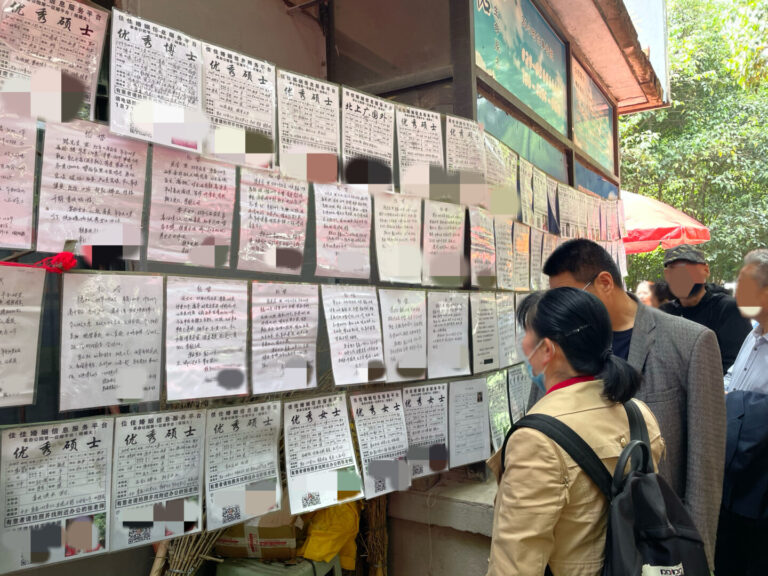
Across a wide range of cultural and socio-political contexts, matchmaking has been valued as a legitimate profession that involves labor and remuneration in cultures. It represents the long-lasting commercialization of effective intimacy building. In the era of algorithms and platforms,the emergence of modern matchmaking, such as in mobile dating apps (MDAs), showcases the impact of platformization and suggests that traditional matchmaking labor relations have shifted in MDAs and modern matchmaking approaches. Thus, with this paper, we ask in what ways contemporary dating practices essentially reinterpret the dated pattern of matchmaking in digital environments and shift its labor aspects. We aim to coin a new category of labor that includes the interplay of traditional cultural matchmaking practices in the concrete social-cultural context of China and the platformized infrastructures for dating. Through this, we surface new dynamics in digital labor and the commercialization of intimacy. Our research underlines the need to study intimate media’s role in its specific cultural contexts.
“Help Them Keep Doing What They’re Doing”: Intersections of Agency, Affect, and Capital in the Twitch Subscription System

With live streaming capabilities becoming increasingly important to the success of social media applications and representing central modes of engagement for popular digital platforms, the economic and socio-political functions of live streaming are critical to an understanding of changing new media landscapes. The existing scholarship on Twitch and similar live streaming platforms has demonstrated the importance of both financial investments and affective labor to these digital spaces. Building from existing scholarship, this article will apply a critical-cultural lens to analyze the ways in which Twitch’s interface mediates users’ agency through mechanics centered on affect, capital, and their intersections. How do emotional intimacies manifest across the design of the Twitch subscription system? How does Twitch incentivize live streaming subscriptions for both viewers and creators via design choices? What does this mean for an understanding of the affective investments that users have in live streaming more broadly speaking? Through an examination of the design-based affordances of live streaming on Twitch, I ask how these capabilities (to pay streamers via subscriptions and gift systems as well as to follow, comment, and otherwise engage) reflect the varying ways that intimacy is both created and understood in live streaming contexts. This work will contribute to an understanding of the affective investments that users have, express, and create across various new media platforms. It will particularly focus on how affective labor is both compensated and obfuscated via systems like the Twitch subscription.