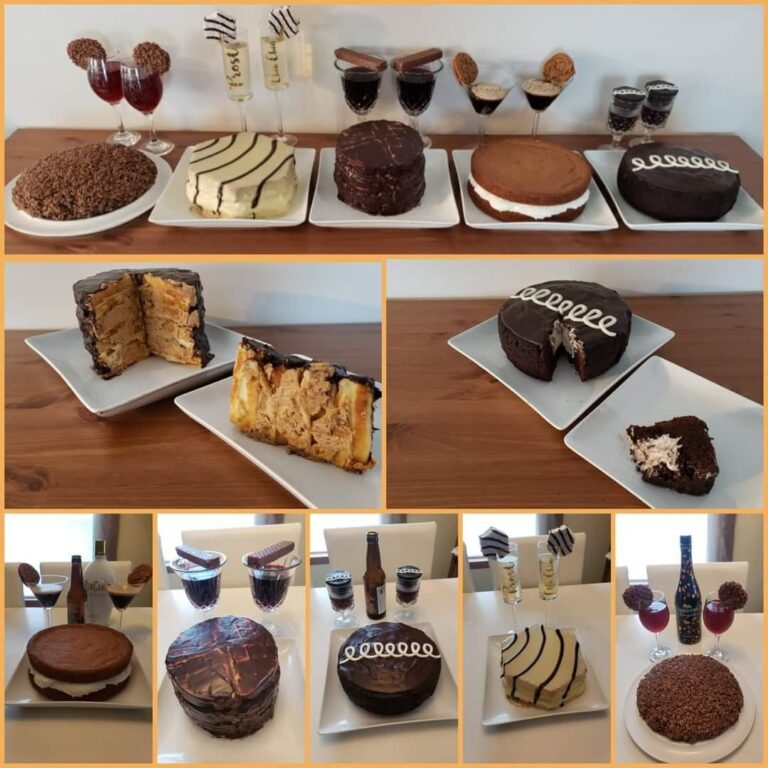
During the COVID-19 lockdown, I joined a Facebook group of scholars with a non-scholarly focus called “Baking in Uncertain Times.” The online community offered participants a series of weekly baking challenges, intended in part to allow those who might be feeling alone and unfocused by the pandemic a chance to come together virtually to create food as well as a shared baking experience/memory. While the group wasn’t intended as a pedagogical model or outlet, my participation in this highly distributed baking community has transferred to my teaching, specifically with how I approach learning through doing. Drawing on Annemarie Mol’s concept of doing, which conceptualizes things that should be done by recognizing that “Doing . . . may also be configured as a task . . . creative and adaptive, infused by desire and attuned to the circumstances,” my focus was twofold: doing tasks as a member of the baking group, and doing (or fostering) hope while adapting to pandemic circumstances and uncertainty. Following Jody Shipka, this paper examines how using a “food lens” and “the centering of food-related practices provides ways of reimagining the potentials of our research, scholarship, and teaching, while encouraging us to rethink [cultural concepts] in new ways, such as literacy, collaboration, embodiment, memory, and community.” Additionally, I highlight some of the processes by which I devised responses to the weekly challenges over a year and provide pictures of a few completed challenges. I also detail how the group ended up functioning as a divergent model of composition pedagogy, as a way to tap into joy, curiosity, and creating a stronger sense of community both in the classroom and among colleagues.
Keyword: food
Introduction – Feeding the Civic Imagination
Food is a powerful entry point into the civic imagination—i.e., the capacity to imagine alternatives to current cultural, social, political, or economic conditions, the social process of which fosters a shared vision for collective action. As an essential material component of human life, food exists as an extremely mundane and dynamic aspect of our everyday personal and social experiences; our relationship with food is intertwined with issues of privilege, access, representation, language, ethnicity, and the materiality of culture. This forum explores diverse intersections between food and civic imagination, with topics ranging from shared memories, local (re-)imaginations, history and civic action, and private-public translations. The forum discusses how food sustains, nourishes, and connects individuals and their communities by delving into both their presence—e.g., acquiring and preparing ingredients, cooking meals, sharing or selling foods—and absence—e.g., hunger and human waste in food ecology. Articles in this collection demonstrate that the civic imagination is not only fed in dining rooms and kitchens but also in less conventionally thought-of contexts, such as digital spaces, toilets, and forums such as ours. They urge us to engage with food in new imaginative ways, fostering and bridging conversations: one cannot change the world unless one can imagine what a better world might look like, and one must explore together to navigate and actualize the imaginative possibilities.
“Cooking in Someone Else’s Kitchen”: Exploring Food as a Commonplace for Antiracist Pedagogy, White Allyship, and Feeding Civic Imagination
Asao Inoue’s metaphor “cooking in someone else’s kitchen” provides a conceptual framework describing how white educators may navigate teaching topics outside of the subject positions they occupy. I apply an intentionally literal interpretation of Inoue’s metaphor, to position food culture as an important component of social justice pedagogy.
As post-secondary institutions prioritize diversity, equity, and inclusion initiatives, antiracist pedagogies have become a source of uneasiness for many white educators. Often, these educators may give excuses stemming from embodied positionality and fear of saying something wrong, which may become reasons to avoid difficult classroom conversations. As a result, universities lose opportunities to educate students about race-related issues, along with the potential for increased civic engagement. This paper addresses white teachers’ apprehension surrounding antiracist pedagogy and presents a food-themed writing course focused on how food has been weaponized historically, contributing to racial, class, and gender injustice—and how similar systems of oppression are still in effect currently. The course centers food as a commonplace to explore race, racism, and cultural difference—while helping teachers gain confidence in joining antiracist efforts.
#eatthatwall
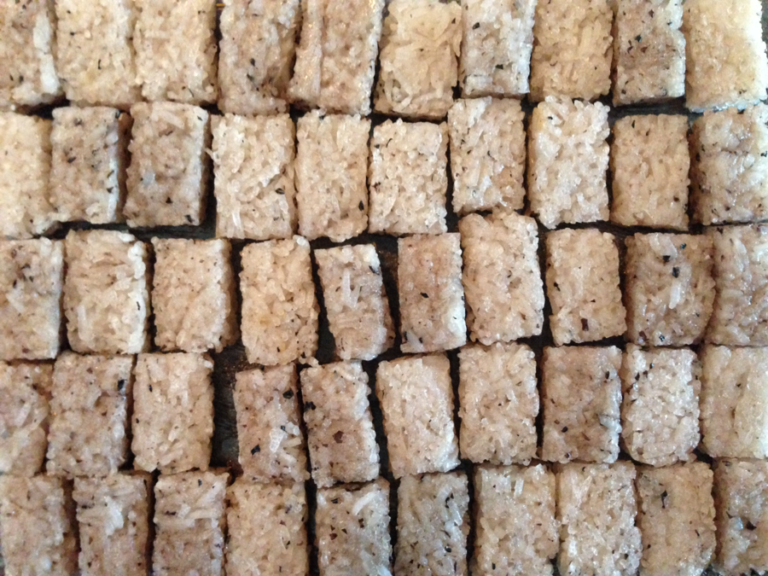
#eatthatwall is an in-progress performance-installation, presented first at Rhizome DC (a DIY experimental art space in Takoma Park, Washington, DC) on April 23, 2017. The project invited gallery participants to assist in the construction and eating of an edible wall made with approximately 1,200 mini cooked rice bricks set with refried bean mortar. The wall served as an imaginary, fabulist structure to separate a currently un-bordered area between Laredo in Texas and Nuevo Laredo in Tamaulipas, Mexico, or anywhere else this hypothetical border might arbitrarily fit. The performance score following the introduction to the project is a document of the process of making: from initial concepts, to the invitation to build/mimic, to a contemplation of how we digest the events and emotions leading to the wall, and to its eventual end.