Introduction
Digital platforms have become ubiquitous in modern societies and people’s everyday lives. Platforms as infrastructures make interactions among users, and between users and systems possible. Another way to understand platforms and platformization is by opening up the socially constructed practices in particular cultural contexts which have moved to platforms or have been platformized, for instance, practices of intimacy.
Intimacy, in a very classical sense, has been described as exclusive partnerships between two individuals, including love, sex, and marriage.1 Intimacy seems to be strongly associated with private, domestic space, as well as the right to privacy and individualism. However, it also has strong connections to the economies and commercialization of love and relationships. The practice of matchmaking vividly demonstrates this in its commercialization of effective intimacy building.2 Matchmaking is defined as a service that introduces two individuals to one another. What’s more, matchmaking takes a complex range of attributes and data of both parties into account, such as their appearance, family background, financial status, religious upbringing, and fertility, which makes some of the most traditional relationships filled by the hidden exchange embedded in local cultures.3
Today, the approaches to building forms of intimacy vary. Especially for young generations, the possibilities of mobile dating applications (MDAs) have not fully taken over the job of finding a partner, but essentially represent the contemporary pattern of matchmaking4 and inherit the functions of matchmakers in courtships.5 MDAs, as platforms, profit from algorithmic matches based on user’s location, tags (preferences, sexual orientation, age), pictures, and users’ activity. Certainly, the changes of intimacy, which may be dynamically shaped from a traditional aim to form6 marriage and reproductive fertility7 to postmodern, “liquid” intimacy and “plastic sexuality.” The term “liquid” metaphorically refers to the transience and volatility of modern intimacy. And “plastic sexuality” frees people from stereotypes about typical or appropriate sexual relationships. These shifts in intimacy are closely linked to how matchmaking is practiced nowadays in light of the emergence of MDAs.
Matchmaking has been changing. But it is always treated, or thought within the logic of a market, no matter whether one prefers the traditional or modern approaches.8 Across a wide range of cultural and socio-political contexts, traditional matchmaking has been valued as a legitimate profession due to its historical significance for the forming of relationships, like marriage, and its meaning for reproduction.9 Now, platforms like MDA are involved in matchmaking. The matchmaking they do is inevitably entangled with digital labor dynamics in cultural shifts and in capitalist-driven logics based on the nature of the platform. But how?
We therefore ask the following research questions in this article, to examine the practice of matchmaking: In the case of traditional and modern matchmaking practices, what are the roles of the mediators, and how do they accompany the user’s needs? How do platforms like WeChat and MDAs specifically made for online dating interpret and impact matchmaking practices? More deeply, how is the relationship between matchmakers and their clients characterized today? In light of platformization, what forms of labor are users involved in with matchmaking practice on MDAs? What forms of labor previously done by human matchmakers are outsourced to users?
With these questions, the empirical data collection and analysis are conducted through MDAs walkthrough, interviews, and fieldwork in one specific Chinese matchmaking park. Based on the analysis, we propose the concept ofplatformized matchmaking labor,in the context of digital intimacy, which encompasses the practice of matchmaking. It aims to characterize the dynamic of platformization and the digital labor and prosumer characteristics that come along in matchmaking for the concrete social-cultural context of (urban) China. We emphasize the exegesis of power, labor, agency, and intimate infrastructure10 in the contemporary market of matchmaking, having to “contend with problematic uncertainties of historicity, materiality, systematicity, and agency raised over the past several decades.”11
Matchmaking as Cultural Work in the Intimacy Market
The Cultural Heritage in Matchmaking and the Chinese Context
Matchmaking has a long history all around the world. It’s explained as a service provided by matchmakers to arrange matches and courtships. Matchmakers act as the intermediary, in other words, as a traditional medium or agency of intervening.12 Matchmakers are responsible for gathering and evaluating information about the personal qualities and background of potential spouses, setting up meetings between candidates, conveying marriage proposals, as well as negotiating the details of the match.13 In some places, matchmakers participate from the proposal of marriage to the engagement and facilitate the marriage between men and women through errands, liaison, coordination, and details of mediation until the end of the wedding. Sometimes, they are even involved in married life, for instance, to ensure that the couple stays happily and united. All these types of matchmaking efforts come with contractual remuneration. In most cases, matchmakers are paid a percentage of the dowry or extra service fee in return for the work to form a successful courtship.
It needs to be noted that the tradition of matchmaking is a profession grounded in a set of local customs of the specific cultural contexts in which they come to function. Importantly, matchmakers are characterized as “community leaders, religious authorities, or other esteemed members of society.”14 Matchmakers profoundly represent a deep “understanding of all potential partners and their social and financial backgrounds and the ability to represent all parties involved.”15 They possess fundamental understanding of the institution of marriage and its meaning for a specific cultural milieu. Thus they play the crucial role in people’s marriage relations, especially during historical periods when small communities were isolated and free courtship was frowned upon.
Precisely because of the cultural factor of matchmaking, the historical heritage of traditional matchmaking should be involved when discussing matchmaking nowadays. In Asian Confucianism history, marriages were solemnized by a matchmaker for them to be just and honorable. Before the idea of “romantic love” and “free love” reached China, the factors that determined one couple’s union were factors such as the status of both families in a society, first impressions of one another, the dowry price, the birthdate, and even the horoscope.16 If a marriage was not arranged by a matchmaker, it was not following the rituals. Only after the parents’ agreement and the approval of the matchmaker would the marriage ceremony be performed.17 Matchmakers would not only be compensated financially but also gain a reputation, which proved their expertise and competence for the growth of a community. One specific example to illustrate this is that in the early years of the People’s Republic of China, especially before the “reform and opening up” marketization economic reform in 1978, romance and sex were repressed since “they take one’s time away from contributing to economic and other development for the collectives.”18 Matchmaking was conducted by matchmakers for two people to “work together” for the greater good, but not for one’s own benefit or rewards.19
As research shows, these beliefs still influence modern societies, for instance, current-day contemporary Chinese society, through multiple ways.20 One can still witness the practice of traditional matchmaking not only popular in rural areas but also in urban cities.21 People of all ages still participate in such activities with the hope to find a partner for marriage, or trendily, for fun in parallel with using other technological media for dating.22 A lot of research focuses on how Chinese parents attend the matchmaking on behalf of their children, which indicate the contemporary interpretation of patriarchy and parentalism through the local marriage culture.23 Meanwhile, digital technologies are blended with traditional matchmaking practices. In other words, the matchmaking itself can take place in other ways and be accompanied by a whole different set of social ideas and norms.
Investigating these shifts and changes in norms in the context of matchmaking, is what this article aims to accomplish.
Platformization in Matchmaking with Media Technology
The history of dating intermediaries has evolved with the development of media technology. In the twentieth century alone, cinema, newspaper and magazine advertisements, and the use of filing systems by dating agencies were early forms of dating technologies.24 Matchmaking websites, blog sites, social media, and dating applications have become new intermediaries for potential romantic couples.25 Algorithmically driven technologies then introduced a calculative, mediated, and data-driven culture into all spheres, as well as the market of intimacy.26 In addition, the emergence of platforms opens up effective connections of social networks within capitalism.27
These technologies are also adopted into the traditional field like matchmaking and have fundamentally shaped the markets through platformization.28 MDAs showcase these dynamics.29 For instance, according to the official descriptions of one MDA, TanTan, it provides the services of meeting new people through technology, e.g., a user interface, algorithms, and data analytics based on user interactions.30 MDAs can search for possible candidates for the user around the clock without any geographic limits. More flexibility is offered with the big volume of data of potential dates, calculated by algorithms based on the labels of interests and user activities.
The user here, as the client or employer in traditional matchmaking, may have more agency in the process of selecting and generating matches for themselves than culturally arbitrary marriage agencies.31 What does that mean for matchmaking practices? Instead of relying on official intermediaries with a community reputation allowing them to facilitate matches, people have taken more autonomy when turning to the platformized medium as a tool for matchmaking. Thus, MDA companies sell the idea that they are only technical tools for mediation and networked effects.32 But in reality, the gradual obsolescence of human matchmakers may possibly move the acts of labor to other agents—some of which are technological, some of which are the users themselves. This phenomenon may show a process of how matchmaking was absorbed into a commodified and platformed environment, or formed a new hybrid activity.
The deep intertwining of digital labor with platformization in theoretical research may indicate this unnoticed innate character of current matchmaking.33 Platformization introduces “(re)programmable digital infrastructures that facilitate personalized interactions, organized through data collection, algorithmic processing, and monetization.” The notion of platformization is considered a process of “reorganization of cultural practices and imaginations around platforms.”34 This emphasizes the connection of technologies, digital infrastructure, and multi-sided markets, as well as the relationships among users and newly introduced forms of platform and platformed labor. The idea of digital labor or platformed labor implies some changes in industrial relations, in which some of the labor is shifted onto the users (employers), who simultaneously perform acts of labor in the process of use/leisure. However, this labor serves not just themselves but the platforms and their underlying markets. This is a new type of exploitative relationship between the digital platforms and the laborers, or so-called “prosumers,”35 in which users enter a flexible labor-management relationship with platforms.36
For sure, the notion of intimacy has evolved dramatically through the introduction of social media and networking sites, as theorists have generally claimed.37 Matchmaking is not only a service for marriage or long-term relationships anymore, but with the financial, time, and other costs for making a match decreasing, with the tools and approaches that matchmaking takes in, it is connected to the process of modern intimate encounters. The cultural factors of matchmaking require interpretation across different eras, yet the capitalist commodity at the core of matchmaking has never dissipated in the course of changing cultural trends and technological architectures. That’s why this article argues matchmaking has always been linked to socio-cultural practices and labor: as production in exchange for the corresponding material and non-material remuneration; as a media in the service of a capitalist institution, which can be associated with the concept of “intimate labor”; as “work that involves embodied and affective interactions in the service of social reproduction.”38 Matchmaking has always been a field of labor.39Nowadays, how digital platforms serve a similar function for modern matchmaking should also be included in this field of discussion.
So, the analysis of matchmaking should be undertaken in specific cultural contexts, which for this paper is the context of contemporary urban China. The rationale for choosing China is that it has the relatively longest tradition of matchmaking and is still a strongly influential culture of matchmaking that affects millions of people of all ages in China to this day. Furthermore, MDAs are utilized widely in contemporary China,40 as one part of China’s heightened platformization, that related to platformization, gender,41, digital labor, and “prosumer”42
Methodology
In order to investigate the transition and gradual shifts from a culture of traditional matchmaking impacted by elements of platformization, the methodological approach of this paper is two-pronged. That is an investigation of traditional matchmaking sites, and the new matchmaking elements incorporated in digital platforms and MDAs.
Before further introduction, it is important to note that we are not suggesting that MDAs are somehow replacing the traditional matchmakers altogether. It is not the case that people have to choose one of the two when seeking intimacy. Rather, we suggest that with the gradual overlay of a data-driven culture, new models of automation and platformization are transforming matchmaking in general, which deeply affect the domains of intimacy culture and, as this paper focuses on, the sphere of labor, which we hope to suggest from the empirical material from both matchmaking approaches.
Research Methods
To interpret these two types of matchmaking under capitalist relationships, the paper builds on the data collection stemming from (1) digital ethnography and (2) on-site fieldwork. The study is based on data collection and research conducted from May 2022 to June 2024.
The digital ethnographic work uses a mixed-methods approach for the empirical data collection. This approach includes walkthrough methods in apps, participant observation, as well as semi-structured interviews. For MDAs, Tinder, Soul, Tashuo, Hinge, MoMo, TanTan, and Qingteng are mainly addressed. Some of them are local Chinese dating apps, and some of them, like Tinder, are globally recognized dating apps that are largely representative of their kind. Meanwhile, one Chinese multifunctional application, WeChat, plays a very important role in several matchmaking scenarios, thus it has been included as well.43
The participant observation in MDAs has been conducted, centered on observation but also participation, especially in digital spaces. For example, to better understand the experience of users and to observe and generate interactive experiences with other users or the platform themselves, Ziyin (the first author of this article) created an account in all MDAs mentioned above and used them daily to swipe, match, and talk to random users. She posted recruitment notices on these accounts stating that these accounts were used for non-profit academic research and to find interviewees who’re willing to share their experience of matchmaking. She wrote observation notes in her own words for analysis. Due to these MDAs’ widespread use around the world and their location-based service (LBS), she has participated in interactions with people from different cultures with set locations. Also, she has used the MDAs on the move in multiple cities in China, observing differences in usage between regions.44
Walkthrough is a method to examine an applications’ technical mechanisms and embedded cultural references to understand how they guide and shape the user’s experience.45 It has been used here to document three MDAs—Tinder, Soul, and TanTan—since they’re most frequently mentioned through the whole data collection. Several aspects of the MDAs are documented, including the user’s journey from registration to matching, the interface and the interaction of MDAs, etc.
During the on-site fieldwork, data has been collected to compare traditional matchmaking with the platformized version of the practice. Ziyin has conducted three months of offline fieldwork from June to September 2022, in a famous matchmaking park in China, Xi’an Revolution Park.46 It was chosen for its cultural and linguistic accessibility but also its popularity in mainland China. It’s in a second-tier Chinese city, Xi’an, which takes the role of traffic center for the broad west side of China. It is located near the Xi’an train station and gathers thousands of people every day. News and research have suggested it as a lens to take a close look at Chinese matchmaking.47 Ziyin has participated in matchmaking activities, as well as interviewed matchmakers and their clients.
Thirty-two in-depth interviews were conducted with interviewees who were willing to participate as referential material. Some of them are from the observation process both online and offline, and some of them joined the research through online recruitment Ziyin posted on the online forum Douban and in all her MDA accounts.48 All people interviewed were informed of the purpose of the authors’ research. It was not possible to make the authors’ research identity known to every passing potential client in the offline park; however, the direct use of the data including online and offline interviews in text or audio recording was based on the informed consent of those involved. The non-direct participants involved in the article and their data have been anonymized. The total number of interviewees from all approaches is thirty-two, and their specific information has been combined in one form (see Form 1).
Research Ethics
It is important to reflect that “we are implicated in the representational practices of those we study. We are engaged or complicit, as the case may be, in complex ways, with all those communities for whom media are important.”49
During the research, Ziyin constructed personal profiles with her personal portraits, and information (including education, location, gender, sexual orientation, etc.) while participating in observation of MDAs and other online activities. Meanwhile, she interacted offline with matchmakers, clients, and spaces in the park. Despite the author’s statement of the purpose of the research to the matchmakers with whom she interacted daily, her personality or other characteristics could have possibly affected some interactions, especially when some of the online users or offline clients had a definite preconceived purpose for the space and acted on their own goals. This paper cannot avoid these possible problems in embodied interactions but can only show the actual situation in as much detail as possible and give analyses. The authors believe that the collected empirical material gives crucial insight into the complex dynamics of the cultural practice of matchmaking in the age of platformization.
The Traditional Matchmaking in Urban China
Matchmaking Corner in Xi’an Revolution Park
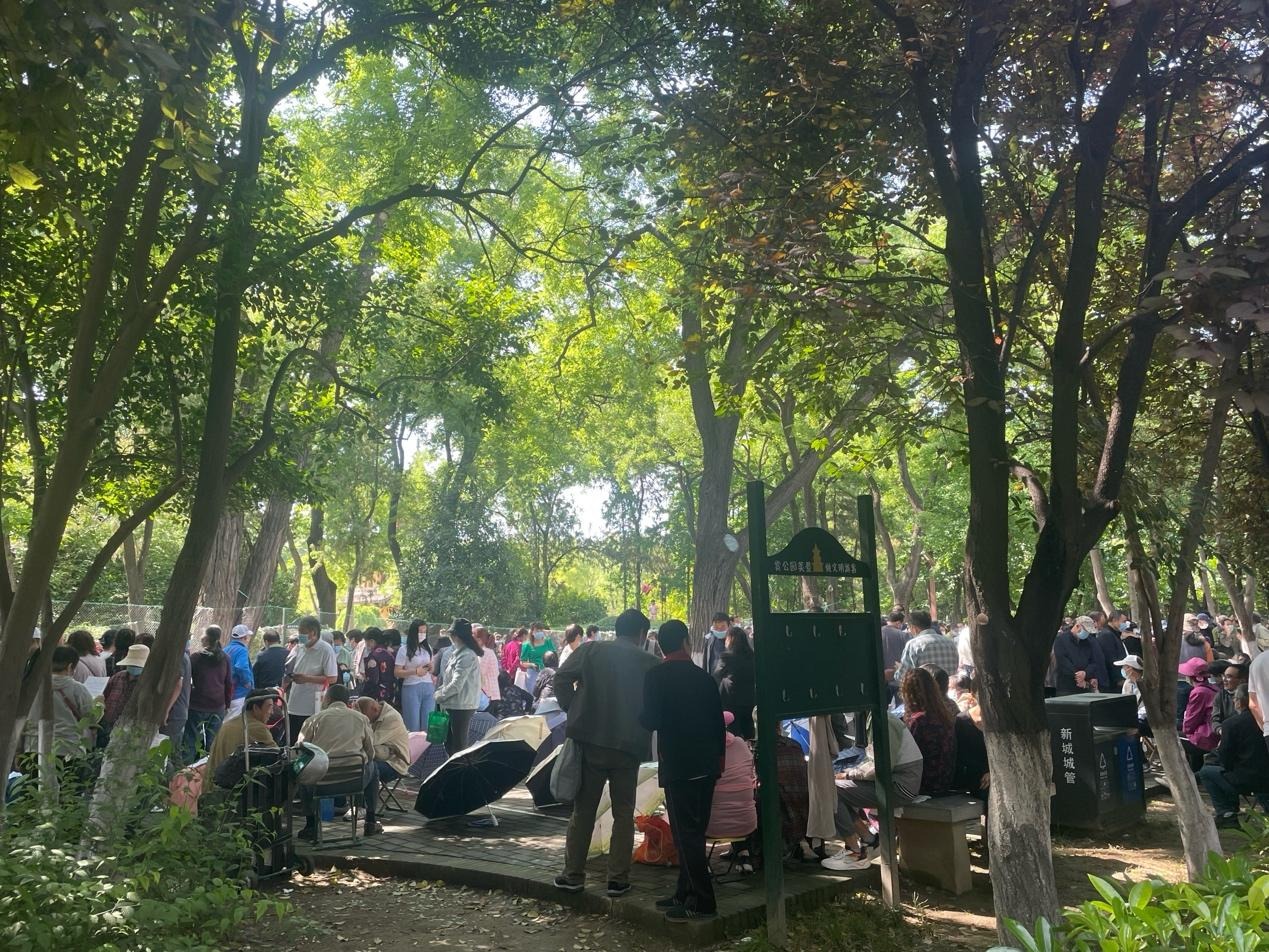
In Xi’an Revolution Park, a Chinese matchmaking corner, several big matchmaking companies and organizations are set, surrounded by individual matchmakers. Matchmakers are often middle-aged local women, and a few are men. They often display their clients’ information on boards or papers to attract more clients (see Fig 1). The boards, other display tools, matchmakers and potential clients collectively form the epitome of the traditional matchmaking market and its industry character. As a market, everyone who walks close to the area will be identified as a potential candidate who is looking for a partner, and will be invited to “free registration” (see in next subsection). The matchmaking services are always well-designed and categorized, with prices set accordingly. As a matchmaking staff (they always call themselves “teachers” in Chinese), “teacher Ho” offered every client a paid, customized membership for one year at their company. For instance, she explained, “the higher the education level, the higher the membership fee. 2980(CNY) for master (for a year), 3980 for doctor. Highly educated people also have high requirements, and it’s hard to find (someone for them). Especially girls generally want to find someone with a higher status than their own. (If one is) in the tip of the tower, the expensive fee (they need to pay).” Following the traditional Chinese valuation of women based on their fertility, increases in age and education raise the cost of matchmaking for them.50
Then, the service starts by helping and coaching clients to fill out the forms the matchmakers designed, with some flaws deliberately skimmed over or downplayed and some of the numbers embellished (see Figs. 2 and 3). For instance, for young men, their assets, housing situation, profession, and salary must be highlighted if it is decent. For older males, real estate, household accounts, pensions, insurance, major illnesses, etc., need to be stated, and women are generally required to have a stable job, with a preference for caring jobs as nurses and teachers, and to be thrifty and family-oriented.
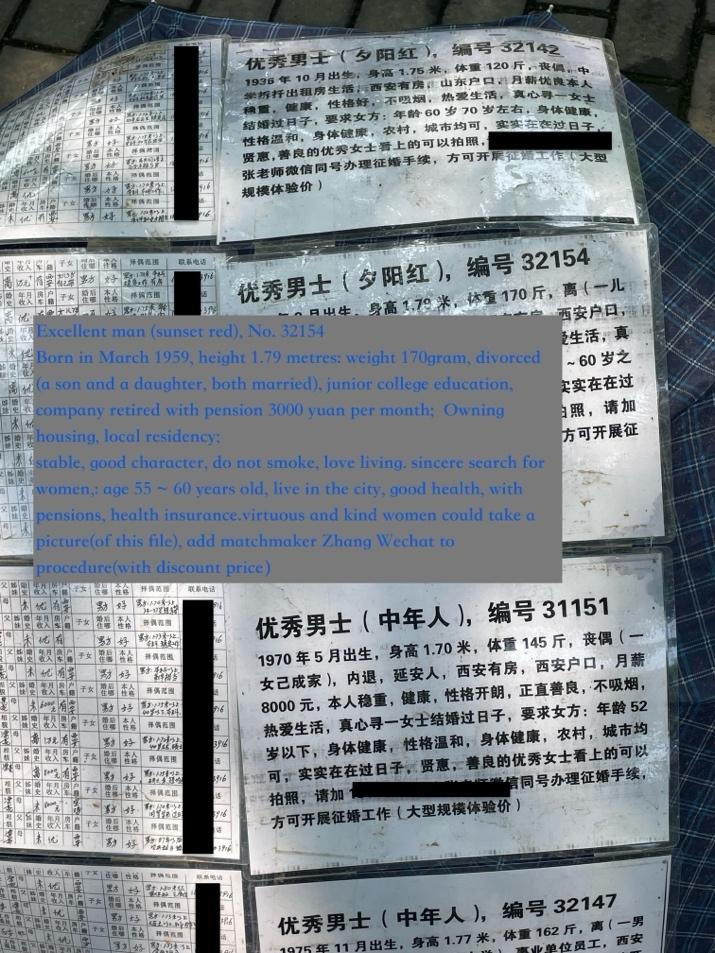
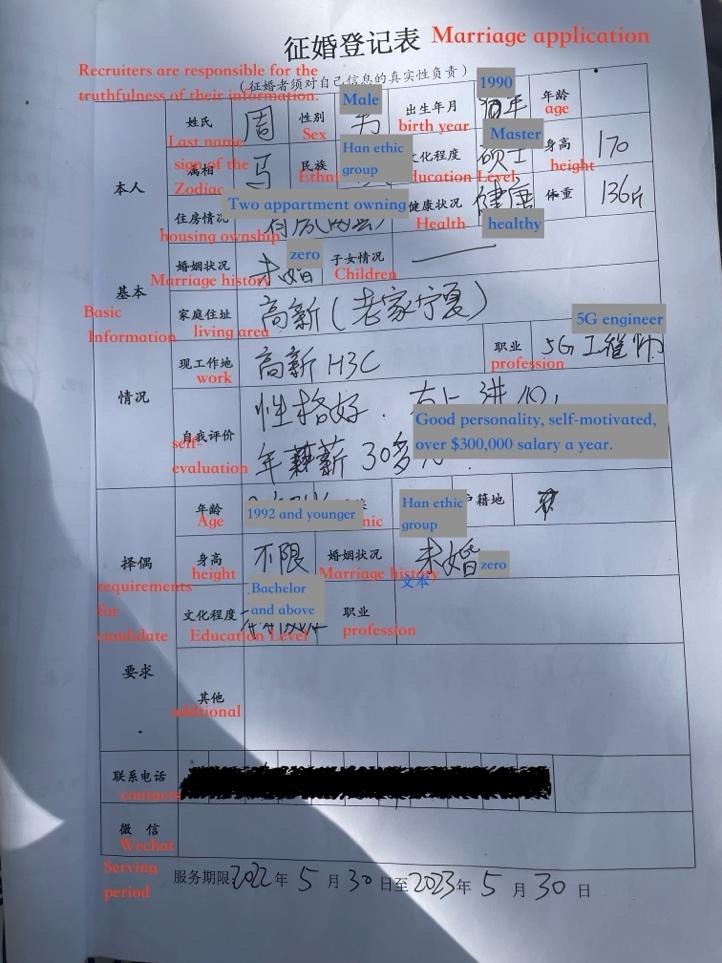
Figures 2 and 3. Different matchmaking forms.
After gathering a lot of forms, the form for male candidates will be given to the female clients first by the matchmakers. If one female client is interested in some of them, her file will also be given back to the male candidates. When the male candidate (also a client) positively responds, the matchmakers will arrange the one-on-one meeting at the matchmakers’ office for them. This process may take place several times for one client to create a match. These meetings continue even if both sides are already interested. This work consumes the time and energy of matchmakers for them to find and connect both sides. Also, matchmakers provide relationship counseling, “offer[ing] emotional support, reassurance or dating tips.”51 Such support often falls in between the formal matchmaking service and an informal act of sympathy, especially when the client has an underprivileged status in local society.52 Matchmaker “Teacher Wang” created more than ten groupings for matchmaking based on different types of clients. Her fliers note that one group consists of “collections of low-education, mentally disabled, and families who want the son-in-law (to take the family name of the female), applicable to urban men with lower education, rural men who can’t afford to buy a residential property in the city.”
In Between Online and Offline: Platformization in the Matchmaking Park
The traditional service of matchmaking is to match a client with one potential candidate at a time,53 but now, the logic of matchmaking has evolved, which may indicate how matchmaking is now shaken by technological developments and digitalization.
All the matchmakers in Xi’an Revolution Park, the ones working for big companies as well as individual matchmakers, aim to create the impression of having a large client base (see Fig. 4). They sell potential clients the idea that the more clients they have, the bigger the possibilities are to make a match, and ultimately saving clients’ time by meeting several candidates at once.
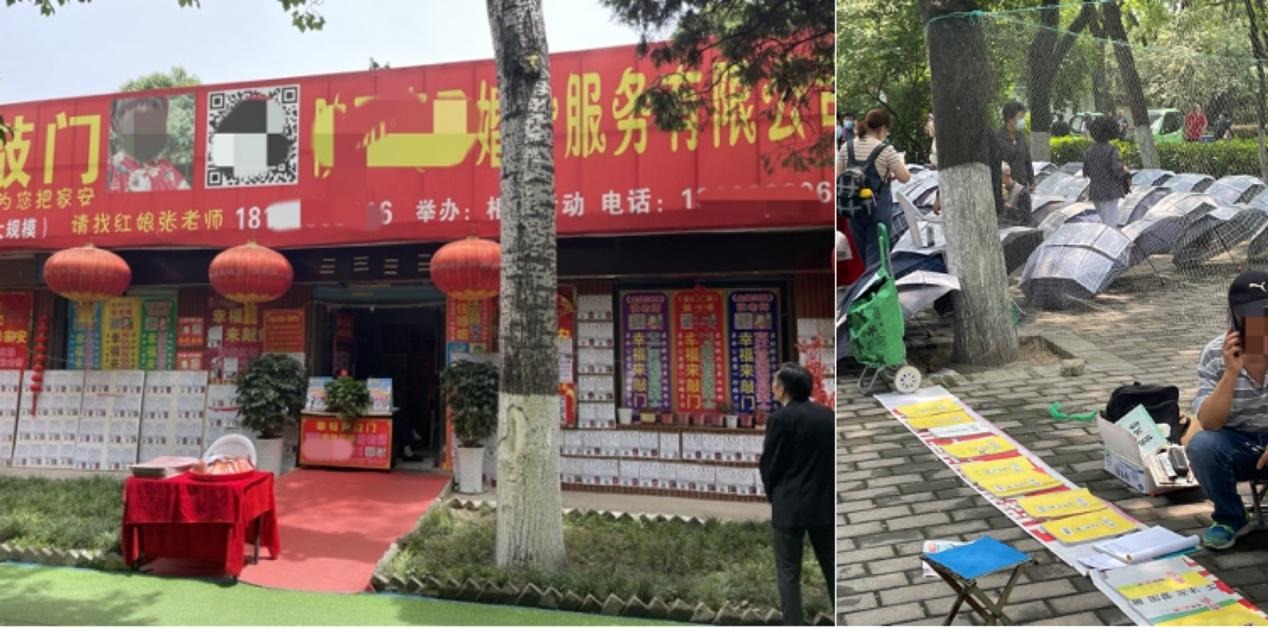
Each matchmaker put in the effort to gather as much “data” as possible. To do so, and to better operate between clients, the matchmakers shifted the work online, mostly to WeChat.
To collect data, some matchmakers strategically invite everyone to “free registration” by filling out the form (some on paper, some in their WeChat groups), which means the client could leave his or her information like occupation, living status, height, housing, contacts, their ideal types of candidates, etc., to the matchmaker, and the matchmaker will send these to the WeChat group or show it in the WeChat moments (the content can be showed to every WeChat friend one has), suggesting “someone would contact you if one’s interested.” Having all this data as a resource, matchmakers market their services by showing the data amount one has in WeChat groups to potential buyers. One matchmaker, “Teacher Zhou,” is proficient in the use of technical tools among these middle-aged matchmakers. She named her WeChat moments “Matchmaking Supermarket,” in which she posted the profiles of all her clients, numbered and coded, according to male, female, and older people, respectively, with different styles of pictures, as a label. Once potential clients give their personal information to her, she shows them the “matchmaking supermarket” for a free period as bait. But later, she will use a function on WeChat to make it invisible, if they end up deciding not to pay extra to become real clients. She interacts with all of her clients in WeChat, navigating often hundreds of operations a day.
Matchmakers also accumulate more data for their own databases through co-operation or purchase. Reusing data is commonplace, and matchmakers do not discard data even if it has been displayed by other matchmakers. Individual matchmakers work together to get more “free registrations” data and share a database (e.g., sharing several WeChat groups). At the same time, matchmaking companies that mainly provide traditional matchmaking services buy data from small matchmaking companies or individual matchmakers. The traditional service always offers tailor-made matchmaking services at a higher price, but it also needs “new data” to provide. As a result, they buy data from “collector” matchmakers and then charge their own clients an annual fee and an extra fee if the match is successful.
As a result of these practices, clients have little control over their data. People leave their information in the “free registration” database, and from then on, their data is out of their hands. Their data have been sent to WeChat groups that they’re not part of or left on paper that hardly ever is updated. Matchmakers state the data would only be kept for a year, but it is typically kept for much longer.54 And the data is often sold to other matchmakers or matchmaking companies without telling clients either in advance or after the fact. Some matchmakers promote a 100CNY service for gaining partial control: clients can be added to their WeChat groups, where they can have agency to send their information and check other people’s messages at any time. But they still won’t know how matchmakers handle their data, like collecting or reselling.
As outlined above, matchmakers keep a traditional business model in place—a culturally-specific and customized service, to compete with the MDAs that impact their business. But they also combine the new data-driven mechanisms—collecting and selling the data for the 100CNY service or offering client data to other matchmaking agents. Some matchmakers, the “collectors,” even turn to rely on the client data as their main source of income, as they operate WeChat groups with four hundred to five hundred people, managing a relatively large database that a regional matchmaking market could hardly operate without digital media.
“The emergence of platforms as a replacement for pre-existing modes of economic coordination” is fundamental to both the idea of platformization and the digital platforms themselves.55 Here, just as the “matchmaking supermarket” of “Teacher Zhou” indicates, data collection is thus driven by the perpetual cycle of capital accumulation, in which the data is collected and sold by capital owners.56
Where Does Matchmaking Labor Go in MDAs?
MDAs represent the character of datafication and platformization, with the commoditization of data being their main features.57 But how do they differ from the traditional matchmakers who leverage crucial elements of datafication and platformization as part of their services?
In light of the “production-consumption continuum” or “prosumer” theoretical discussion in plantform usage, we consider not only questions of agency related to users and MDAs, but also questions of digital labor.58 Now, “how data is extracted from multitudes of users in the form of ‘digital labor’” and “how users’ behavior is fragmented and reduced to standard tasks” should be examined.59
Labor in Data Files and Data Activities
To recap the first section, traditional matchmakers are responsible for 1) Information gathering, information imparting; 2) Assistance in data building, embellishing information; 3) Candidates matching, arranging of meetings; and 4) Process tracking, relationship counseling. Most of these processes need to be accomplished in MDAs as well. Some of the work is taken on by computing technology and interactive interfaces, but not all of it.
First, as part of the information-gathering process, users need to register themselves, leaving a lot of data on the MDA by creating an account. Prospective users can sign up through a variety of ways when the MDAs follow the same strategy as the traditional matchmakers in the previous section, which is to use “free sign-ups” to grow the pool of users. Just through users’ signing up as an account for the platform, the growing pool can then be used to attract other users and solicit business. The datafile creation provides a major selling point that the platforms can monetize, rather than just serve the users themselves.
Also, active users generate the capital value of DAU (daily active user). The number of DAU usually counts the number of users who logged in or used the app (excluding repeat logins) within one day. The higher DAU implies more possible user spending within the app, such as purchasing memberships, the “who liked me” feature, etc. More importantly, DAU influences the price when the platform resells user data. The DAU, or MAU (monthly active user), have become the main metric for measuring apps in the internet world.60 For instance, Soul states in its official Baidu encyclopedia, “According to Avery Dennison, Soul has the highest number of private messages per user per day and the highest number of daily launches per device in 2021,” and “according to Soul App’s disclosed data for March 2021, Soul App has one of the highest average daily DAU launches in the industry in its category, as well as one of the highest average daily launch rates and Gen Z user penetration.”61 This slightly differs from the traditional matchmakers, who seem to sell the data by pieces but not to value the activeness and updatability of each user. This difference may relate to the different operating speeds between the online and offline worlds.
Moreover, the uploading of photographs has become a mandatory step of information gathering. Portrait photos are almost always the most important piece of user data for MDAs. Similar to traditional matchmakers asking for personal information and photos, MDAs ask users to make their accounts available through the use of real photos and activities to attract and retain other users and to improve the matchmaking experience. The MDA TanTan asks new users to upload portrait photos that must show their faces clearly for detection and states “No photos, no matchmaking” (see Fig. 5). Some MDAs encourage users to upload more photos. For instance Tinder has a feature it calls “Featured Photos,” that claims to automatically “keep testing all of your profile photos, picking and prioritizing the best ones.”62
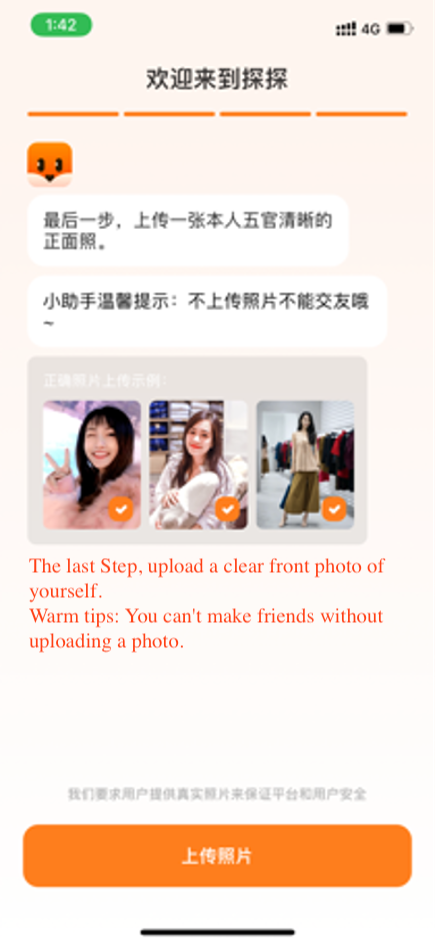
This should be thought about in connection with two MDA’s characteristics. First, the swipe is one of their most important interaction features, which interaction relies heavily on the user’s photo data, and a sufficiently large amount of photo data. Second, underneath the swiping, another significant characteristic of MDAs is the algorithmic matching. The algorithm continuously feeds user A to user B or A to C. The algorithm, as a means of invoking data, requires fresh new users and their activities to train the algorithm for future pairing.63
Then, users also need to tag themselves, fill in self-introductions, and connect their other social media accounts. As an MDA with a relatively wide user base and a long history of operation, Tinder is equipped with a fairly well-developed tagging mechanism. After registering for an account, Tinder first asks the user to fill out a five-hundred-word profile. The user can choose interest tags, and there are nearly a hundred interest tags available. They need to choose up to five tags and cannot create their own tags. After this, the user can fill in twenty-five pieces of information such as horoscope, education, family plan, COVID-19 vaccine status, etc. Each piece of information contains five to twenty labeling options. Users are not required to fill out all of this information, but Tinder (as well as other MDAs) reminds users of the current level of completeness of their information (30 percent to 100 percent), and guides users to improve their information. The MDA Jimu claims “the more complete the profile is, the higher the match rate, and the better the socialization” and the “perfect match.”64 According to the settings of the platform, user-selected tags serve as the computational foundation for matching algorithms to pair users and for conducting routine data analysis.
For the matching, there are two general modes, “real-time” and “non-real-time.” Most MDAs have “non-real-time” matching, i.e., when user A sees user B’s profile, A can choose to “swipe left” (not interested) or “swipe right” (like). After A swipes right, if user B has already swiped right on user A, both users will be in a “match”, and they can enter the chat interface. However, if user B has not randomly been fed by user A’s profile, or didn’t “like” user A, B will receive the system’s “someone has liked you” message, and then can interact accordingly. In “real-time” matching, that two users are online at the same time is the main condition for matching, while other tags are prioritized backward. Taking Soul as an example, its main interface shows the number of users who are currently online, and once a user clicks on the “Soul Match” function, two current online users would be matched together. Again, these computations rely on the user’s swipes or online time/activities to perform similarly, combinatorial computations to keep the algorithm function. These users’ actions of tagging themselves, and every swipe and click, are the laborious process of training algorithms, profiting the MDAs.
Aesthetic Labor Practices
As mentioned previously, matchmakers of traditional dating markets edit the presentation of their client’s information with knowledge situated in a socio-cultural context to enhance the matching rate. For example, in traditional Chinese matchmaking culture, men and women are assessed for their value in different ways and are taught to act accordingly.65 In the case of MDAs, however, users rely on themselves, to fit in the cultural environment and find the clue to increase their chances of a match. Researchers understand the flexible interaction of users around algorithmic data through the lens of technological domestication,66 but from another perspective, this process may suggest that users perform aesthetic labor for the platform.
Aesthetic labor, from a sociological perspective, refers to “the transformation of embodied abilities and attribute traits by workers into skills that are aesthetically adapted and incorporated into the labor process to evoke sensory emotions in customers for the commercial benefit of the organization.”67 It emphasizes work for which “individuals are compensated indirectly or directly for the appearance and affective power of their own bodies” —as opposed to bodywork (unpaid work on one’s own body) and body labor (paid work based on the bodies of others)68 or emotional labor, which has been theoretically described first by sociologist Arlie Hochschild as the unpaid labor of managing emotions.69
MDAs lead users to mistakenly believe that every photo uploaded and every edited self-introduction is an autonomous action, ones that can serve as opportunities to improve their attractiveness.70 The commercial benefits gained by the platform in the process are easily neglected. This type of labor is closely related to the cultural endogeneity on which the platform relies, and contributes to shaping the platform’s aesthetics. The user’s body and facial image, expression, and overall looks and style can be converted into commercial value for the platform. Simply put, platforms need users to “look good and sound good.”71
Interviewee28, recruited from Douban comment, illuminates how platforms invisibly convert the aesthetic labor of their users, especially female users, for the benefit of the platform:
Girls in [city G] are more detailed (refined), and not as rough, they know how to dress themselves, how to look better on their own, and express themselves. I met three girls on the app while I was in [city G]. They were really good-looking and very attractive to me. I only used the app for two weeks in [city G], but the user experience was different from using it in [city X], it has something to do with the city. I just like the girl’s picture too much, I really want to chat with her, I really do. I feel like I can’t miss it. So, I will go to top-up the membership, or buy the “super like.” I think it’s worth it because I had the feeling rush into my head, just have to make that match.
Interviewee28’s review of the MDA users among cities also suggests that aesthetics is an ambiguous and flexible criterion. Consequently, MDA users must deeply analyze cultural contexts to discern what constitutes “aesthetically desirable” in a given time and place. They may need to follow specific fashion trends, pursue upper-class aesthetics, or emphasize innovation and authenticity, etc.. Matching on MDAs is quickly assessed; it’s largely based on geographic proximity and physical attractiveness. So, users need to display effective visual attraction features and textual content for viewers to make quick decisions. In different (sub)cultural environments, such as different times, spaces, or even different applications, users need to put in the effort to learn the current cultural environment and make some kind of change.
Interviewee6 mentioned that she uploads different photos and uses different introductions on different dating apps. For example, a dating app that aims for “serious relationships” encourages users to first fill in their education and work information, and provides a channel to authenticate their real name and education through their ID number. She will post some pictures of, in her words, “good marriage material,” while on other platforms, it is beneficial to adapt a more “Western style,” to “show more skin” “be more casual” (to fit in the “plastic sexuality culture”) because everyone in it is doing so.
Aesthetic changes may also be associated with physical spaces. For instance, some culturally-based criteria are externalized and embedded again in the self-presentation of
MDAs. Many male MDAs users in China, especially users of TanTan and Momo, prefer to present their wealth as a manifestation of masculinity, for example using cars, watches, luxury goods, and upwardly mobile activities as eye-catching decorations in their photos, while men in Western societies define masculinity as avoiding femininity while displaying sexuality, assertiveness, and dominance.72 Accordingly, male MDA users in the West idealize male behavior and appearance through rugged masculinity, emphasizing their body and physical, even militaristic, capacity. In this way, cultural preferences also influence aesthetics, with people in different societies choosing to use different cultural activities to express themselves, such as animal protection, environmental protection, volunteering, music festivals, art exhibitions, political events, and so on.
Living between distinct aesthetic traditions, those users who live abroad or in changing online/offline environments, often choose to integrate more into the local intercultural environment, by changing the way they present and express themselves, and even how they engage in sexual activities. The conditions for crossing these cultural thresholds are not as difficult as leaping to a different social class, yet it takes time and effort to figure out and find these flexible and ever-changing cultural norms to become fluent in one of the cultures (see Fig. 6).
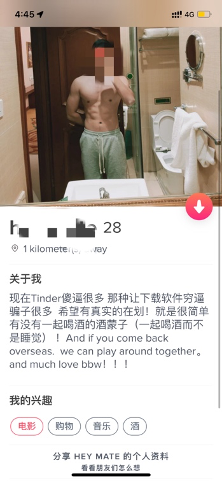
Users do or may need to do certain work if they want to fit in certain cultural environments and look for matches. Demonstrating changes in cultural thought concerning feminism and the proactive sexual desire of women, in MDAs that are dominated by users mostly from Western societies where feminism is a well-promoted discursive climate, such as Tinder, Hinge, and Bumble, promote themselves to be “female-friendly”73 not only by their UX design and emergency functions, but also by several events that have been held to solidify the feminist environment.74 A lot of female users label themselves as feminists in such apps, and so do some male users; they also tag themselves as feminists and talk about feminism in their self-introductions. This phenomenon among men users has been widely discussed.75
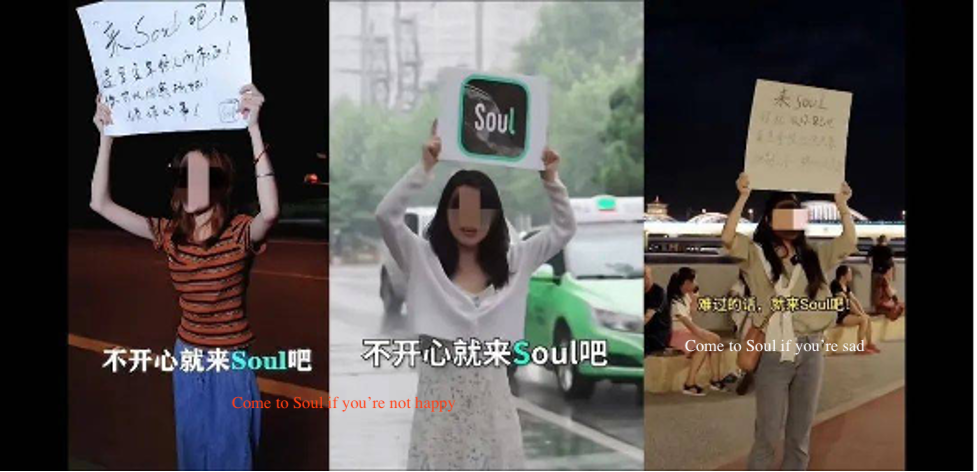
Whereas, conversely, among participants who predominantly use traditional ways of matchmaking, or in environments where conservative social trends have emerged under the influence of mainstream cultural and political forces, MDAs primarily serve conservative cultures.. For instance, topics that are considered radical are rarely brought up, or are suppressed in some Chinese MDAs. With internet censorship, male users shouldn’t send outlier sexual expressions (Interviewee1), while female users are not only restricted by censorship, but according to the traditional gender scripts, they are required to hide their sexual desires and follow the male. A more specific demonstration is that female users take pictures from a downward shooting angle to appear more passive, gentle, or soft or act more docile and innocent.76 In addition, the advertisements of Chinese MDA Soul show how the aesthetic labor of women could serve or attract male users (see Fig. 7).77 This work fuels the guiding logics of the MDAs and helps the MDAs operate under and be consistent with mainstream values of masculinity and Confucianism. Along the social norms, users need to hide their potential non-heterosexual orientation78 and submit to the opposition to casual sex or “radical” feminism.79
A New Matchmaking Labor
In response to the longstanding need for matchmaking, MDAs surfaced as the platformized answer to matchmaking in the digital age. As a type of digital platform or even a representative of an algorithmic matching platform, MDAs brought about quantitative and qualitative changes to the practice of matchmaking. This paper begins with the tradition of matchmaking to then discuss the platformization of the traditional matchmaking market that takes place in light of the emergence of platforms. The shift between traditional and modern matchmaking that leads us to propose an analysis of digital platforms of matchmaking in the following.
With respect to the idea of digital labor, platformization and datafication are always combined and have several features: 1) “The supposed universality of data reframes everything as falling under the domain of data capitalism. All spaces must be subjected to datafication.”80 2) Data and data activities as capital and material for training algorithmic arithmetic, are required to be initiative and autonomous, which means users need to “work.” In matchmaking, people pursue the so-called infinite opportunities that big data brings—an idea that platformization and datafication inculcate. Thus, even in the platformization shift of traditional matchmaking, we find that matchmakers bring this idea into their work, i.e., the specialized (exclusive) serviceability of traditional matchmaking is gradually replaced by the notion of big data. When this happens, perhaps the agency moves to users. For example, contemporary traditional matchmakers begin to ask users to make matches on their own in the chat groups of SNS tools (Social Networking Services, such as Wechat, Tencent QQ, etc.) by sending messages and other actions. In these cases, agency is given to users at the cost of labor involved in maintaining and updating their profiles.
MDAs arguably amplify this tendency by setting up a seemingly neutral position to match, with tagging and algorithmic matching relying on users’ data uploads and actions. The production of data and data activity is unpaid digital labor whose characteristics are identical to other social platforms in terms of the platform-based nature of the MDA. Furthermore, we point to another layer of labor which is part of the users’ involvement in platformized intimacy. Whereas MDAs seemingly function as digital matchmakers, part of the work of the matchmaker is transferred to the user as a prosumer. This part of the transferred immaterial intimate labor shows up as aesthetic labor in the production-consumption continuum, and they are strongly culturally embedded. Aesthetic labor, for example, is not gratuitous in pre-existing traditional matchmaking. But in MDAs, the platforms profits from the aesthetic value of the laborers beyond the data, converting their cultural aesthetics and affect into commodities for the platform’s profit, creating a composite exploitative relationship. In this relationship, the users’ labor is continuously required to update and refine their self-presentation in the digital cultural environment in which they are situated.
Combining these two layers of labor, we attempt to propose the concept of the platformized matchmaking labor. As we pointed out, the original matchmaking labor is to arrange matches between intimate and romantic partners, and also to secure courtships and other interpersonal arrangements.81 This is the work primarily undertaken by matchmakers. The matchmaking labor we describe adds additional layers of labor in the age of digital platformization. That is, while the matching arrangement is based on algorithmic counting, the user is required to perform a variety of digital activities to complete the new process of matchmaking, including data authorization, data activation, sensing the cultural context, adapting the digital self-presentation, initiating matches, and so on, a part of which is transformed by the platform (or platformization) into the revenue-generating commodities of matchmaking, and for which the user does not receive compensation.
We thus also propose the platformized matchmaking labor to make the claim that further research is needed to account for the impact of platformization on socio-cultural practices, such as is the case with traditional matchmaking. Platformized matchmaking labor represents a new type of labor in the process of matchmaking in the digital era. We believe that, in the modern platformization in China and potentially other places, this concept is not limited to the practice on digital platforms, but opens to other labor sites, just like the traditional matchmaking practice that has been platformized. Secondly, platformized matchmaking labor needs to be leveraged in more contexts and sites beyond urban China. Matchmaking can have multiple meanings. It not only points to the matching of intimate relationships but also to other forms of relationship building, such as for business, human resources and communities. These types of matchmaking may equally present new labor in the digital age. Lastly, in this article, through the juxtaposition of traditional and modern matchmaking with the analysis of the empirical data, we come to outline two categories of labor present in the new matchmaking labor. The concept of platformized matchmaking labor has the potential to encompass many other kinds of labor involved in matchmaking practices, such as (digital) emotional labor and other work that is related to the intimate labor that is done by traditional matchmakers but seems hard to pinpoint in MDAs. In conclusion, as this article aimed to show, research on the platformization of labor and intimacy would benefit greatly from the analysis of the in-between spaces of offline and online that we surfaced for the case of matchmaking.
Notes
- Qing Ye, “Supermarketization of Contemporary Chinese Youth’s Intimacy——Based on Analysis of Marriage Magazines”, Contemporary Youth Research (in Chinese) 6 (2014): 100–06. ↩
- Liesel L. Sharabi, “Love, (Un)Automated: Human Matchmaking in the Era of Online Dating,” Journal of Social and Personal Relationships 41, no. 11 (2024): 3293–315, https://doi.org/10.1177/02654075241264720; Ahuvia, Aaron C., and Mara B. Adelman. “Formal Intermediaries in the Marriage Market: A Typology and Review.” Journal of Marriage and Family 54, no. 2 (1992): 452–63, https://doi.org/10.2307/353076. ↩
- Wollburg, “The History of Matchmaking”, 2016; Feilong Li, A Study of Marriage and Family in Rural China under Social Change, PhD Dissertation, National Academy of Governance, 2010; Fransisca Benedicta Avira Citra Paramita. “Changes in culture and matchmaking behavior: Online dating on Tinder,” Indonesian Journal of Social Sciences 13, no. 1 (2021): 33–45, https://doi.org/10.20473/ijss.v13i1.26353. ↩
- Wollburg, History of Matchmaking, 1. ↩
- Kath Albury, Jean Burgess, Ben Light, Kane Race, and Rowan Wilken, “Data Cultures of Mobile Dating and Hook-up Apps: Emerging Issues for Critical Social Science Research,” Big Data & Society 4, no. 2, 2017:1–11; doi.org/10.1177/2053951717720950; Shuaishuai Wang. “Calculating Dating Goals: Data Gaming and Algorithmic Sociality on Blued, a Chinese Gay Dating App.” Information, Communication & Society 23, no. 2 (January 28, 2020): 181–97; https://doi.org/10.1080/1369118X.2018.1490796. ↩
- Yunxiang Yan, Private Life Under Socialism: Love, Intimacy, and Family Change in a Chinese village, 1949–1999 (Shanghai Media Press, 2006), 52. ↩
- Zygmunt Bauman, Liquid Love: On the Frailty of Human Bonds (Business Weekly Publications, Inc., 2007); Jamison Lynn, Intimacy:Personal Relationships In Modern Societies (Polity Publishing, 2002), 146. ↩
- Elizabeth A. Povinelli, The Empire Of Love: Toward A Theory Of Intimacy, Genealogy, and Carnality (Duke University Press, 2006); Tanja Wiehn. “Algorithms and Emerging Forms of Intimacy,” in Handbook of Critical Studies of Artificial Intelligence, ed. Simon Lindgren (Edward Elgar Publishing, 2023).; Wilson Ara, “The Infrastructure of Intimacy,” Signs: Journal of Women in Culture and Society 41, no. 2 (2016), https://doi.org/10.1086/682919. ↩
- Wollburg, The History of Matchmaking, 2016. ↩
- Wilson, “The Infrastructure of Intimacy,” 2016. ↩
- Eileen Boris and Rhacel Salazar Parreñas, eds., Intimate Labors: Cultures, Technologies, and Politics of Care (Stanford University Press, 2010). ↩
- Raymond Williams, Keywords : A Vocabulary of Culture and Society (Oxford University Press, 1983, 103. ↩
- Aaron C. Ahuvia and Mara B. Adelman, “Formal Intermediaries in the Marriage Market: A Typology and Review.” Journal of Marriage and Family 54, no. 2 (1992): 452–463; https://doi.org/10.2307/353076. ↩
- Eli J. Finkel, Paul W. Eastwick, Benjamin R. Karney, Harry T. Reis, and Susan Sprecher, “Online Dating: A Critical Analysis from the Perspective of Psychological Science,” Psychological Science in the Public Interest 13, no. 1 (2012): 3–66; https://doi.org/10.1177/1529100612436522. ↩
- John. Seely. Brown and John. Hagel, “The Power of the Business Matchmaker,” Fortune, January 3, 2013, http://fortune.com/2013/01/03/the-power-of-the-business-matchmaker. ↩
- Li, A Study of Marriage and Family. ↩
- Li, A Study of Marriage and Family; Yan, Private Life under Socialism. ↩
- SuiMing Pan and YingYing Huang, xing zhi bian: 21shiji zhong guo ren de xing sheng huo.{The Change of Sexuality: The Sexual Life of Chinese People in the 21st Century} (in Chinese) (People’s University of China Press, 2013), 5. ↩
- Pan and Huang, “xing zhi bian {The Change of Sexuality}” . ↩
- Yan, Private Life Under Socialism, 2006. ↩
- Yuying Cai, “Intergenerational, Class and Gender Research on Media Coverage of ‘Matchmaking Corner’” (in Chinese), Master’s thesis (South China University of Technology, 2019), https://doi.org/10.27151/d.cnki.ghnlu.2019.000478. ↩
- Zixi Liu and Jiaojiao He, “Network as a Medium: The Infrastructural Form and Operational Logic of Marriage Matching in the Digital Era” (in Chinese), Zhejiang Journal 95 (2023):157–166; https://doi.org/10.16235/j.cnki.33-1005/c.2023.05.021. ↩
- Peidong Sun, “Match-making Corner and Parental Match-making: the Collective Sexual Anxiety of Knowing Youth Parents as a Perspective” (in Chinese), Youth Research 6 (2013): 12–25+92. ↩
- Bauman, Liquid Love; Stanley Woll, “So Many to Choose from: Decision Strategies in Videodating,” Journal of Social and Personal Relationships 3, no. 1 (1986): 43–52. ↩
- Deborah Chambers, Social Media and Personal Relationships: Online Intimacies and Networked Friendship (Palgrave Macmillan, 2013). ↩
- Rikke Andreassen, Michael Nebeling Petersen, Katherine Harrison, and Tobias Raun, Mediated Intimacies: Connectivities, Relationalities and Proximities (Routledge, 2017); Chambers, Social Media and Personal Relationships; Albury, Burgess, Light, Race, and Wilken, “Data Cultures of Mobile Dating.” ↩
- Ping Sun, Linchuan Qiu, and Haiqing Yu, “Platforms as Methods: Labour, Technology and Communication” (in Chinese), Journalism and Communication Research (2021): 8–24. ↩
- Simiran Lalvani and Joyojeet Pal, “The Moral Orders of Matchmaking Work: Digitization of Matrimonial Services and the Future of Work,” Proceedings of the ACM on Human-Computer Interaction 6, no. CSCW1 (March 30, 2022): 1–23; https://doi.org/10.1145/3512968. ↩
- Carolina Bandinelli and Alessandro Gandini, “Dating Apps: The Uncertainty of Marketised Love,” Cultural Sociology 16, no. 3 (September 1, 2022): 423–41; https://doi.org/10.1177/17499755211051559. ↩
- “TanTan – Asian Dating App,” AppStore for iPhone, Accessed January 15, 2025, https://apps.apple.com/my/app/tantan-asian-dating-app/id861891048. ↩
- Bronwyn Carlson, “Love and Hate at the Cultural Interface: Indigenous Australians and Dating Apps,” Journal of Sociology 56, no. 2 (June 2020): 133–50, https://doi.org/10.1177/1440783319833181. ↩
- See, for instance, Soul APP, https://www.soulapp.cn/en; or Tinder, https://tinder.com. ↩
- Sun, Qiu, and Yu, “Platforms,” 13; N. Srnicek, Platform Capitalism (Polity, 2017): 27. ↩
- Poell, Thomas, and David Nieborg, and José van Dijck, “Platformisation,” Internet Policy Review, no.8 (4) (2019): 6, https://doi.org/10.14763/2019.4.1425. ↩
- Ritzer, George, and Nathan Jurgenson. “Production, Consumption, Prosumption: The Nature of Capitalism in the Age of the Digital ‘Prosumer.’” Journal of Consumer Culture 10, no. 1 (March 2010): 13–36. https://doi.org/10.1177/1469540509354673. ↩
- Sun, Qiu, and Yu, “Platforms,” 14. ↩
- Taina Bucher, If . . . Then: Algorithmic Power and Politics (Oxford University Press, 2018); Susanna Paasonen, “Infrastructures of Intimacy,” in Mediated Intimacies, 103–116.; Wiehn, “Algorithms and Emerging Forms of Intimacy,” 117–27. ↩
- Boris, Intimate Labors. ↩
- Strimpel, “The Matchmaking Industry and Singles Culture.” ↩
- Lik Sam Chan, The Politics of Dating Apps: Gender, Sexuality, and Emergent Publics in Urban China (MIT Press, 2021). ↩
- G. Zhang and L. Hjorth, “Live-Streaming, Games and Politics of Gender Performance: The Case of Nüzhubo in China,” Convergence 25, no. 5/6 (2017): 807–25. ↩
- G. Zhang and L. Hjorth, “Live-Streaming, Games and Politics of Gender Performance: The Case of Nüzhubo in China,” Convergence 25, no. 5/6 (2017): 807–25.42. L. Zhang, “Fashioning the Feminine Self in “Prosumer Capitalism”: Women’s Work and the Transnational Reselling of Western Luxury Online,” Journal of Consumer Culture 17, no. 2 (2017): 184–204; https://doi.org/10.1177/1469540515572239. ↩
- WeChat is a multifunctional platform holding enormous popularity in China. It offers users the possibility to share their daily activities and moments, work, and socialize, as well as make online/offline mixed forms of transactions and online shopping. See Yujie Chen, Zhifei Mao, and Jack Linchuan Qiu, Super-Sticky WeChat and Chinese Society (Emerald Publishing Limited, 2018). ↩
- Some of these apps, although not officially operating in mainland China, are still used by many Chinese users overseas or through web-based tools, and are also popular in mainland China. ↩
- Light, B., Burgess, J., and Duguay, S. “The walkthrough method: An approach to the study of apps”. New Media & Society, no. 20(3), (2018): 881–900. https://doi.org/10.1177/1461444816675438. ↩
- Parks play a crucial role in modern traditional matchmaking in China. T. Gui, “ ‘Devalued’ Daughters Versus ‘Appreciated’ Sons: Gender Inequality in China’s Parent-Organized Matchmaking Markets,” Journal of Family Issues, no. 38(13) (2017): 1923–48. https://doi.org/10.1177/0192513X16680012. ↩
- Sina News, “Revolutionary Park: Witnessing the Changes of a City, Famous Matchmaking Corner,” 2017, https://sx.sina.cn/news/xian/2017-10-26/detail-ifynfrfm9174909.d.html; Guopeng Ni, “A Study of Elder Practice of Mate Choice in Parks from the Perspective of Weak Ties: A Case of the Matchmaking Corner of the G Park in Xi’an,” Master’s Thesis (2022), Central China Normal University. https://doi.org/10.27159/d.cnki.ghzsu.2022.000201. ↩
- Douban is a social media site well known to Chinese youth that has won a large number of long-term users for its diverse cultural identity. Sees Li, “Moral Misbehavior.” ↩
- Ginsburg, Faye D., Lila Abu-Lughod, and Brian Larkin,eds., Media Worlds: Anthropology on New Terrain (University of California Press, 2002), 23. ↩
- Sampson Lee Blair and Timothy J. Madigan, “Dating Attitudes and Expectations among Young Chinese Adults: An Examination of Gender Differences,” Journal of Chinese Sociology 3, no. 1 (2016): 12, https://doi.org/10.1186/s40711-016-0034-1. ↩
- Ahuvia and Adelman, “Formal Intermediaries in the Marriage Market,” 1992. ↩
- Lalvani, Simiran, and Joyojeet, “Moral Orders of Matchmaking Work,” 2022. ↩
- J. Hao, “Matchmaking in Ancient China” (in Chinese), Tianfu xinlun 4, (2010):123–127. ↩
- Not only does the author see data from years ago in the paper files shown by the matchmaker, but strangers continue to contact her two years after she left her information there. ↩
- Julian Posada and Antonio A Casilli, “The Platformization of Labor and Society,” in Society and the Internet, ed. Mark Graham and William H. Dutton (Oxford University Press, 2019), 293–306, https://doi.org/10.1093/oso/9780198843498.003.0018. ↩
- Jathan Sadowski, “When Data Is Capital: Datafication, Accumulation, and Extraction,” Big Data & Society 6, no. 1, (2019), 1–12, https://doi.org/10.1177/2053951718820549. ↩
- Chambers, Social Media and Personal Relationships; Friedrich Krotz, “Intimate Communication on the Internet,” in Eva Lia Wyss (ed.), Communication of Love: Mediatized Intimacy from Love Letters to SMS (2014), 79–92, Transcript Verlag, https://doi.org/10.1515/transcript.9783839424445.79; Bandinelli and Alessandro,“Dating Apps.” ↩
- Hector Postigo, “The Socio-Technical Architecture of Digital Labor: Converting Play into YouTube Money,” New Media & Society 18, no. 2 (2016): 332–49, https://doi.org/10.1177/1461444814541527. ↩
- Posada and Antonio, “The Platformization of Labor and Society,” 294. ↩
- “What is DAU? Daily Active Users: Overview & Tracking,” Reteno, accessed October 21, 2024, https://reteno.com/glossary/daily-active-users-dau. ↩
- “Soul App,” Soul BaiduBaike, accessed December 10, 2023, https://baike.baidu.com/item/Soul/19832271?fr=ge_ala. ↩
- “Find Out Why Tinder Is the World’s Best Dating App,” Tinder, accessed August 10, 2023, https://tinder.com/about. ↩
- Wang, “Calculating,” 181–97. ↩
- “Jimu,” Jimu, accessed September 15, 2023, https://www.hitupwithu.com. ↩
- Zheng Jing, “Xiangqin Wave: A Close Look at Modern Chinese Dating Culture,” Academic Journal of Interdisciplinary Studies (October 2013): https://doi.org/10.5901/ajis.2013.v2n9p319. ↩
- Wang, “Calculating,” 181–97. ↩
- Joanne Entwistle and Elizabeth Wissinger, “Keeping up Appearances: Aesthetic Labour in the Fashion Modelling Industries of London and New York,” Sociological Review 54, no. 4 (2006): 774–94, https://doi.org/10.1111/j.1467-954X.2006.00671.x; Ana Sofia Elias, Rosalind Gill, and Christina Scharff, eds., Aesthetic Labour (Palgrave Macmillan UK, 2017), 22–6. ↩
- Ashley Mears, “Aesthetic Labor for the Sociologies of Work, Gender, and Beauty,” Sociology Compass 8, no. 12 (2014): 1330–43, https://doi.org/10.1111/soc4.12211. ↩
- Arlie Hochschild, The Managed Heart: Commercialization of Human Feeling (University of California Press, 2003). ↩
- G. Ranzini and C. Lutz, “Love at First Swipe? Explaining Tinder Self-Presentation and Motives,” Mobile Media & Communication 5, no. 1 (2017): 80–101, https://doi.org/10.1177/2050157916664559. ↩
- Chris Warhurst and Dennis Nickson, “‘Who’s Got the Look?’ Emotional, Aesthetic and Sexualized Labour in Interactive Services,” Gender, Work & Organization 16, no. 3. (2009): 385–404, https://doi.org/10.1111/j.1468-0432.2009.00450.x. ↩
- Chan, Politics of Dating Apps, 55–60. ↩
- Rena Bivens and Anna Shah Hoque, “Programming Sex, Gender, and Sexuality: Infrastructural Failures in the ‘Feminist’ Dating App Bumble,” Canadian Journal of Communication 43, no. 3 (2018): 441–59, https://doi.org/10.22230/cjc.2019v44n3a3375. ↩
- Laura Brightwell, “Feminist Tinder: Young Women Talk Back to Harassment Online,” in Debbie Ging, Eugenia Siapera.(Eds) Gender Hate Online: Understanding the New Anti-Feminism (Palgrave Macmillan, 2019), 233–51, https://doi.org/10.1007/978-3-319-96226-9_12. ↩
- Dazed, “Men Are ‘Wokefishing’ Women by Pretending To Be Feminists on Dating Apps,” accessed October 27, 2024, https://www.dazeddigital.com/life-culture/article/50106/1/men-are-wokefishing-women-by-pretending-to-be-feminists-on-dating-apps. ↩
- Li Ziyin, “Moral Misbehavior Versus Feminist Sexuality: Text Analysis on How Chinese Youth See Dating Apps,” Sexuality & Culture 29 (2025): 883–901, https://doi.org/10.1007/s12119-024-10304-1; Jennifer R. Sedgewick, Meghan E. Flath, and Lorin J. Elias, “Presenting Your Best Self(ie): The Influence of Gender on Vertical Orientation of Selfies on Tinder,” Frontiers in Psychology 8 (2017): 604, https://doi.org/10.3389/fpsyg.2017.00604. ↩
- Li, “Moral Misbehavior,” 2025. ↩
- Chan, Politics of Dating Apps, 77. ↩
- Li, “Moral Misbehavior”, 2025; Tingting Liu, “Neoliberal Ethos, State Censorship and Sexual Culture: A Chinese Dating/Hook-up App,” Continuum 30, no. 5 (September 2, 2016): 557–66, https://doi.org/10.1080/10304312.2016.1210794. ↩
- Sadowski, “When Data is Capital.” ↩
- Wollburg, The History of Matchmaking, 2. ↩
