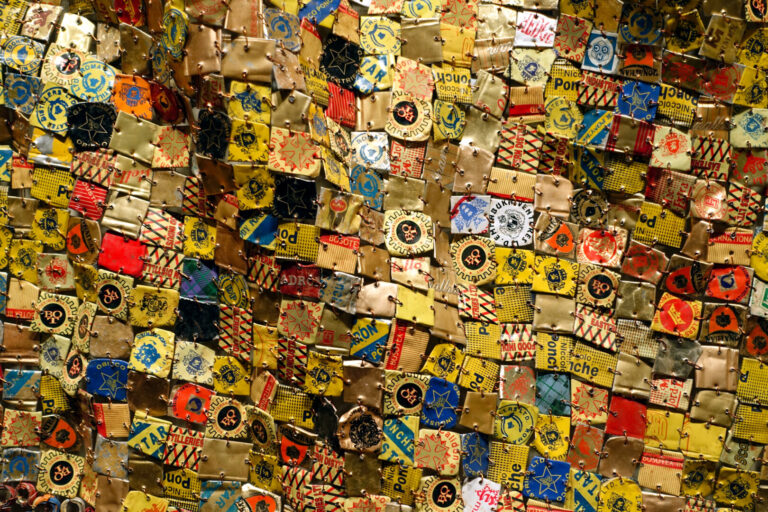
Here, Katerina Paramana introduces the articles in the “Political Economy and the Arts” special section of this issue. In the current climate of geopolitical upheaval (from Ukraine, to Gaza, Iran, Venezuela, and Greenland), the articles illuminate what arts do to produce resistance at a micro level by re-writing problematic narratives, visibilizing marginalized communities, imagining alternative models and futures, and working towards equitable space-making.
Political Economy and the Arts
Edited by Katerina Paramana
Political Economy and the Arts seeks to address how art and political economy might impact, critique, and reflect on one another and their futurity through the staging of conversations across the fields of visual and performing arts, cultural studies, visual cultures, politics, economics, human geography, social theory, and health and well-being.
Contribute a proposal >
The Indigenous Turn, or the Spectacle of Otherness: Cultural Political Economies of the 60th Venice Biennale, Foreigners Everywhere
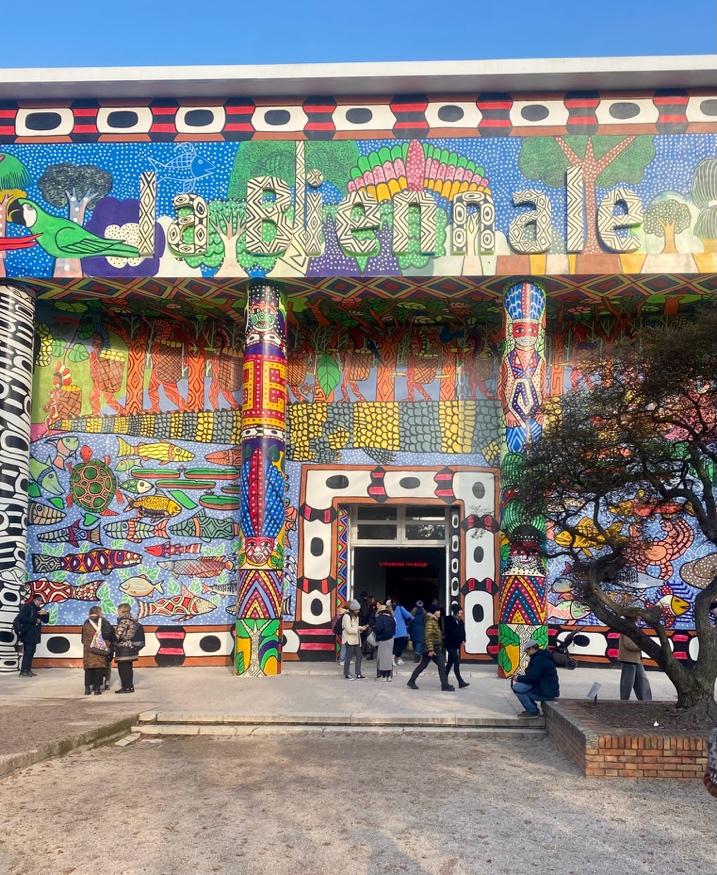
The 60th Venice Biennale, Foreigners Everywhere, placed the figure of the foreigner at its center, drawing on Adriano Pedrosa’s curatorial idea that foreignness is a pervasive condition of human existence. Within a broad spectrum of “minoritarian foreigners,” the “Indigenous” emerged as a particularly charged symbolic figure. This article situates the Biennale as a global institution whose strategies of expansion and rarefication sustain its symbolic power, examining four “framing moments” of Indigenous representation in the 60th edition: cosmologies, objects, alternative modernisms, and memory. These framings variously spiritualize, aestheticize, historicize, and politicize Indigeneity, producing visibility around Indigenous cultures in an exclusive environment where viewership is characterized by cultures of speed. The article argues that the institutional framing of Indigenous artists’ biographies and traditions simultaneously validates and commodifies identity, with “authenticity” serving as symbolic and economic capital. While such visibility can create opportunities for recognition and market access, it also may fetishize and flatten heterogeneous Indigenous histories into a universalized category of “the Indigenous.” The article explores how the Biennale’s pursuit of global relevance depends on the spectacular inclusion of difference, a process in which otherness—and, here, Indigeneity—is made visible but also subject to institutional power and gatekeeping logics. Reading the Indigenous not only through the lens of representation but also as a symbolic actor within the exhibition’s cultural-political economy, the article concludes by reflecting on whether alternative curatorial strategies—slower, more focused, and territorially specific—can create space for Indigenous representation beyond spectacle, enabling forms of knowledge production that better acknowledge the diversity and historicity of Indigenous peoples.
Affective Economies of Freedom in Paradoxical Times
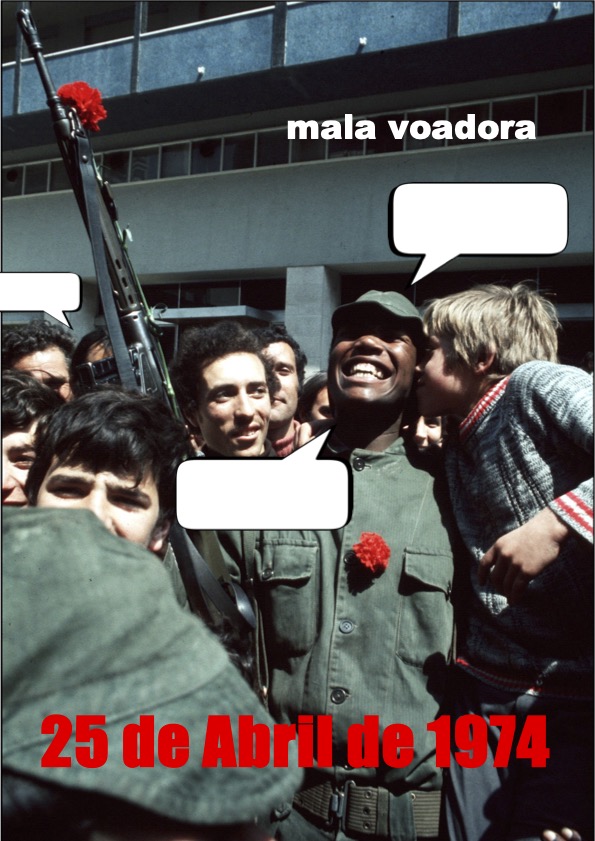
This article proposes the concepts of “brutal” and “gentle” affects as a critical framework to analyze affective economies of freedom in paradoxical times. Drawing on Sara Ahmed’s work on affect, Sruti Bala’s on participation, and Franco Berardi’s on freedom, it argues that freedom emerges not solely as a historical achievement of an inalienable right, but as an embodied experience enhanced by theatrical dispositifs. I consider forms of celebrating, performing, and capturing freedom in paradoxical times, including the staging of the fiftieth anniversary of the Carnation Revolution; the production 25th of April 1974 by Portuguese company Mala Voadora; and The Seagull by Argentinian director Guillermo Cacace. I begin with a discussion of the relationship between populism and notions of freedom, describing the nuanced usage and political capture of the latter to examine its paradoxes in the present. I then examine how these productions critically engage with the paradoxes of freedom and reset the conditions of experience of its affective-sensorium.
Unsettling Political Economies: Instituting, Blurring, and Monstrous Space-Making
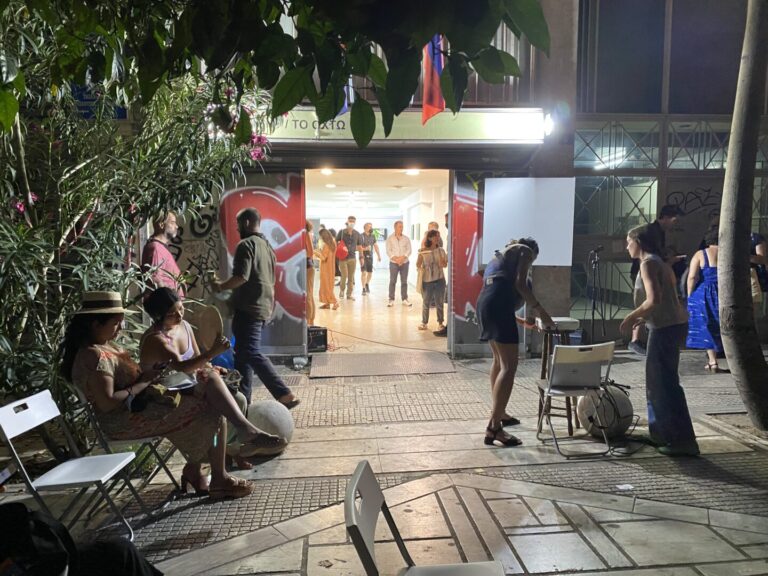
This article explores the ways in which emergent cultural space-making practices—particularly practices of “instituting,” “blurring,” and “monstrous space-making”—challenge and ephemerally unsettle political and economic systems. It focuses on the history of the cultural space, EIGHT Critical Institute for Arts and Politics, in Athens, Greece. The concept of “instituting” is discussed as a form of space-making that refuses structuralization, while “blurring” signifies a process of dissolving boundaries and categories to create fluid, unpredictable spaces that resist fixed identities. The notion of “monstrous space-making” is introduced as a method of excess and refusal, capable of disrupting dominant political economies. The article argues that these practices, rooted in modes of “militant curating” and critical spatial interventions, operate as performative acts of reconfiguration—offering ways to produce new relations, economies, and imaginaries within contested landscapes. It suggests modes of continuous, open-ended spatial interventions that do not seek to fix existing systems but to deform and reimagine them from within.
Cultural Space as Resistance: Racialized and Immigrant Communities’ Artistic Practices and the Political Economy of Urban Development in Canadian Cities
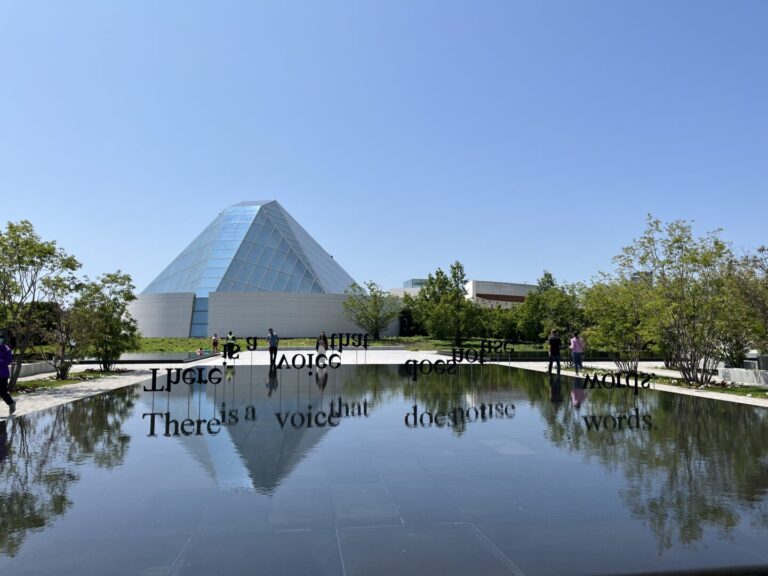
In Canada, Indigenous, racialized, and immigrant communities face systemic challenges in securing and sustaining cultural spaces due to real estate speculation, funding disparities, and exclusionary urban policies. These barriers not only threaten the continuity of cultural expression but also diminish the visibility and influence of marginalized artistic practices. This article explores how these communities resist spatial erasure through artistic interventions, grassroots activism, and alternative funding models, positioning their creative practices as sites of political-economic critique and creating alternative futures. The article emphasizes the connections between colonialism, anti-Black racism, and Islamophobia in contested cultural space dynamics.By mapping sites of artistic resistance and community-led cultural preservation, this article reveals the transformative potential of art as a tool for reimagining urban futures. It argues that sustainable multicultural urbanism requires policies that protect and invest in culturally significant spaces, recognizing them as vital components of both social infrastructure and political resistance. This article emphasizes the importance of recognizing culture as the fourth bottom line as part of urban development projects. The findings offer insights for policymakers, urban planners, and cultural organizations committed to fostering inclusive and equitable urban environments. Ultimately, this article contributes to the conversation on political economy and the arts by demonstrating how racialized and immigrant communities’ creative practices challenge dominant narratives of urban development, asserting their right to cultural sustainability and spatial justice.
Introduction – Performance and Political Economy: Bodies, Politics, and Well-Being
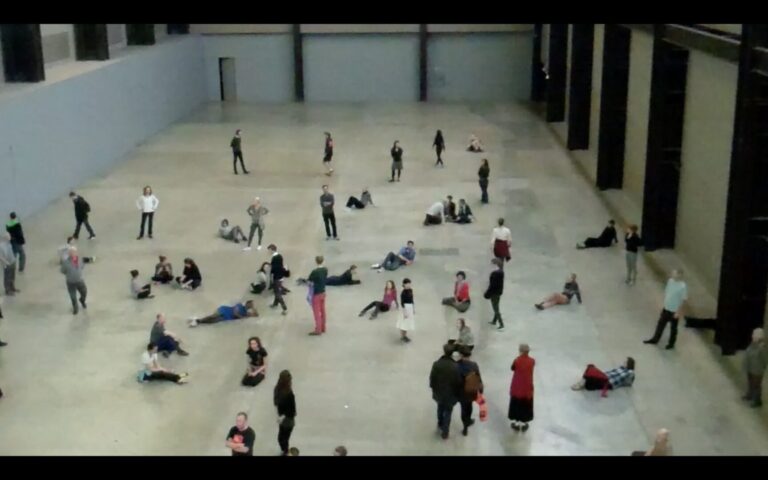
In this article, Katerina Paramana introduces Lateral’s special section, “Political Economy and the Arts,” and its first set of articles, “Performance and Political Economy: Bodies, Politics, and Well-Being,” and provides the rationale and context for this section’s topic. In the face of a multiplicity of world-wide problems and suffering, this special section aims at a reinvestment in desire for change in order to resuscitate and reinvest in hope. The articles therein provide insights into the current relationship between politics, human and non-human bodies, and their well-being (and why it is necessary we take action to change it) which might help us steer the wheel before we drive off the cliff.
The Problems with the Critique of Political Economy in the Arts
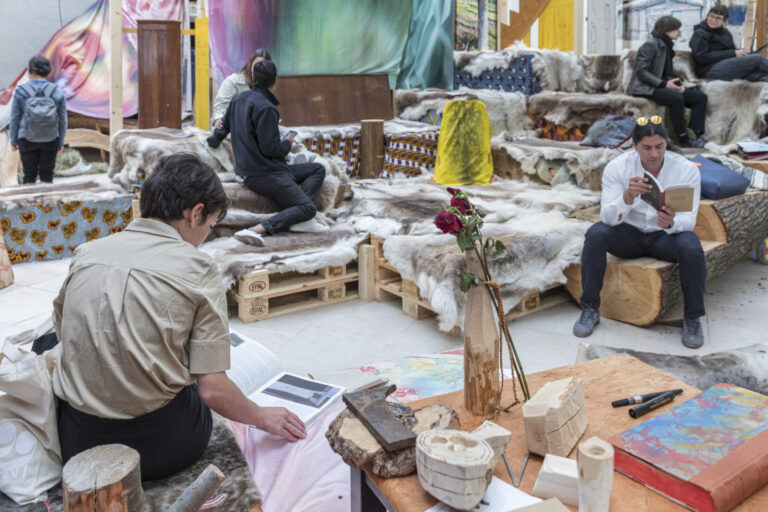
This article attempts to offer a systemic discussion about the paradigm shift away from the neoliberal Washington consensus and its ramifications for the worlds of performing and visual arts. The article first provides an overview of discussions of political economy in the arts, in which the typically speculative arguments are contrasted with sociological and historical knowledge which reveals a limit to them. The article then describes contemporary political economy in the era of post-globalization and makes a few proposals on how the arts can think through it.
Racial Capitalism, Refugee Adjudication, and the Performances of Zama Zama
This essay investigates the category of the refugee as an instantiation of racial capitalism. To illustrate this conjunction, it first examines international law that defines refugees and, then, looks to specific national jurisprudence that accords different recognition to them. The national contexts discussed are the United States, given that the racial discourse there serves as a ground for the most widely known theorization of racial capitalism via Cedric Robinson’s book Black Marxism: The Making of the Black Radical Tradition, and South Africa, where racial capitalism was first coined. Robinson’s work is briefly elaborated in relation to subsequent scholarship that has engaged and extended the concept of racial capitalism, in relation to the particularities of South Africa racialization, and in relation to zama zamas (unregulated miners, often perceived as foreigners who threaten the Rainbow Nation’s stability in various ways). Given limitations of space, the essay uses the overview of juridical regimes and the excursus on Robinson to rethink the category of refugee. Zama zamas and the history of the South African mining sector as it informs understandings of race are posited as a fruitful direction for further research because these phenomena help to extend the entwinement of race and refugee and the implications of Robinson’s text for understanding refugees anew.
“A Currency of Happenstance”
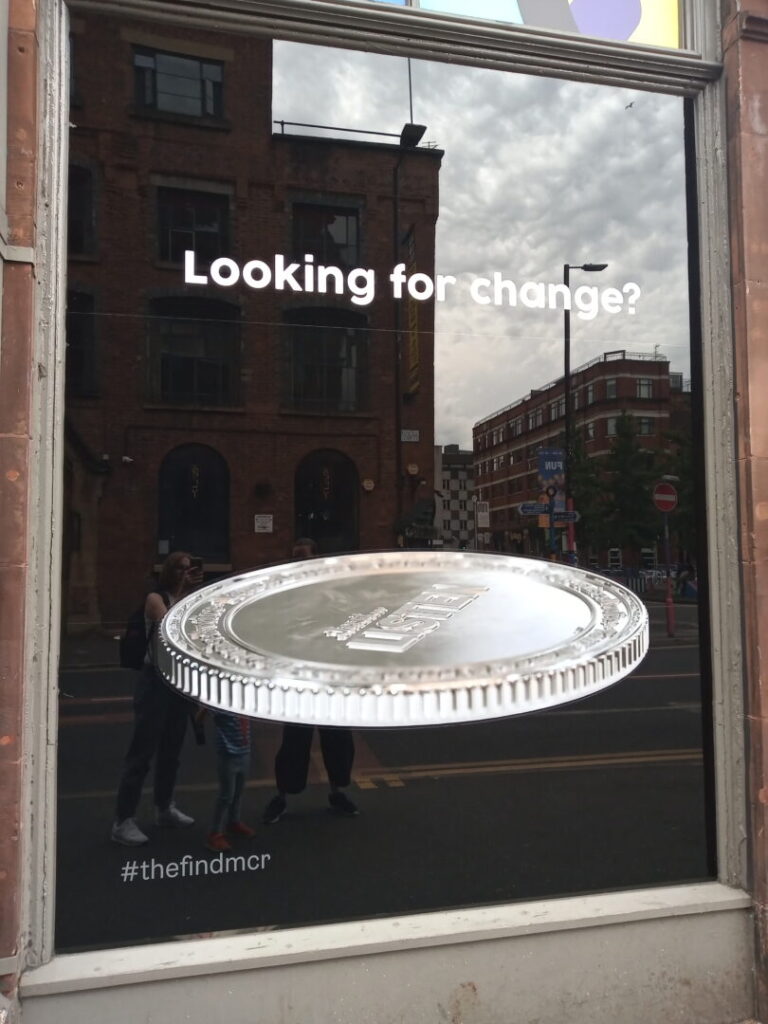
Commissioned by Manchester International Festival, The Find (2023) was a participatory art project by conceptual artist Ryan Gander. It distributed non-monetary coin in public space to create what Gander termed “a currency of happenstance,” engaging chance procedures and choice. This essay discusses The Find’s participatory aesthetics and ethical claims, asking what its engagement with coin might elucidate regarding continuities and changes in cultural and economic life, and contemporary political struggles regarding money.
Young People’s Self-Making in Neoliberal Capitalism: Challenges and Opportunities
This paper charts the development of young people’s self-making in neoliberal capitalism, specifying relationships between their self-making and susceptibility to mental health difficulties as they make their way in neoliberal market society. While neoliberal capitalism provides young people with opportunities to pursue and experiment with diverse identities and ways of being in the world, it also structures their self-making opportunities, by which charting selfhood becomes fertile ground for internalizing mental health problems. Our paper argues that the cultural imperative on young people to attain social status and success in the competitive and achievement-oriented forms of life that inhabit neoliberal capitalism demands that they curate and commodify highly desirable forms of selfhood that can never quite be realized. Endlessly failing to satisfy the conditions of selfhood in neoliberal capitalism, exhausted by the injunction to be more than they have already achieved, young people are socialized into increasingly complex and pressurized neoliberal capitalist cultures which challenge their ability to fulfill both their extrinsic desires for status and identity enhancement and their intrinsic needs for relatedness, belongingness, and self-worth. To conclude our paper, we summarize our main arguments and make some recommendations for promoting a more beneficial relationship between young people and the culture of neoliberal capitalism.
How Vital is Nature? Animated Bodies and Agency in Contemporary Capitalism

This paper brings into conversation two ontologies that depart from the anthropocentric norm: new materialism, represented here by the US vitalist philosopher Jane Bennett, and the animated cosmology common among Indigenous peoples, as an example of which I take Braiding Sweetgrass by the Potawatomi bryologist Robin Wall Kimmerer. I provide exegeses of both philosophies, with respect in particular to the notion of “animation,” noting that the animated sphere is much more extensive for Bennett than for Kimmerer. I then track Bennett’s shift away from environmental ethics. Finally, I relate differences in philosophy to differences with regard to race and racism, with a detailed discussion of Bennett’s tribute to Walt Whitman, and the genocidal elements within his democratic politics.
Without Rethinking Colonialism and Racialization, a Sustainable Future is Not Possible
In this article, I talk about the performances of global capitalism, its relation to colonization and racialization, and the ways it hinders the well-being of vulnerable bodies. An understanding of the relation between post-colonialism and post-socialism is crucial to this discussion. I therefore start from a territory that is no longer conceivable today, namely former Eastern Europe and its post-socialism of 1990. I then proceed to discuss the relation of post-socialism to post-colonialism and capitalism. I conceptualize and discuss a diagram that illustrates the relations between the former East, the West, the North, and the South, and in particular, the relation between labour and capital and between capitalism and colonialism across these territories. I suggest that if we are to dismantle imperialism, that is, terminate capitalist colonialism, we need to rethink the racial/colonial divide and the imperial/colonial divide.
Conscious Delirium of a Traveling Body: The Poetics and Politics of a Creative Practice
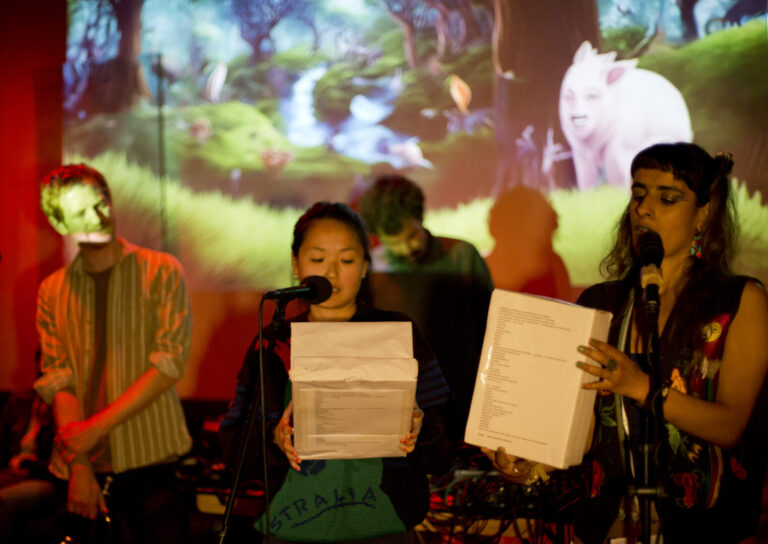
The question of political economy in the arts offers a way into a creative-critical reflection on the challenges associated with navigating identity labels and living a freelance artist’s life pressured to conform to institutional expectations particularly within the UK’s art scene. This piece is a personal account of a body resisting becoming a symbol, of staying conscious of our socio-political landscape and the ongoing Israeli settler-colonialism. I draw on examples from three of my artworks: the collaborative project From the Lips to the Moon, ongoing nights of longform improvised music and poetry in London; In Observance, a performative research and intervention at the United Nations in Geneva, involving archival documents related to Palestine; and Mishandled Archive, which involves dispersing family photographs and documents in public places, accompanied by daily dances. Through these works, this essay asks: How can historical evidence of imperialism and settler-colonialism be absorbed or resisted within the body? How can we transform loss into movement and togetherness? How late is too late as mounds of rubble and bodies multiply?