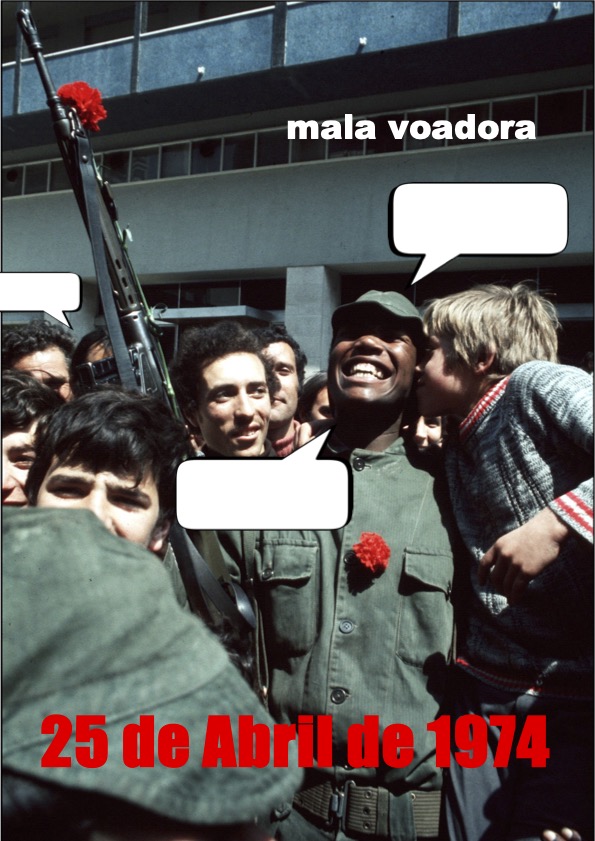
This article proposes the concepts of “brutal” and “gentle” affects as a critical framework to analyze affective economies of freedom in paradoxical times. Drawing on Sara Ahmed’s work on affect, Sruti Bala’s on participation, and Franco Berardi’s on freedom, it argues that freedom emerges not solely as a historical achievement of an inalienable right, but as an embodied experience enhanced by theatrical dispositifs. I consider forms of celebrating, performing, and capturing freedom in paradoxical times, including the staging of the fiftieth anniversary of the Carnation Revolution; the production 25th of April 1974 by Portuguese company Mala Voadora; and The Seagull by Argentinian director Guillermo Cacace. I begin with a discussion of the relationship between populism and notions of freedom, describing the nuanced usage and political capture of the latter to examine its paradoxes in the present. I then examine how these productions critically engage with the paradoxes of freedom and reset the conditions of experience of its affective-sensorium.
Keyword: movement
Nanopolitics: A First Outline of Our Experiments in Movement
The London-based nanopolitics group formed around a desire to think politics with and through the body, organising movement, theatre, and somatic based workshops and discussions. Using the term ‘nanopolitics’ to describe a political engagement that is attentive to the body, the nanopolitics group engage in a first reflection about their project in the text that appears here. They pose a series of questions that emerged from the project and engage in a collective reflection on their work with the body and movement, making a first foray into theorising their practice and its relevance.