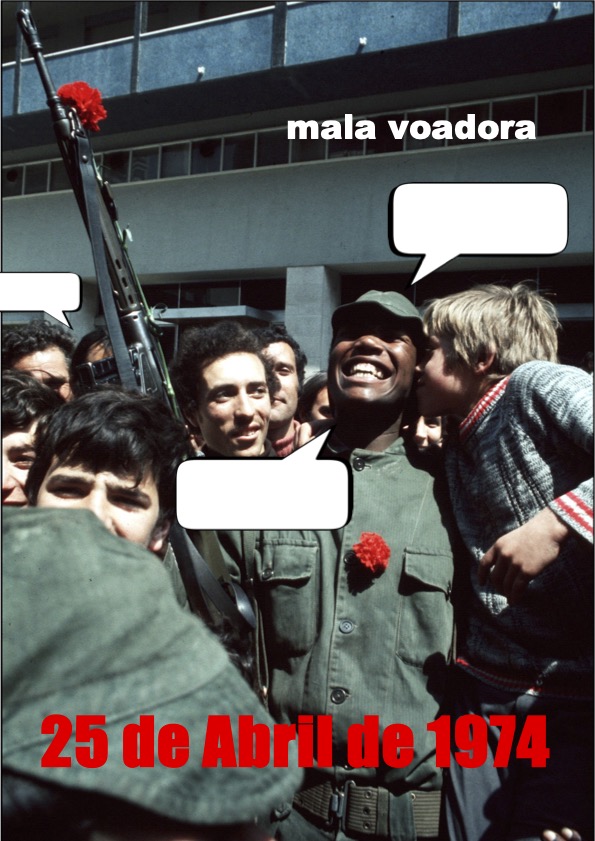
This article proposes the concepts of “brutal” and “gentle” affects as a critical framework to analyze affective economies of freedom in paradoxical times. Drawing on Sara Ahmed’s work on affect, Sruti Bala’s on participation, and Franco Berardi’s on freedom, it argues that freedom emerges not solely as a historical achievement of an inalienable right, but as an embodied experience enhanced by theatrical dispositifs. I consider forms of celebrating, performing, and capturing freedom in paradoxical times, including the staging of the fiftieth anniversary of the Carnation Revolution; the production 25th of April 1974 by Portuguese company Mala Voadora; and The Seagull by Argentinian director Guillermo Cacace. I begin with a discussion of the relationship between populism and notions of freedom, describing the nuanced usage and political capture of the latter to examine its paradoxes in the present. I then examine how these productions critically engage with the paradoxes of freedom and reset the conditions of experience of its affective-sensorium.
Keyword: revolution
Review of Marx for Cats by Leigh Claire La Berge (Duke University Press)
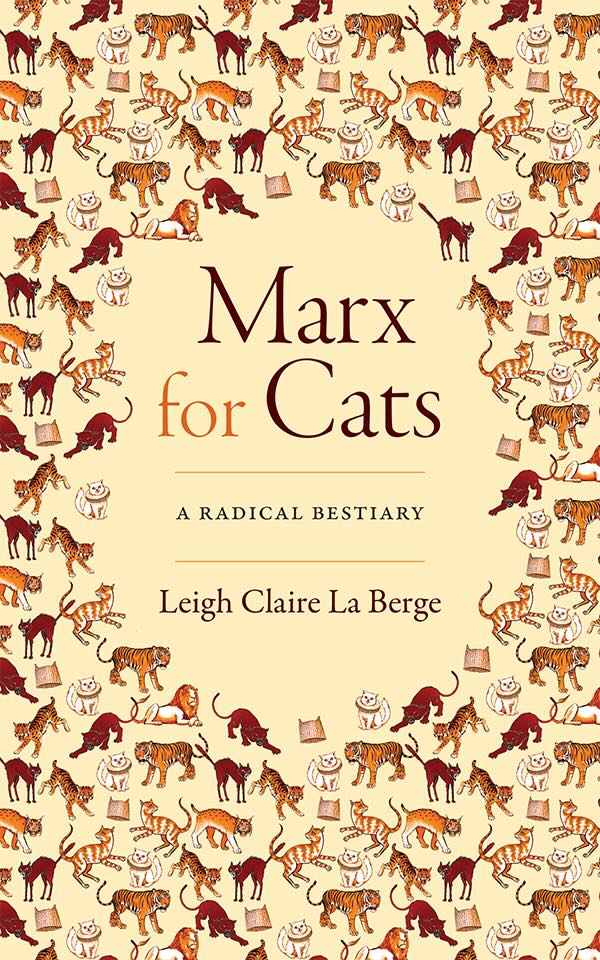
Leigh Claire La Berge’s Marx for Cats reimagines the history of capitalism by analyzing archival documentation about felines. By updating bestiaries to include contemporary criticism of capitalism, La Berge positions cats as the key to an economic revolution. While the title and cover suggest a playful, possibly unserious analysis, La Berge carefully constructs a detailed history from feudalism to capitalism to point readers toward an animal-friendly future that reconsiders power structures and dares to imagine a world beyond capitalism.