
Grief is typically portrayed as an individual experience that is a response to loss and provides the basis for personal growth; grief is something to work through, and, ideally, to benefit from, and represents a state change. But might it be possible to conceptualize grief of the future, a subjunctive grief that is based in speculation about change that brings that change into the present? The subjunctive invokes the wished for, the imagined, and the possible, and subjunctive grief serves to work through the experience of the future in the present. Focusing on debates around medical aid in dying and the parenting of a child with childhood psychosis, I consider grief in the subjunctive tense and how anticipation of change affects practices in the present. Attending to subjunctive grief provides an affective methodology that demonstrates interdependency and how conceptions of intimacy, love, and caregiving shape the experience of grief in the future tense.
Keyword: affect theory
What Should We Do with Our Depressions? Feelings, Biology, Politics

The aim of this contribution is to explore some of the ways in which cultural studies, and more specifically affect studies and feminist new materialisms, have dealt with the problem of depression. My main argument is that, through these approaches and discussions, depression becomes a powerful site to delve into crucial controversies within affect theory and new materialisms, such as the distinction between affect and emotions and the related dichotomy between biology and culture, or the proper place of critique in contemporary thought. One glaring entry point to these controversies is the topic of antidepressants. In the 1990s, the so-called Decade of the Brain, a new generation of antidepressants took hold of the public imagination in the United States: the selective serotonin reuptake inhibitors, SSRIs, with Prozac (fluoxetine) on top. The 1990s also witnessed the emergence of both affect theory and new materialisms, and with them the shaping of some deep and enduring controversies. Indeed, almost twenty years later, these entangled debates were reenacted in two books: Ann Cvetkovich’s Depression: A Public Feeling (2012), originally prompted as a critical response to depression memoirs, and Elizabeth A. Wilson’s Gut Feminism (2015), strongly critical of what she considers to be the usual critique of antidepressants in cultural studies. Are antidepressants taking us closer to the true psychosomatic nature of bad feelings, or are they an insidious form of biopower? How should cultural studies, feminist, and queer work approach them? What do they say about depression and negative feelings in general? Are our feelings of distress mainly visceral and biological, or are they socially and culturally determined, or both? And how? How do the 1990s and 2010s controversies live on today?
Review of Gestures of Concern by Chris Ingraham (Duke University Press)
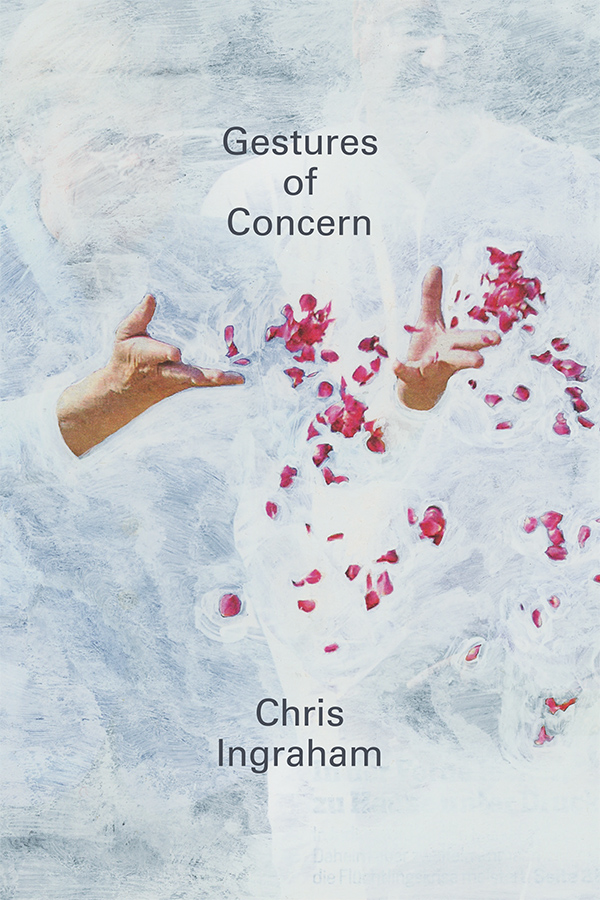
Chris Ingraham’s Gestures of Concern considers how affective communities can be built by and through concerned gestures. His analysis of the political power of a range of these gestures—from the small tokens of get-well cards to the political protests against shuttered public resources such as libraries—emphasizes their affect as much as their action. Ingraham pays attention to the background of concerned gestures that are political, aesthetic, and community-based, and his analysis of their efficacy and their impact draws readers to consider different kinds of critical resistance in the face of growing social disparities.