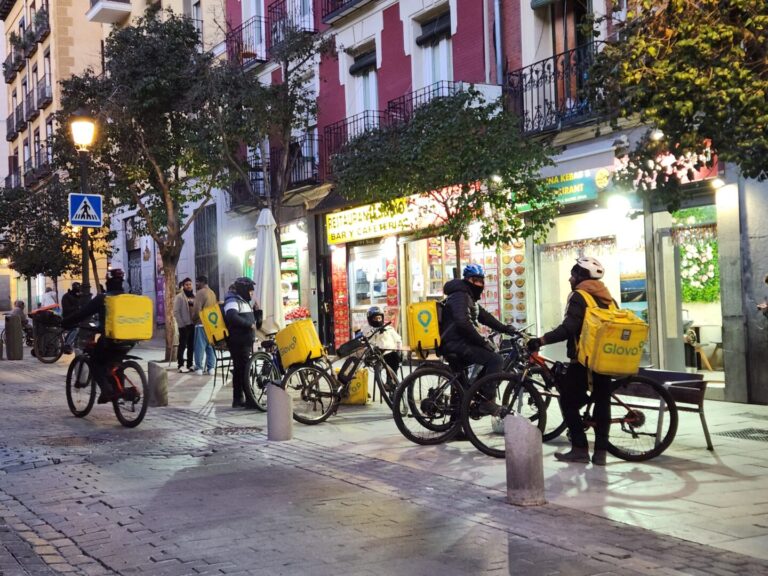
Bicycle couriers are key contributors to urban food delivery platforms. This article outlines the multiple and uneven ways in which delivery riders are “put to work” in the platform economy. Using the vignette of a single delivery by a bicycle courier working in Los Angeles, I illustrate some of the processes contained in platform labor. By breaking down in detail the economics behind platform food delivery, which is commonly performed at a loss, other forms of accumulating value beyond the delivery itself, such as being available, contributing advertising, and generating data become visible. Finally, exploring the history of the sandwich on one hand and the practice of employing human billboards, called “sandwichmen,” on the other helps highlight the ways in and conditions under which bicycle delivery riders are being put to work. Among other contributions, I conclude that bicycle couriers are the twenty-first century’s sandwichmen in both senses: delivering sandwiches to the wealthy and human billboards traversing urban space.
Keyword: gig work
Making Live through the Gig: The Case of Comfort Taxis in Singapore

Against the scholarly emphasis on precariousness, this article focuses on how gig work in 1970s Singapore was developed with the specific vision of enabling life for the working-class Singaporean family-man. From 1970 to 1993, the taxi company Comfort invested its operations with a powerful vision of the transformative potentials of taxi-driving labor. The gig work of taxis was made to change the work ethic of men, creating workers and fathers who could advance class mobility, nation-building, and the family, raising children who would become ideal workers of the future. Such hopes, however, still relied upon the insecurity of the gig to force the men into adherence. Entangled with patriarchy, nationalism, and familialism, this article examines the compromises exacted through the gig’s capacity to make live, and analyses how Comfort’s experiment has left a legacy in the ways that platformed gig work is governed today, which needs engagement and revision.