
This article interrogates the visual and political logics that make black protest intelligible within modern regimes of political appearance. Focusing on the Black Lives Matter movement and the 2020 Minneapolis uprising, the essay draws on Afropessimist and psychoanalytic theory to examine how the riot unsettles the frameworks that render Blackness legible only through vulnerability, loss, or redemptive spectacle. Against interpretations that recuperate black protest as democratic renewal or moral claim, it theorizes black protest as a site of rupture rather than representation, and as an encounter that exposes the limits of visibility politics and gestures toward a mode of relation unbound from recognition, redemption, or the demand to appear.
Keyword: psychoanalysis
Mind the Gab: A Racial Rhetorical Criticism of an “Alt-Tech” Complaint Against “Big Tech” Content Moderation
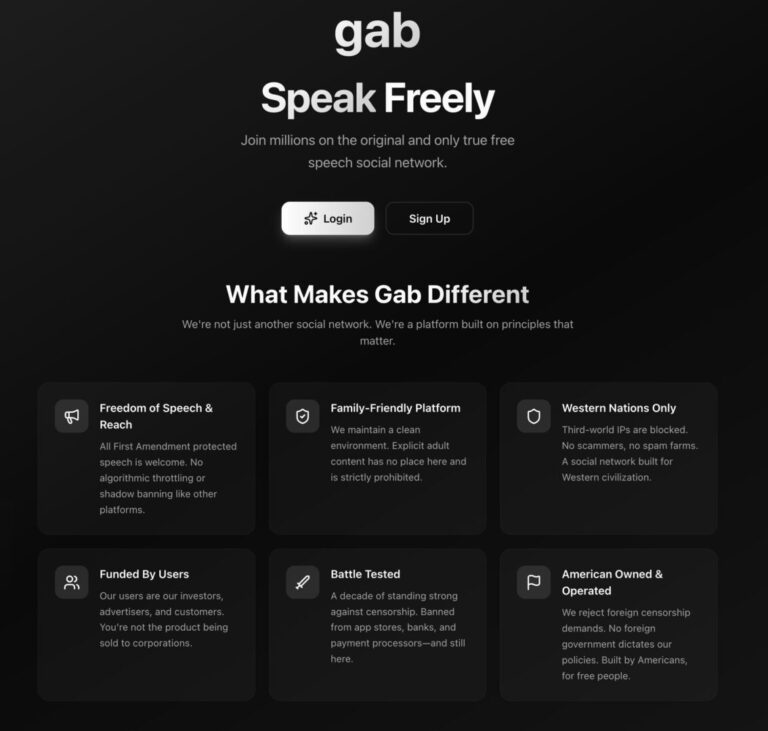
This article analyzes the role of race in the branding rhetoric of the “free speech software company” Gab AI Inc. as found in the X/Twitter and blog posts promoting its products. This analysis aims to assess conservative anxieties about content moderation which drive the creation of alternative social media platforms like Gab. The article argues that the point of stasis, or core set of issues in a debate, in Gab’s branding rhetoric between the company and its audience is a shared fantasy of white enslavement/abjection by the content moderation policies of “Big Tech” companies. This point of stasis is extended through three entangled racialized commonplaces: post-racial incorporation of Blackness, nostalgia for settler conquest, and techno-orientalist paranoia. The article analyzes the reciprocal relationship between these commonplaces and the point of stasis in Gab’s branding rhetoric and concludes by reflecting on what Gab’s aspiration towards white sovereignty in the platform economy entails for contemporary anticolonial and abolitionist praxis and scholarship on content moderation and alternative social media platforms.
Subjunctive Grief: Affective Methodologies for Articulating Futures

Grief is typically portrayed as an individual experience that is a response to loss and provides the basis for personal growth; grief is something to work through, and, ideally, to benefit from, and represents a state change. But might it be possible to conceptualize grief of the future, a subjunctive grief that is based in speculation about change that brings that change into the present? The subjunctive invokes the wished for, the imagined, and the possible, and subjunctive grief serves to work through the experience of the future in the present. Focusing on debates around medical aid in dying and the parenting of a child with childhood psychosis, I consider grief in the subjunctive tense and how anticipation of change affects practices in the present. Attending to subjunctive grief provides an affective methodology that demonstrates interdependency and how conceptions of intimacy, love, and caregiving shape the experience of grief in the future tense.