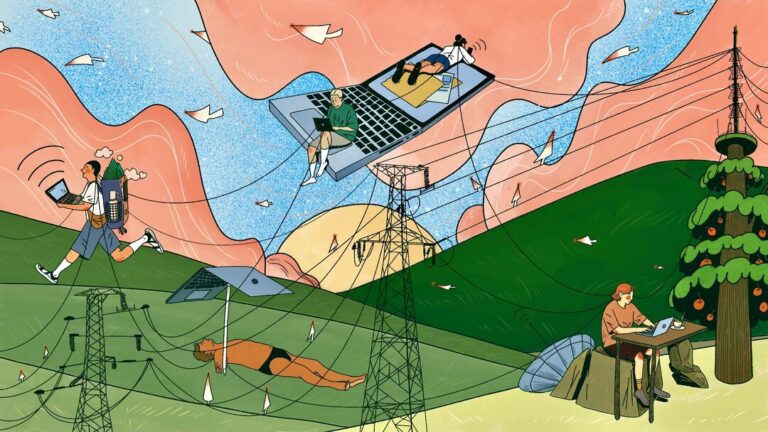
This piece introduces a special section on digital platforms and agency. It unpacks the tension between, on the one hand, the imposition of digital platforms upon cultures by immensely-powerful technology companies, and on the other hand, the emergence of possibilities as people work, play, and express themselves on platforms. Cultural studies, which has always concerned itself with structure, culture, and agency, is well-positioned to work through this tension in order to orient scholars of platform studies toward radical critique and political action. The introduction situates the invited works of “Digital Platforms and Agency” in this context, elaborates upon cultural studies’ charge toward the emerging field of platform studies, and summarizes the individual and collective contributions of the special section authors.
Digital Platforms and Agency
Edited by Reed Van Schenck and Elaine Venter
New platforms always invite new subversions of human agency, from Facebook spying on us to AI taking our jobs. This special section invited scholars in media and cultural studies to interrogate that tension.
The Platform-Enabled Durability of Colonial Racial Capitalism in Washington DC’s Wards 7 and 8

This article explores how platforms reinforce structures of racism and coloniality in Washington DC’s majority-Black Ward 7 and Ward 8. Drawing on ethnographic research with Black hosts who short-term rent on Airbnb, I follow how Black residents’ imaginaries of space are superseded by platform-enabled white users’ imaginaries through Airbnb’s “Location” star ratings. This rating draws down hosts’ overall ratings based on guests’ racist experiences of feeling “unsafe” in majority-Black working-class neighborhoods—resulting in lower visibility on Airbnb’s app, decreased bookings, and financial losses. Using a geopolitical conception of racism on platforms which I call the Colonial Racial Capitalist Stack (CRCStack), I show how these ratings enable platform-mediated conceptions of space and land that discursively reinforce racist depictions of Wards 7 and 8. I read Benjamin Bratton’s design concept of “the Stack” through Ruha Benjamin’s analytic of “discriminatory design” to argue that platforms are key sites for the exploitation and ongoing dispossession of land and labor under systems of racism, settler and franchise colonialisms, and capitalism across a variety of historical and geographical contexts, as described by Koshy, et. al. Through an exploration of the Stack’s layers (User/Interface/Address, City/Cloud, and Earth), I argue that the CRCStack makes racism, as a social technology, more durable by entrenching as a racialized geopolitical ordering of the world into the life worlds of Black people living in Wards 7 and 8. Durability is a key metric by which platforms are measured. Platforms that are unable to cultivate durability—whether by cultivating a loyal user community, harnessing the network effect, or technological necessity—are quickly replaced by other platforms. Reading technology as a racializing and racialized tool helps us understand how racism, as a system, is innovated and entrenched through technological means. I demonstrate how platforms act as the latest technological innovation created to extend the durability of existing systems of racialization and colonization that are required for racial capitalist economies to function. I theorize how racism on the CRCStack operates at multiple overlapping layers, focusing specifically on how discrimination on Airbnb impacts users, neighborhoods, cities, and the wider real estate market. In doing so, I not only explore how platform-enabled racism restricts Black residents’ spatial imaginaries but also trace how Black hosts push back against the CRCStack through Airbnb Support complaints, grassroots practices of negotiation with racist guests, and social movement actions in conjunction with state authorities. I conclude by thinking through what dismantling the CRCStack would require for platform corporations like Airbnb, its users, and city residents.
Searching for Blackness: #BlackGirlPilates and Racialized Hashtags as Agentic Praxis on TikTok

This paper explores how Black women on TikTok activate platform affordances to make themselves visible within the search engine. Specifically, we offer #BlackGirlPilates as a case study, given the increased interest following socialite Lori Harvey’s endorsement of the exercise at the 2022 Met Gala. Both Pilates and Western Technoculture have been studied in regards to its centrality of whiteness as normative. Thus, we conduct a comparative analysis of #pilates and #BlackGirlPilates in TikTok’s search engine to see how the addition of a racial qualifier changes results. Our analysis reveals that the “anonymous” user within a search for content on Pilates is white, demonstrating that the use of racial qualifiers in hashtags intentionally marks visibility around racial identity. We argue that Black women’s use of hashtags in this way is an agentic praxis and form of digital Black feminism wherein they can circumvent white perspectives to create culturally relevant results within the platform. #BlackGirlPilates constructs a community that centers and supports Black women’s experience and expertise.
Alexa’s Monstrous Agency: The Horror of the Digital Voice Assistant

First released by Amazon in 2014, the digital voice assistant Alexa allows users to connect and automate their smart home devices through the sound of their voice. Alexa’s automation of domestic spaces comes, however, with its own set of anxieties. How much data does Alexa sense and capture, and how is this data used? How is agency distributed between humans and the machines surrounding them? Is Alexa an empowering tool, or an invasion of privacy that undermines human agency? In this paper, we trace the ways in which the anxieties surrounding the blurred boundaries of human and non-human agencies introduced by the Alexa interface are represented and negotiated across different narrative forms and archives. Firstly, we turn to the corporate promotional media produced by Amazon in selling its assistant. Secondly, we analyze Alexa’s representation in the web horror genre known as “creepypasta”—first-person narratives written in and for online communities. We frame the interplay between these archives as an entangled narrative field of contestation, which we engage with through a practice of diffractive reading. The images and ideas of each narrative corpus adapt to and are affected by the materials and tropes forwarded by the other. As a result of this interplay, Alexa becomes a monstrous placeholder for the anxieties of its users, whose erratic and pervasive agency endangers every facet of their existence. The analysis of these narratives provides valuable insights into the anxieties surrounding the ongoing encroachment of digital platforms into the lives of humans.
The Platformized Matchmaking Labor: What Do Prosumers Do in Dating Apps
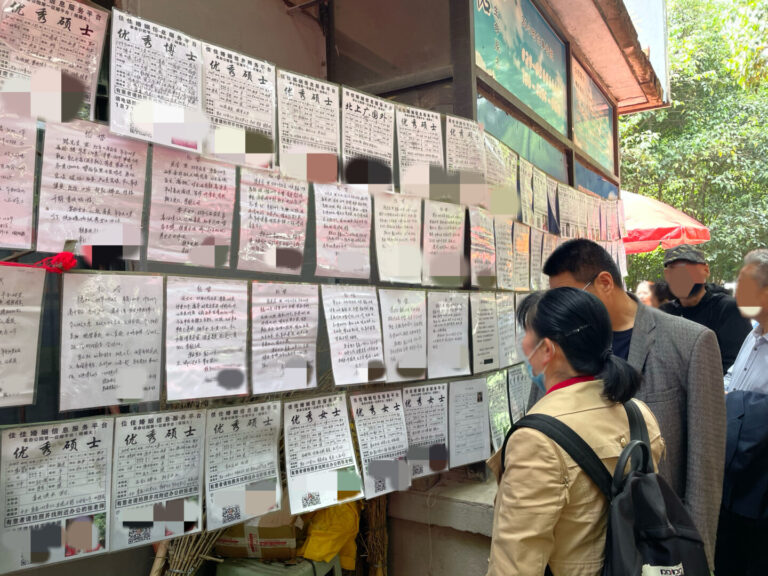
Across a wide range of cultural and socio-political contexts, matchmaking has been valued as a legitimate profession that involves labor and remuneration in cultures. It represents the long-lasting commercialization of effective intimacy building. In the era of algorithms and platforms,the emergence of modern matchmaking, such as in mobile dating apps (MDAs), showcases the impact of platformization and suggests that traditional matchmaking labor relations have shifted in MDAs and modern matchmaking approaches. Thus, with this paper, we ask in what ways contemporary dating practices essentially reinterpret the dated pattern of matchmaking in digital environments and shift its labor aspects. We aim to coin a new category of labor that includes the interplay of traditional cultural matchmaking practices in the concrete social-cultural context of China and the platformized infrastructures for dating. Through this, we surface new dynamics in digital labor and the commercialization of intimacy. Our research underlines the need to study intimate media’s role in its specific cultural contexts.
“Help Them Keep Doing What They’re Doing”: Intersections of Agency, Affect, and Capital in the Twitch Subscription System

With live streaming capabilities becoming increasingly important to the success of social media applications and representing central modes of engagement for popular digital platforms, the economic and socio-political functions of live streaming are critical to an understanding of changing new media landscapes. The existing scholarship on Twitch and similar live streaming platforms has demonstrated the importance of both financial investments and affective labor to these digital spaces. Building from existing scholarship, this article will apply a critical-cultural lens to analyze the ways in which Twitch’s interface mediates users’ agency through mechanics centered on affect, capital, and their intersections. How do emotional intimacies manifest across the design of the Twitch subscription system? How does Twitch incentivize live streaming subscriptions for both viewers and creators via design choices? What does this mean for an understanding of the affective investments that users have in live streaming more broadly speaking? Through an examination of the design-based affordances of live streaming on Twitch, I ask how these capabilities (to pay streamers via subscriptions and gift systems as well as to follow, comment, and otherwise engage) reflect the varying ways that intimacy is both created and understood in live streaming contexts. This work will contribute to an understanding of the affective investments that users have, express, and create across various new media platforms. It will particularly focus on how affective labor is both compensated and obfuscated via systems like the Twitch subscription.
Call the (Bot-)Police: User-Led Platform Governance of “(In)Authenticity” on Instagram

The pervasive practice of botting by using fame-enhancing bots and operating porn bots, and Instagram’s opaque and unreliable authenticity governance, has evoked human Instagram users to actively police and govern botting and other bot activity. Botting describes repetitive and quantitative posting, messaging and engaging on social media platforms to provoke reciprocal engagement. Running bot police accounts, Instagram users engage and try to play an active role in the authenticity governance process of Instagram. The article investigates why and how Instagram users govern two types of “inauthentic” Instabots, which concentrate on detecting automated interactions by fame-enhancing bots and reporting porn bots. Two case studies of three Instagram accounts and their content show different approaches to user-led authenticity governance and how these profiles perceive themselves as custodians of “authenticity.” The key findings reveal that their activities of pillorying and collective flagging are considered digital vigilantism that potentially cause harm to other users. Furthermore, they show mechanisms of peer surveillance and mutual moderation on a user level, and complex power asymmetries between the platform company, its moderation systems, advertisers, and its users.
Mind the Gab: A Racial Rhetorical Criticism of an “Alt-Tech” Complaint Against “Big Tech” Content Moderation
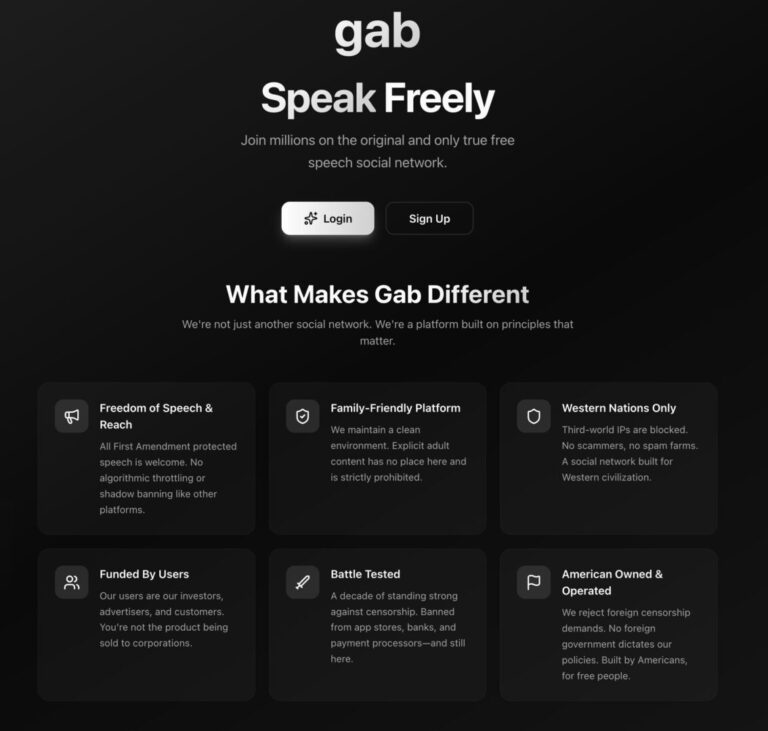
This article analyzes the role of race in the branding rhetoric of the “free speech software company” Gab AI Inc. as found in the X/Twitter and blog posts promoting its products. This analysis aims to assess conservative anxieties about content moderation which drive the creation of alternative social media platforms like Gab. The article argues that the point of stasis, or core set of issues in a debate, in Gab’s branding rhetoric between the company and its audience is a shared fantasy of white enslavement/abjection by the content moderation policies of “Big Tech” companies. This point of stasis is extended through three entangled racialized commonplaces: post-racial incorporation of Blackness, nostalgia for settler conquest, and techno-orientalist paranoia. The article analyzes the reciprocal relationship between these commonplaces and the point of stasis in Gab’s branding rhetoric and concludes by reflecting on what Gab’s aspiration towards white sovereignty in the platform economy entails for contemporary anticolonial and abolitionist praxis and scholarship on content moderation and alternative social media platforms.
Digital Agents: The New Politics of Recognition in Contemporary “Post-Race” Fiction
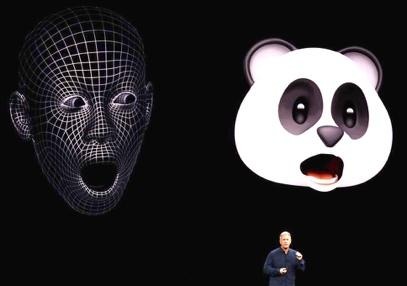
What are the new racial politics of individual agency and collective recognition in a putatively “post-race” era defined, in large part, by platform capitalism’s increasingly pervasive technologies for identity management and securitization? This essay begins with Apple’s highly publicized 2016 counterterrorism dispute with the FBI and the company’s subsequent marketing campaign for facial recognition-based password encryption (Face ID) before turning at length to recent anglophone novels of ethnicity—by Bharati Mukherjee, Mohsin Hamid, and Teju Cole—that lend narrative expansion to the “post-racial” racializing logics that Apple’s litigation and campaign materials reveal. A cathexis for Big Tech’s identity politics as a whole, Apple’s engagement with debates over personal and national security adumbrates an intensified if deeply familiar neoliberal conception of racial individualism implicitly opposed to the coarse, impersonal racial rubrics presumed to operate across security’s bureaucratic institutions. Condensed by “the most unforgettable, magical password ever created: your face,” security, in Face ID’s schema, emerges not as the controversial task of law enforcement but as the innate (read: magical) property of a given subject’s racial-identitarian uniqueness, a property whose protections obtain not from the state’s overreaching vigilance but rather from the technical sophistication (read: magic) of Apple’s biometric sensor, able to sublimate that subject’s racial singularity into digital form. Apple thus marks out a “post-racial” racial recognition paradigm cast along two vectors: the first, a highly particularized vector of “post-racial” individualism provisioned by what Alexander Galloway describes as platform capitalism’s “new customized micropolitics of identity management,” where subjects of all races enjoy the illusion of an expansive political agency; the second, a highly reductive, re-racializing vector that, as Erica Edwards suggests, collapses Black and Brown subjects under post-9/11 rubrics of threat, fear, and terror by data-driven processes of “strategic characterization” and “pattern of life” profiling that progressively transmute individual human agents into digital racial types. Contemporaneous novels of ethnicity pursue versions of that “post-racial” vectorization scheme. Featuring Black and Brown protagonists whose racial identities disappear, mutate, and resurface as they move between shifting, differentiated zones of political inclusion and exclusion, within and across increasingly flexible national borders, and in and out of new technologies of algorithmic governance and visual securitization, novels by Mukherjee, Hamid, and Cole depict in turn race’s digital obfuscation and its hypervisibility, its subsumption within tech-intensified neoliberal market logics of individual preference, qualitative uniqueness, and customizability, and its monolithic resurgence at the militarized borders of the nation. Tracing out a literary protocol of “post-racial” race-making that belies these vectors’ opposition and foregrounds instead their mutual reinforcement of US empire and global white supremacy, these novels subsequently compel a “post-racial” reading practice in which depth reading—reading for race’s ontological invalidity—paradoxically uncovers and renews its mimetic coordinates. At bottom, they profess the digital intensification of what Madhu Dubey calls race’s “conceptual instability” in a putatively “post-race” era for which platform capitalism’s relentlessly individualizing forms of agential capacity are deployed as compensation for race’s biological retrenchment across the range of US empire’s global securitization projects.