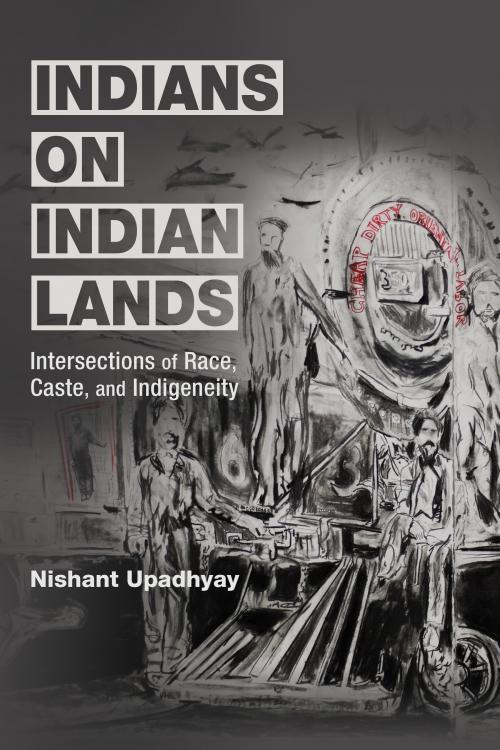
Nishant Upadhyay’s Indians on Indian Lands bridges settler colonial studies and South Asian diasporic studies to examine the complex, often contradictory position of dominant-caste Indian diasporas on Indigenous lands in Canada. Rejecting reductive frameworks that cast diasporic Indians solely as settlers, Upadhyay foregrounds the entangled relationalities of caste, race, labor, and intimacy that structure Indian presence on occupied lands. Through interdisciplinary methods, including ethnography, literary analysis, and archival research, the book examines how caste and brahminism operate transnationally, shaping diasporic complicity in settler colonial projects. From critiques of dominant-caste erasures in the settler academy to analyses of labor and sexual intimacies between Indians and Indigenous peoples, Upadhyay shows how caste and hindutva ideologies reproduce colonial hierarchies abroad. Yet, the book also gestures toward decolonial futures, highlighting diasporic solidarities and anti-caste praxes that disrupt these complicities. Indians on Indian Lands offers a critical and urgent intervention into how dominant-caste South Asians occupy, negotiate, and can potentially transform their roles on stolen land.
Articles by Tapaswinee Mitra
Tapaswinee is a doctoral candidate in the Women’s, Gender, and Sexuality Studies department at the University of Maryland, College Park. Their research interests lie at the intersection of settler-colonial studies, critical Kashmir Studies, and anti-caste studies. They have pursued these interests through interdisciplinary research methods that include oral history and the study of creative practice (poetry) as resistance. Their proposed PhD project explores the relationship between settler colonialism and the rise of religious fundamentalism in the socio-political context of contemporary South Asia.