Launching from recent interest in disabled people’s livelihoods in the context of global Northern societies, this paper theorizes interview descriptions of livelihoods from 20 disabled, mad, and Deaf artists in Ontario, Canada. Drawing on a critical sustainable livelihoods framework, we observe that the lives of disabled artists play out in an ethos of neoliberal-ableism that has resulted in an accelerated impetus toward death for disabled people, specifically through the advancement of Medical Assistance in Dying (MAiD). Interviews reveal themes of disposability, dignity, and art-as-resistance that are deeply entrenched in disabled artists’ livelihood experiences and the complexities of their artistry and involvement in wider, contemporary disability arts communities. This paper responds to Stienstra and Lee’s 2019 call in Societies to begin “widening our gaze in concrete terms” as we explore disabled people’s livelihoods, contending that discussions of disabled artists’ livelihoods must be situated in the social and material realities of their current contexts. We argue that the lived experiences of disabled people in Canada are also death experiences, and therefore a sustainable livelihoods approach to disabled artists’ experiences must account for Canada’s necropolitical realities.
Keyword: artists
“Up for Grabs”: Agency, Praxis, and the Politics of Early Digital Art
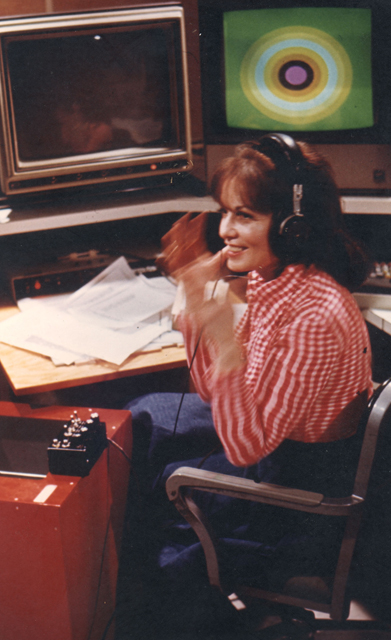
In its infancy, digital art was, as artist and writer Anne M. Spalter enthusiastically put it, “up for grabs.” But how did women artists overcome the fallacy that computer technology was inherently masculine? And why did computing become a kind of sanctuary for some women artists? I will show that the indeterminacy and flux that permitted freer agency, was reflected in the computing field as a whole. Over time, anti-computer sentiment, which affected all artists using the medium, would prove so pervasive that it often eclipsed the sexism later suffered by women.