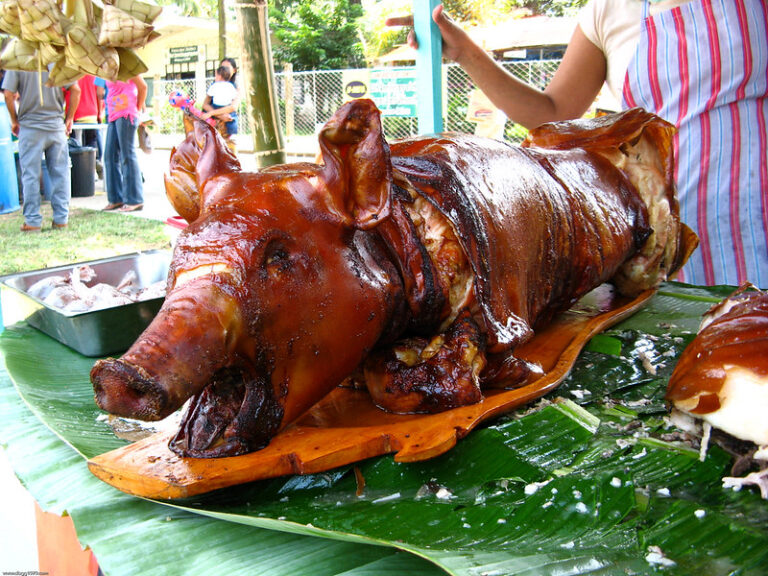
In its depiction of interracial, international marriage, the reality television show 90 Day Fiancé has become an object of morbid fascination to US and global audiences alike. Featured prevalently in the series, couples consisting of white US men and Filipina women constitute a recurring motif through which 90 Day Fiancé solidifies the institution of marriage as a locus for creating and enforcing politics of global capital, heteronormative gender, racialization, and imperialism. This article focuses on the depiction of a couple, Larry and Jenny, as one example of how the series restages the abusive colonial relation between the US and the Philippines through the marriage institution. Further, the figure of the Filipina is rendered along a spectrum of uncivilized animalism vs. nationalist caregiving—that which the US white male subject defines himself against. Following scholarship in Filipinx studies, visual culture, and postcolonial studies, I argue that 90 Day Fiancé extends occupation- and Cold War-era rhetorics of sentimentality and nationalism into the current globalized moment. Thus, I offer unsentimental decoding as a method of reading, viewing, and interpreting Western media that resists the recuperative logics of neoliberalism, (neo)colonialism, and historical erasure.
Keyword: Asian American
Review of Making the Human: Race, Allegory, and Asian Americans by Corinne Mitsuye Sugino (Rutgers University Press)
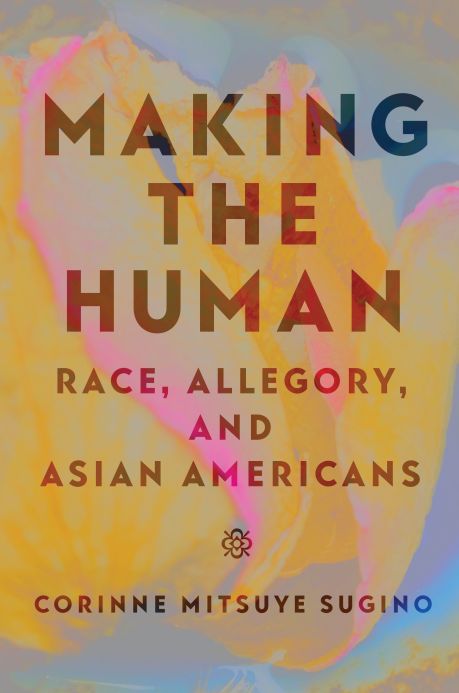
Corinne Mitsuye Sugino’s Making the Human: Race, Allegory, and Asian Americans theorizes how Asian Americans are constructed and made legible through cultural narratives to shore up normative European colonial whiteness, or what Sugino calls “Western Man.” This process happens through “racial allegory,” or discourses that narrativize racial difference, often by making distinctions between the human/inhuman or “in/animacies”; these allegories in turn work to reproduce power. Further, because Western Man is founded on anti-Blackness, Sugino demonstrates how Asian American racialization is intimately tied to anti-Black violence. By focusing on the process of Asian American legibilization itself, Sugino sidesteps portraying an accurate or “authentic” Asian America; instead, Making the Human takes up the relationship between discourse and materiality, centering the question of what narratives around Asian Americans do, create, and enact. Making the Human offers to scholars across multiple fields a significant and novel theory to understand Asian American racialization and its imbrication in complex vectors of power.
Review of Constellating Home: Trans and Queer Asian American Rhetorics by V. Jo Hsu (The Ohio State University Press)
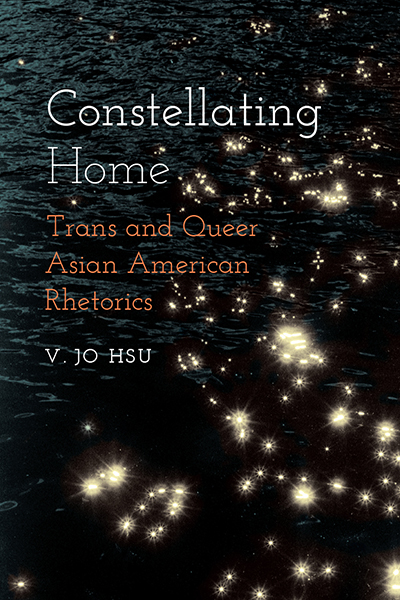
Constellating Home: Trans and Queer Asian American Rhetorics by V. Jo Hsu examines how queer and trans Asian American (QTAPI) individuals have reshaped the narratives around their belonging in the United States or elsewhere. Hsu recognizes the ways pervasive narratives like the model minority myth have imbued the meaning of Asian American belonging with capitalist, heteronormative, ableist, racist, and patriarchal notions. Exploring oral histories, visual representations, essays, and numerous other forms of rhetoric, Hsu engages in “diasporic listening,” a method that unpacks how QTAPI individuals have wrestled with these pervasive narratives and found ways of redefining their belonging. By focusing on the stories of trans, nonbinary, disabled, and other minoritized groups within the Asian American diaspora, Hsu shows how these diverse and individual stories contribute more robust meaning around being and belonging as an Asian American.
Review of Ocean Passages: Navigating Pacific Islander and Asian American Literatures by Erin Suzuki (Temple University Press)
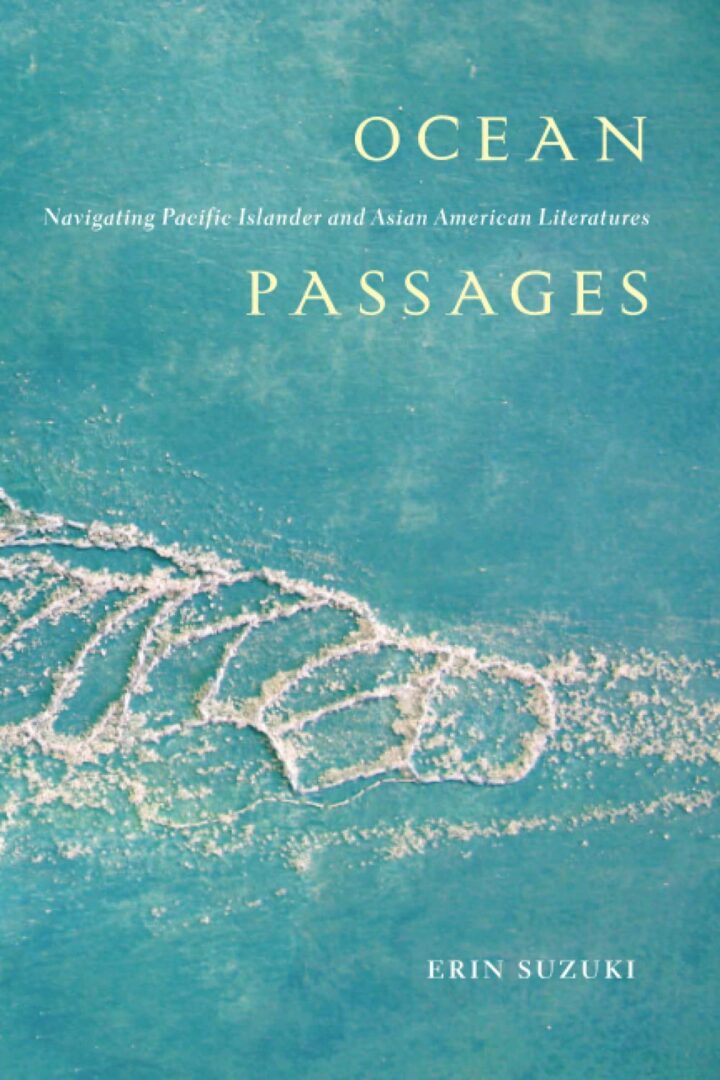
Erin Suzuki’s Ocean Passages is a sustained analysis of how various narratives of “ocean passages” disrupt and revise hegemonic constructions of the Pacific. Through analyses of contemporary Indigenous Pacific and Asian American literatures, Suzuki demonstrates what new paradigms can emerge by bringing Asian and Pacific Islander passages across the same sea into critical relationality.
Multicultural Redemption: Crazy Rich Asians and the Politics of Representation
This essay examines the film Crazy Rich Asians and its surrounding celebratory discourse in order to consider the relationship between multicultural media production and contemporary power dynamics. Crazy Rich Asians has been exalted by the public as a win for diversity, representation, and racial progress. Yet the film is not an anomaly but part of a larger trend in mainstream U.S. television and film that have begun to proliferate shows with “diverse” casts and “progressive” storylines such as Black Panther, Master of None, and To All the Boys I’ve Loved Before, among others. I argue that the contemporary multicultural era has given rise to a common narrative of racial reconciliation, in which inclusion within hierarchy is rendered synonymous with redemption from racial violence. I term this narrative a “multicultural redemption narrative,” and suggest Crazy Rich Asians illuminates how it works. Specifically, this narrative does the discursive and ideological work of constraining the imaginative boundaries of liberation, such that liberation can only be imagined as wielding the very systems of oppression one seeks to escape.