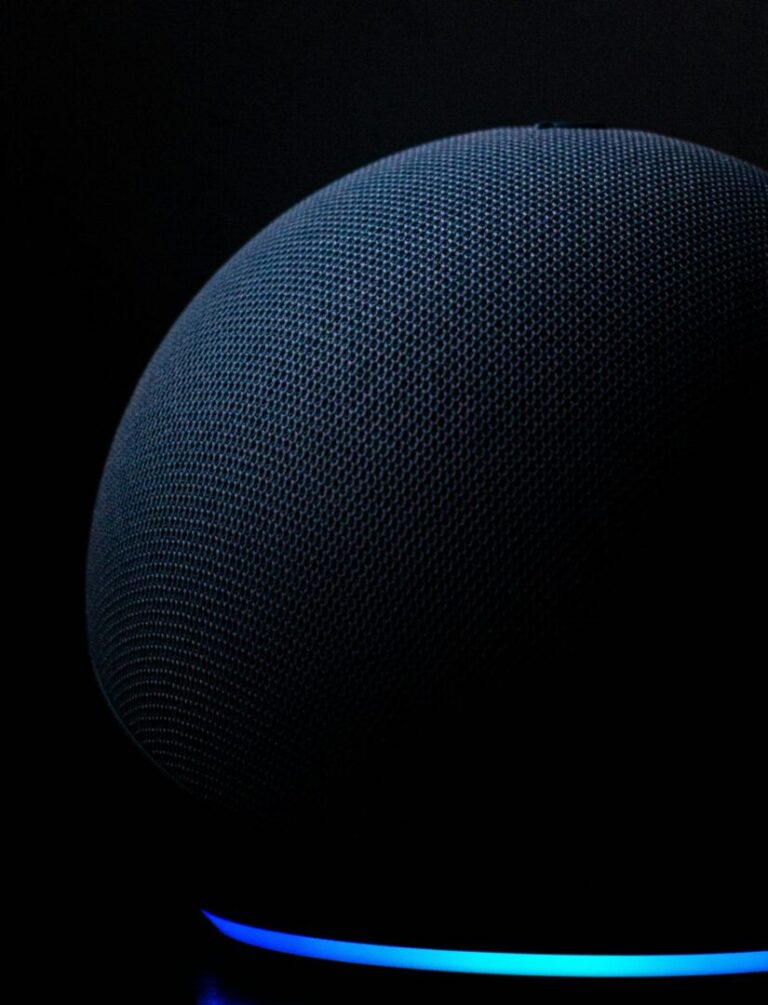
First released by Amazon in 2014, the digital voice assistant Alexa allows users to connect and automate their smart home devices through the sound of their voice. Alexa’s automation of domestic spaces comes, however, with its own set of anxieties. How much data does Alexa sense and capture, and how is this data used? How is agency distributed between humans and the machines surrounding them? Is Alexa an empowering tool, or an invasion of privacy that undermines human agency? In this paper, we trace the ways in which the anxieties surrounding the blurred boundaries of human and non-human agencies introduced by the Alexa interface are represented and negotiated across different narrative forms and archives. Firstly, we turn to the corporate promotional media produced by Amazon in selling its assistant. Secondly, we analyze Alexa’s representation in the web horror genre known as “creepypasta”—first-person narratives written in and for online communities. We frame the interplay between these archives as an entangled narrative field of contestation, which we engage with through a practice of diffractive reading. The images and ideas of each narrative corpus adapt to and are affected by the materials and tropes forwarded by the other. As a result of this interplay, Alexa becomes a monstrous placeholder for the anxieties of its users, whose erratic and pervasive agency endangers every facet of their existence. The analysis of these narratives provides valuable insights into the anxieties surrounding the ongoing encroachment of digital platforms into the lives of humans.
Keyword: interface
Review of Archaeologies of Touch: Interfacing with Haptics from Electricity to Computing by David Parisi (University of Minnesota)

Archaeologies of Touch announces itself as an opening salvo for a new media studies subfield capable of addressing this ongoing haptic reconstruction of our media environment. Parisi charts a genealogy of haptic interfacing that begins with seventeenth-century experiments using electrostatic generators and culminates in the latest projections for virtual reality. Over several centuries, we have become rendered “haptic subjects” through an “ongoing cultural training” (43) though “tactile media”—a “shifting assemblage composed of technical elements, embodied sensations, and cultural practices” (97). No longer aiming to stimulate the full surface of the flesh, what now counts as touch-based media assures but one or a few points of contact between the tip of the finger and the screen. Far from fulfilling the fate of electronics by rebalancing the human sensorium, haptic feedback as we know it today seems a step in the opposite direction. Parisi closes his book with a spirited call to action insisting on the need for an interdisciplinary subfield of haptic media studies, on par with visual cultural studies and sound studies.