A movement is growing to reimagine jewishness in a decolonial frame.1 As zionism loses its grip on ever more jews in the global north, and with increasing momentum after Israel’s genocidal reprisal following the events of October 2023, the geopolitical figuration of jewishness has never been more contested. But what are the critical and political horizons of such a movement? This essay argues that conversations and political actions aimed to reconfigure jewishness will fail if they do not adequately situate jewishness in relation to other marginalized identities, especially blackness. Jewishness cannot be meaningfully understood only in relation to whiteness; nor can the complex relations among antisemitism, islamophobia, settler colonialism, and other racist forms of oppression be adequately grasped in the absence of a serious engagement with blackness and black studies. Too often, discussions of jewish identity founder upon oversimplified and dehistoricised binaries—“are jews white?”—leading to serious political fractures on the left, including disastrous and increasingly fascist activations of anti-antisemitism. To avoid this, thinkers of jewishness must learn not just from the history of african diasporas but also from the radical methodologies of critical black studies. Some of the most profound conversations today are taking place at the intersection of black and indigenous studies.2 A new kind of critical jewish studies could make valuable contributions to those conversations, but only if jewishness itself is repositioned in a much broader and less eurocentric frame: what I call here a black planetary. Within that richer and more grounded context, many pathways exist to reimagine and reinvent jewishness. This essay concludes with a speculative turn toward one such pathway, namely the reactivation of the figure of the cryptojew.
Taking inspiration from Santiago Slabodsky’s important book Decolonial Judaism, this essay approaches diasporic and third world modes of jewishness as standpoints from which it might still be possible to articulate decolonial and anticolonial futures.3 Like Slabodsky, I trace alternative lineages of jewish thought and practice to reimagine the potential meaning of jewishness in the present. However, instead of the south american decolonial theory that Slabodsky foregrounds, I locate my approach to jewishness in critical black studies. There are several reasons for this: first, there is a long history of examining black and jewish histories in parallel, for example through the shared concept of diaspora. Second, exactly that notion of blackness and jewishness as parallel or analogous identities is currently being instrumentalized in harmful ways, obfuscating the historical meanings of both and running directly against the project advanced here. Third, and most importantly, critical black studies has, in recent decades, accomplished the most rigorous rearticulation of race and identity in the anglophone humanities. Taking seriously the claim that “Black Studies is a critique of Western Civilization,”4 I find in its writings the most compelling epistemological and methodological framework for rethinking jewishness in the present. I therefore propose a new agenda for decolonial jewishness that is grounded in diverse, transdisciplinary black studies. Here I offer not another essay on black–jewish relations, but a black studies essay on jewishness, in which blackness operates as methodology rather than object of study.
The first section introduces the project of rethinking jewishness through a critical black studies lens. It shows how black studies has been misused in recent discussions of jewishness, demonstrating why jewishness and blackness cannot be treated simply as parallel demographic objects. The second section articulates what I call a “black planetary,” a counter-world within which multiple asymmetrical identities and standpoints might take refuge or even find new maroon homes. I consider some of the contributions of black studies to understanding not just identity but also knowledge, being, and the current planetary horizon, offering an open-ended notion of a black planetary, within which non-black positionalities can be situated. The essay then turns toward the refiguration of jewishness in that context. The third section recalls the jewishness of critical theory, in order to name the hidden jewishness of the “critical” in critical black studies. The fourth and final section takes up the notion of hidden jewishness via the cryptojew, as a historical yet never fully knowable figure that is ripe for critical fabulation in apprenticeship to black studies.
1. blackening jewish studies
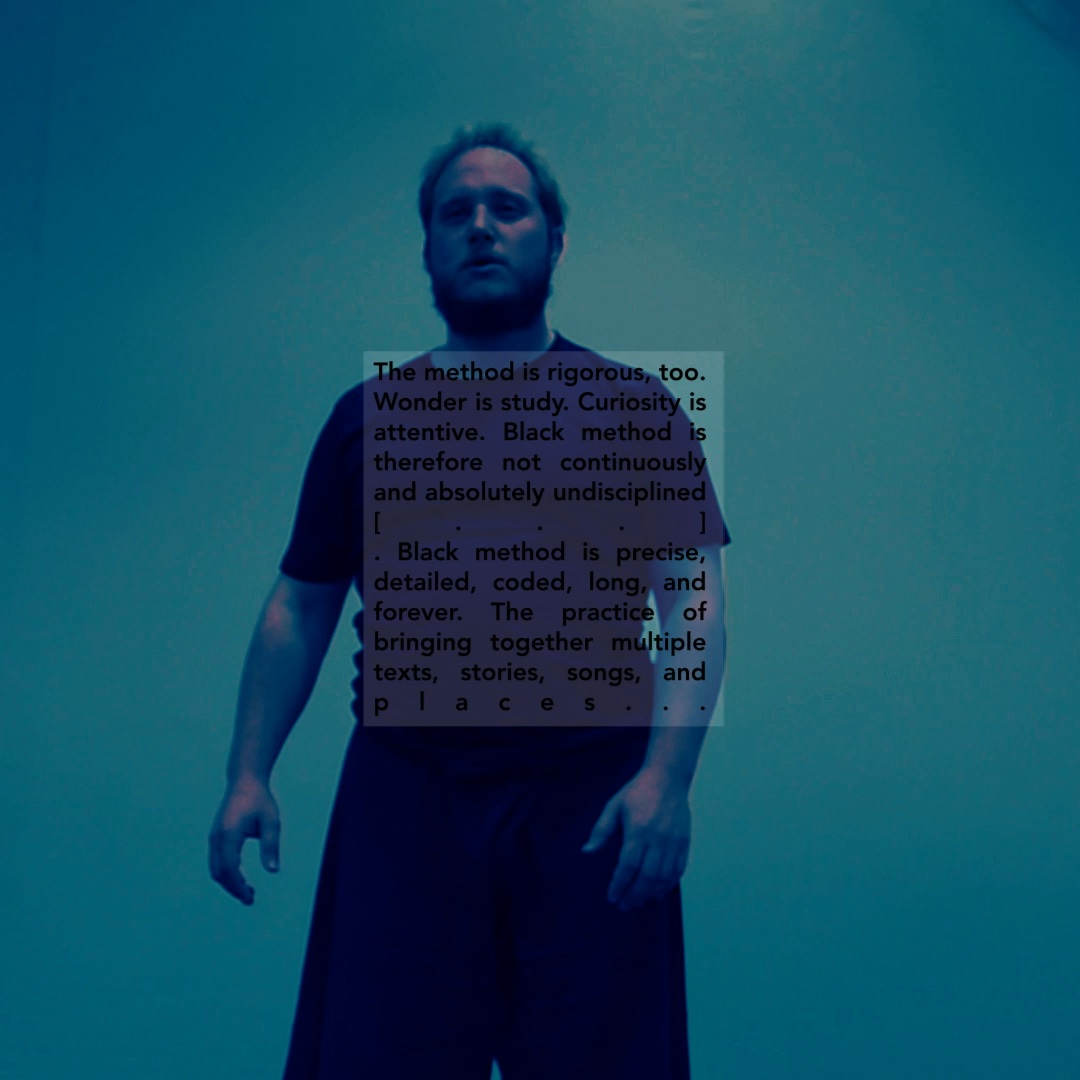
David Marriott has written that “the Fanonian object of knowledge is simply what it means to be black,” adding that this is “entirely distinct from an historical claim, both in its object and in its principles and methods, and has nothing whatsoever in common with identity.”5 The division suggested here, between an ontological blackness and one linked to history and identity, has been formulated by Fred Moten in less dichotomous terms: “The paraontological distinction between blackness and blacks allows us no longer to be enthralled by the notion that blackness is a property that belongs to blacks.”6 Video artist and cinematographer Arthur Jafa translates Moten’s insight into simpler language:
I think, in some ways, it behooves everybody to study blackness. Someone like Fred Moten has been super articulate about it: Black people have a privileged relationship to blackness, but it’s not a proprietary relationship to blackness. Blackness is not the same thing as black people. It’s a new kind of formulation.7
While Moten’s work is sometimes positioned as a rebuttal of the afropessimist turn toward strictly ontological formulations of blackness, he begins the essay just cited by hailing the afropessimism of Frank Wilderson and Jared Sexton as “the most exciting and generative advance in black critical theory, which is to say critical theory.”8 Far from shutting down critical discourse, as is sometimes claimed, the ontologization (or para-ontologization) of blackness is generative of many new critical approaches, such as Tiffany Lethabo King’s extraordinary work on “black flux” as a level of “nonnormative and nonhuman” excess that shatters white epistemic distinctions between human, animal, plant, and earth.9 In the context of this essay, it is not my intention to parse in detail the differences between multiple zones or tendencies within recent critical black studies, such as afropessimism, afrofuturism, black feminism, and the black radical tradition. Rather, I want to highlight the richness of these projects together, including their disagreements, in order to show how much the study and practice of jewishness can learn from them.
While many have asked what it means to be jewish, I do not believe that any scholar has yet gone far enough in applying the radical methodological proposals of recent critical black studies to the project of rethinking and remaking jewishness. Already in the 1990s, Daniel Boyarin was learning from Hortense Spillers how to rethink Sigmund Freud’s jewishness in a postcolonial frame.10 More recently, Boyarin has thought alongside Aimé Césaire, Frantz Fanon, and Fred Moten towards a “no-state solution” to the problem of jewish nationhood.11 The trajectory of Nicholas Mirzoeff’s work is similarly instructive, moving from an earlier paralleling of black and jewish cultures of diaspora toward a more profound commitment to black politics as the basis for a radical critique and deconstruction of whiteness.12 Michael Rothberg learns from W. E. B. Du Bois in his influential rethinking of post-Holocaust trauma beyond the dichotomization of victim and perpetrator.13 There is also significant work in black studies that examines intersections with jewishness; notably Paul Gilroy’s discussion in The Black Atlantic, which begins by recognizing that “the term ‘diaspora’ comes into the vocabulary of black studies and the practice of pan-Africanist politics from Jewish thought.”14 Moten points to a “deep but unacknowledged affinity with and indebtedness to the work of Hannah Arendt” in that of Orlando Patterson, a foundational reference point for recent black studies.15
These connections gesture not only to historical parallels between black and jewish diasporic trajectories, but also to the divergent ways in which black studies and jewish studies formulate their objects of study. At the risk of oversimplification, it is broadly the case that jewish studies has continued to research jews, as a social or demographic category, while recent black studies has moved into an articulation of blackness that pushes beyond the historical or sociological study of black populations or communities, toward blackness as a critical field of knowledge: an onto-epistemological turn. Even when studies of jewish literature, for example, make serious attempts to question the existence of a coherent jewish people, there almost always remains “an identitarian foundation” grounded in the “act of taking for granted an identifiable Jewish subject.”16 The title of a 2024 conference held at Harvard University—“Jews and Black Theory”—illustrates the ongoing persistence of this divergence. This title acknowledges the theoretical work of black studies and its relevance to other fields and identities, while “Jews” remain consigned to (or privileged by) the status of a substantive noun.17 Thus, while black studies has developed a diverse and sophisticated ongoing discussion that draws generative distinctions between ontological, epistemological, sociological, and demographic concepts of blackness, contemporary jewish studies remains bound to a grounding concept of “Jews” that limits its capacity to think jewishness otherwise. In other words, jewishness is currently undertheorized, creating serious problems for political debates in the public sphere, as much as for any academic field.18
Without a sustained and rigorous critique of the central structuring and epistemic power of whiteness in modernity, such as that provided by black studies, jewish studies is unable to come to grips with the contemporary category of jewishness as anything other than a cultural or ethnic demographic within liberal multiculturalism. This can be seen in the ways that some jewish studies scholars currently misuse black studies scholarship, citing it in support of uncritical parallels between black and jewish identities that seriously misrepresent the work of black studies.19 For example, writing in AJS Review: The Journal of the Association for Jewish Studies in 2019, David Schraub purports to analyze the complex “interplay of whiteness and Jewishness” via an “intersectional” approach.20 Yet, despite paying lip service to Kimberlé Crenshaw and bell hooks, Schraub’s essay refuses to understand whiteness on a structural level, instead relying on narrower models of whiteness as individualized possession, with “perks” and “benefits” that jews may or may not possess in specific contexts.21 This approach lacks the rigorous engagement with history and structure that recent black studies undertakes, an absence reaching absurd heights when Schraub applies the same logic to Israel, calling it a state for which “Whiteness opens some doors.”22 Another example of the misuse of black theory to buttress rather than critique jewish whiteness can be found in a series of recent talks given by renowned jewish studies scholar Susannah Heschel. In a talk that responds explicitly to the events of October 7, 2023, Heschel cites the work of Saidiya Hartman to foreground the sadistic dimension of rape as a form of racializing violence. While such a connection might be valid in principle, Heschel’s refusal to grapple with the continuities of white supremacy between the United States and Israel/Palestine enables her to formulate the events of that day as a “pogrom.”23 In this way, she weaponizes a foundational work of critical black studies, twisting Hartman’s archivally-grounded accounting of white supremacy to construct a vague and timeless figure of “the antisemite,” who might as well be a Russian Cossack in the early twentieth century or a Hamas militant today.
These examples show how jewish studies can misappropriate black studies to dire ends, when it refuses to look beyond a simple parallel between blackness and jewishness and to engage with black studies as a trenchant critique of “Western Civilization” and of whiteness. In such cases, black studies writings are selectively cited to reinscribe the oppression or marginalisation of jews, without interrogating jewish complicity with whiteness. By failing to name whiteness—including its continuities from the past to the present, and from Europe to the United States to Israel—these examples illustrate the ongoing disconnect between jewish studies and those fields that have undertaken a deeper examination of whiteness and coloniality, including critical indigenous studies, ethnic studies, and other “interdisciplines.”24 Such approaches are unequipped to explain how contemporary white supremacy is able to wield both antisemitism and anti-antisemitism as part of its arsenal. Unfortunately, much of jewish studies continues to operate on the basis of a broadly eurocentric account of history and a concomitant obliviousness to structural whiteness. While theorists of the interdisciplines are in ongoing dialogue with each other (and with an older generation of jewish critical theory, as I discuss below), the discipline of “Jewish Studies” proper—along with some of the most aggressively whitening institutions of jewishness, such as the Anti-Defamation League in the United States and the Jewish Board of Deputies in the United Kingdom—has remained largely aloof from these discussions.25 Locked within a complicit relationship to whiteness and still treating jewish trauma as if it were uniquely world-historical, such figurations of jewishness are unable to recognise themselves in the racialized other or to locate any grounds for decolonial solidarity.
There is then an urgent need to re-theorize jewishness in relation to blackness, whiteness, indigeneity, and other identities, positionalities, and narratives that make up the present geo-socio-political conjuncture. As the above examples illustrate, this cannot be done by positioning blackness and jewishness as analogous demographic objects, whereby the task might be to assess how each is more or less oppressed, more or less privileged, as a marginalised group. Such an approach fails not only because it ignores the existence of black jews, but also because it locates both blackness and jewishness within an implicitly white space, as figures against a white background (the “mainstream,” the “American,” the “West”). Instead, that structural and historical context itself must be named and theorised, its whiteness acknowledged and interrogated, until it has been unmade. “Jewish Studies” proper lacks the tools for such a radical deconstruction of social and political time and space, having organised its study of jewishness according to a profound eurocentrism that is not only demographic but methodological. It must therefore learn from black studies how to reconceptualize its own relation to whiteness—not just the demographic whiteness of european jews, but the methodological whiteness of any study of “Jews” as a proper noun. This would be a move to blacken the very study of Jewishness: to reinvent jewishness as a kind of “blackened knowledge,” in the wake of those material histories of colonialism, enslavement, and genocide that black studies takes as its starting points.26 Such a move requires much more than distinguishing between jews and white people, or between jewishness and zionism. It requires a thorough disentangling of figural jewishness from whiteness, on a planetary scale.
2. for a black planetary
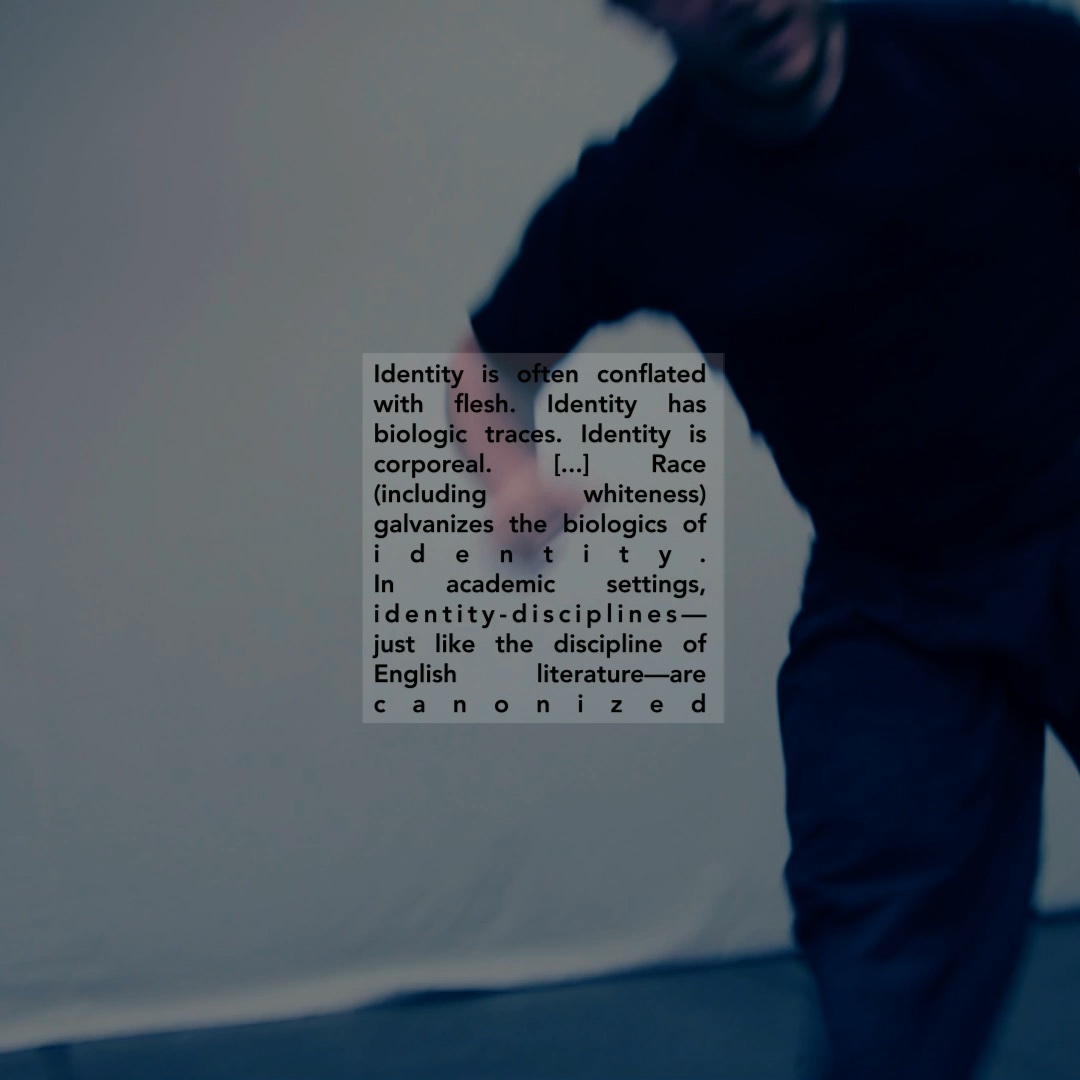
Critiques of so-called identity politics often argue that categories like blackness are too bound to superficial attributes of phenotype (e.g., skin color) and “culture” to afford any revolutionary politics on the scale of the world. This is as true of recent works by Asad Haider and Anthony Appiah as it is of older writing in the 1980s, which pit cultural interpretations of race against allegedly more structural analyses of class.27 An unspoken assumption of such critiques is that class, understood more or less via Karl Marx, is the only truly structural or political way to analyse the planetary situation. To think “on the scale of the world” would therefore mean to locate race within class or, as Stuart Hall wrote, to understand race as “the modality in which class is ‘lived’.”28 If blackness were merely a “race,” and race merely an effect of racism, then attempting to imagine a black planetary would be a dead end. Instead, there could only ever be locally black elements within a planetary socialist vision. However, if we more adequately comprehend the contributions of recent black studies, it will become clear that this amounts to a massive underestimation of blackness, in which radical black knowledges—precisely those dimensions of blackness that have the greatest potential to overturn the present world-system—are reductively cast as mere culture and identity, rather than structure or politics. The reduction of such knowledge to “culture” is itself a form of antiblackness, which reinscribes narrow white materialisms (both new and old) as uniquely transparent ways of articulating the material, the real, and hence the political.
On the contrary, given that the socially constructed roles of capitalist and laborer are nested within those of owner and owned, master and slave, human and animal, it might well be more accurate to suggest that class is the modality through which race is lived. This is because, as Zakiyyah Iman Jackson lucidly states:
Slavery and colonialism not only catalyzed the conscription of black people into hegemonically imperialist and racialized conceptions of “modernity” and “universal humanity” but also inaugurated Western modernity’s condition of possibility, initiating a chain of events that have given rise to a transnationalist, capitalist order.29
A project to rethink the world from blackness begins by refuting the reduction of blackness to race, culture, identity, or class. It activates blackness in place of these categories, refusing to allow blackness to be conceptually contained within any one of them. This means taking what is sometimes dismissed as mere “culture” seriously, not as the superficial output of material reality but as the bedrock of knowability, the episteme through which all politics unfolds. As Denise Ferreira da Silva has shown, the separation of allegedly real and substantive politics and knowledge from mere cultural difference or performance has long been a form of ideological violence; a way of “deploying the cultural to incarcerate the others of Europe in their traditions and to safely keep post-Enlightenment Europe in the moment of transparency.”30 To liberate blackness and the “others of Europe” from that incarceration requires the recognition of culture precisely as knowledge and politics, as is found in the work of da Silva, Hartman, Spillers, Tiffany Lethabo King, Shona Jackson, Fred Moten, Alexander Weheliye, Christina Sharpe, Kathryn Yusoff, and many others.31 In an essay published recently, Hugo Canham and Mohamed Seedat propose a turn to “black planetary studies.”32 Thinking with north american black critical studies from a position situated in South Africa, their work offers a “rooted planetary vision” of “blackness as continuous with the natural world” that is at once ecological and radically anti/decolonial.33 With further reference to both the currently touring art exhibition Project a Black Planet and Public Enemy’s 1990 album Fear of a Black Planet, it seems therefore right to highlight the notion of a black or blackened planetary as an essential horizon of contemporary political imagination.34
I leave out the substantive in the phrase “black planetary,” keeping open the question of what exactly is being evoked. The reference may be to black planetary studies, black planetary imaginaries, black planetary politics, or the like. A black planetary is not merely an alternative to the world of globalization and international relations. It is an active counter-world, the earth as conceived from the ontological antipode of white globalization, a non-world or para-world that is radically and not just superficially otherwise. In my reading, black planetary imaginings exceed marxist conceptions of labor, production, and the working class, insofar as those terms effectively analyze the internal structure of whiteness, while blackness names its exterior. A black planetary politics is necessarily anticapitalist, but the emergent mode of political blackness it imagines is a more compelling candidate for a planetary revolutionary subject than the working class.35 It has been suggested that, in a world defined by a pervasive atmosphere of capitalist realism, “it is easier to imagine an end to the world than an end to capitalism.”36 But this curtailment of imagination is exactly why afropessimists like Wilderson follow Fanon in calling for “the end of the world”—a phrase that demands not universal annihilation but a political vision that exceeds those of white anticapitalism, white feminism, and other movements that formulate themselves through the onto-epistemologies of white modernity.37 As Moten suggests, a black planetary is not an identity that can be claimed by an individual. Instead, it is a background against which anyone might figure themselves; an alternative ground of figuration itself.
While black planetary thought is most forcefully deployed against whiteness, in both its capitalist and colonizing formations, it also carries important warnings for the activation of other identity categories and positions. An example of this caution, with particular salience for rethinking jewishness, is found in Garba and Sorentino’s response to Eve Tuck and K. Wayne Yang’s much-cited essay from 2012, “Decolonization is Not a Metaphor.”38 As important as the latter, now-canonical text has been, I have been dismayed to see it used recently by white european scholars to block critical interventions that aim to undermine and transform predominantly white institutions through processes that cannot be reduced to land transfer. It seems that Tuck and Yang’s essay may circulate today, at least in Europe, as a justification to avoid thinking deeply about institutional forms and structures, offering instead an oversimplified understanding of what constitutes decolonial action. Garba and Sorentino’s pointed response, “Slavery is a Metaphor,” warns against this risk, revealing the limitations of a politics of land transfer that does not also thoroughly engage in a radical deconstruction of white ontologies of land and ownership. Far from being an empirical demographic or racial category, blackness here operates as an onto-epistemological leverage point—even, they provocatively suggest, a kind of metaphor—by which to overturn basic assumptions about land, flesh, and knowledge that may underpin the most explicitly anticolonial and anticapitalist politics. Blackness thus becomes planetary not by being subsumed within class, or included within a new indigenous sovereignty, but through a figural reworking, in this case the figure of the slave. Garba and Sorentino’s titular phrase, positing slavery as metaphor, builds on generations of black studies work that has repositioned transatlantic chattel slavery as a central narrative of modernity, opening a rift in liberal or progressive histories that cannot be resolved through any kind of nationalism, or even global socialism.
It is therefore crucial for non-black political movements to engage seriously with blackness and black studies as they move toward planetary visions. This does not mean that blackness itself is immune to appropriation or that it cannot be mobilized in oppressive and even racist ways, as can be seen in examples ranging from the continuity of US imperialism under Barack Obama to anti-indigeneity in the Caribbean and in Liberia.39 On the contrary, it must be underscored that a black planetary cannot be an institutional or political formation in the terms currently available. Any legibly political formation in the present will necessarily be onto-epistemically white, insofar as it must participate in a white global world-system. A black planetary is therefore a warning against such formations and a call for radically different approaches to politics, knowledge, and earth itself. The point is not to pretend that blackness offers some kind of purity or innocence, upon which a new world can be raised. Rather, the questions raised by blackness, in its complex relations with indigeneity and with whiteness, define a necessary matrix for attempts to reimagine the planetary.
In the current geopolitical moment, the most recognizable example of a white state formation enacting virulent racism under cover of a non-white identity is the state of Israel. This state defends itself against accusations of colonialism and genocide through its identification as jewish, while in the same moment it enacts the most brutal forms of globally supported white supremacy. More broadly, through the rise of political zionism and what Enzo Traverso called the end of jewish modernity, jewishness as a global figure has increasingly been identified with whiteness.40 This alignment is currently unfolding in the most horrific way in Palestine, where Achille Mbembe identified the intensification of “necropower” through a Fanonian “spatial reading of colonial occupation” years before the current genocide.41 But it can also be seen in how the weaponization of antisemitism claims was activated to both defeat Jeremy Corbyn in the United Kingdom and support the rise of Trump in the United States. To extricate jewishness—as well as neoliberal versions of both indigeneity and blackness—from such complicities with whiteness, a much deeper engagement with blackness and black studies is needed.42
A black planetary provides a context in which the figuration of jewishness might be reimagined and transformed. Rather than comparing black and jewish histories or identities, the task of jewish studies would be reoriented to a set of more fundamental questions: What is jewishness in the context of a black planetary? If planetary life, being, and sociality were organized with an orientation to safeguard the unique powers and vulnerabilities of flesh and land, then what might be the role of that particular embodied history we call jewish? Black studies opens up not only these questions but our ways of answering them, the methodologies by which we might seek to reformulate and refigure jewishness and judaism. It demands nothing less than a thorough refiguration of jewishness—one that must carefully avoid the dominant tropes that characterize mainstream jewish culture and politics, from diasporic nostalgia and Holocaust memory to national and religious orthodoxies. How can we hear and honor the grief of the past, in the context of the grief of the present, and even the grief of the future? What new possibilities may arrive, once we abandon a “proprietary” relation between jewish people and jewishness? What figures might reveal themselves, from within the vast archives of jewishness, when those archives are revisited in a luminous black light?
3. critical theory is cryptojewish
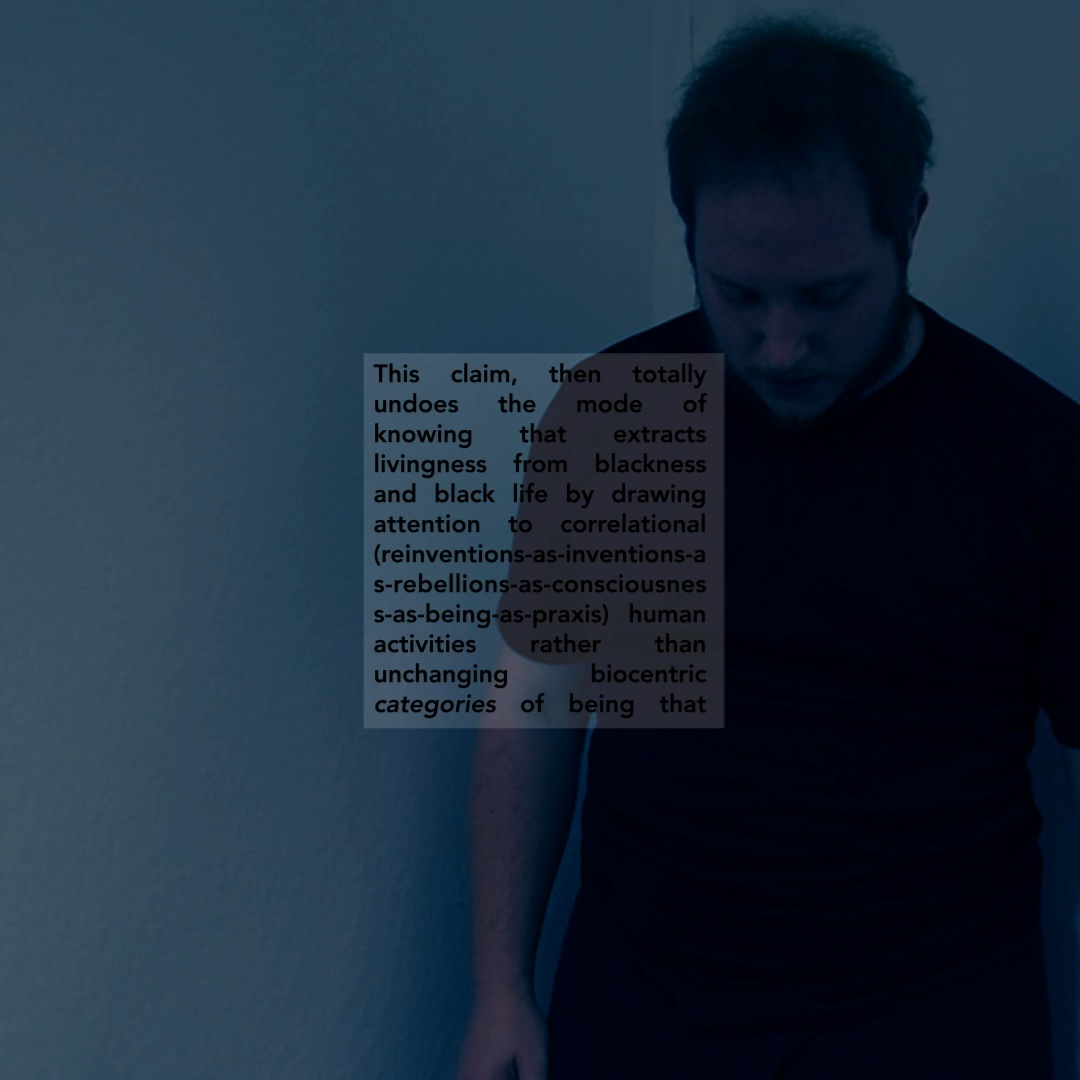
If the preceding discussion emphasized the working-through of complex and asymmetrical entanglements among blackness, indigeneity, global white supremacy, and capitalism, it may seem that jewishness has no obvious place in such debates. Certainly, jewishness is rarely a named participant in those vital conversations that today have moved beyond multiculturalism and intersectionality to interrogate the meanings of antiracism, anticolonialism, anti-imperialism, abolition, and decoloniality in a global or planetary context; nor is “Jewish Studies” among the key interdisciplines that interrogate the politics of knowledge along the borders of academia.43 Zionist attempts to position jewishness as a kind of indigeneity notwithstanding, jewish identity almost never sits at the table of critical decolonial thought under its own name. Nevertheless, jewishness is everywhere in these conversations, if one knows how to look. Just where black studies formulates the “paraontological” relation between blackness and black people; just where it offers an incisive critique of how anticapitalist projects still rely on notions of labor and production; just where it enters into careful dialogue with critical native and indigenous studies—the writings and intellectual contributions of previous generations of jewish thinkers are a constant presence. The very term “critical” in “critical black studies” can be seen to name this engagement with jewish thought, but it does so in a cryptic, hidden way. Indeed, if we take the “critical” in “critical black studies” as a hidden signifier or code for jewishness, then critical black studies can be seen as an essential contemporary inheritor—arguably the most important—of jewish thought.
When a scholar like Mark Rifkin juxtaposes indigenous politics with “Black, Chicanx, Latinx, Asian, or other political orders,” there is no possibility that a jewish political order might be included in that list.44 Yet neither would jewishness be invoked here as simply identical to whiteness, since Rifkin would be keenly attuned to the need to distinguish jewishness from zionism and white supremacy. Instead, jewishness is nominally absent. It cannot be gathered into the fold of potential solidarities, nor can it be equated with coloniality. Similarly, Shona Jackson’s 2024 study of blackness and indigeneity in the Caribbean makes no explicit mention of jewishness. Yet alongside Cedric Robinson, Walter Rodney, C. L. R. James, and Sylvia Wynter, Jackson’s project is unthinkable without her critical engagements with Marx, Arendt, Immanuel Wallerstein, and Karl Polanyi. The term “critical theory” comes from the Frankfurt School and, as Jack Jacobs has written, “all of the full members of the Institute in residence in Frankfurt and actively involved in its affairs in the period immediately preceding the Institute’s relocation out of Germany—Horkheimer, Pollock, Grossmann, Fromm, and Lowenthal—were Jews.” Even Theodor Adorno, “who had not been involved in Jewish life while living in Germany, seems to have come, eventually, to think of himself as a Holocaust survivor, and even, to some extent, as a Jew.”45 The same could be said of countless other strands of contemporary thought.
An entire literature exists studying the relationships to jewishness of Baruch Spinoza, whose work was so important for Deleuze; of Walter Benjamin, Hannah Arendt, and Emmanuel Levinas, with whom Fred Moten and others undertake extended dialogue; and, of course, of Marx and Freud. Isaac Deutscher famously wrote of the “non-Jewish Jew,” a kind of heretic who carries jewish knowledge “beyond the boundaries of Jewry.” His list includes those he calls “the great revolutionaries of modern thought: Spinoza, Heine, Marx, Rosa Luxemburg, Trotsky, and Freud.”46 Later scholars like Jacques Derrida and Judith Butler have discussed their own relationships to jewishness at length, examining its role in their theoretical projects. I cannot review this literature here, but only want to highlight how foundational jewishness is across the fields of critical theory. The point is not to claim critical theory for jewishness, in a move that would be exactly “proprietary” in Moten’s sense. As Jacobs writes:
I do not believe that Critical Theory is a Jewish theory, any more than psychoanalysis is a “Jewish science.” The latter assertion was a Nazi calumny. The former is deeply suspect. And yet I intend to argue that the lives of key members of the Frankfurt School’s founding generation are illuminated by situating these men in multiple contexts—including that of Jewish history.47
My aim here is to understand the distinct mode of presence of jewishness in these critical fields, which are so different from the discipline of “Jewish Studies.” Returning to the 2024 Harvard conference on “Jews and Black Theory,” we might ask what could be learned from a wilful identification of Marx’s anticapitalism, Freud’s psychoanalysis, Derrida’s deconstruction, and Butler’s gender performativity, if we recognized them as branches of “jewish theory.” Perhaps more interestingly, we might use the hidden or forgotten presence of jewishness in critical theory—the cryptojewishness of critical theory itself—to consider how the political potentiality of jewishness today may be linked to its nominal disappearance.48 When Jacobs and others disavow the jewishness of critical theory, do they participate in the general whitening of jewishness, alongside zionism and the broad twentieth-century trajectory of jews “becoming white”?49 Or do they instead smuggle hidden resistances and critical instruments into contemporary thought, initiating sabotage under cover of that same alleged whiteness? Moreover, if critical black studies is constantly in dialogue with a previous generation of cryptojewish critical theory, is it not arguably more jewish than a “Jewish Studies” that has shown much less interest in the critical project?50
As we witness the return of explicitly white supremacist fascism in US politics and on the global stage, jews who identify with the left and with decoloniality increasingly find ourselves navigating a terrain in which disclosure as jewish can have sharply divergent effects. It seems important to champion antizionist jewishness, but this can risk centering white american and european voices over palestinian ones. It is also necessary for critical jewish organisations to enact solidarity with black and indigenous ones, but doing so requires a careful articulation of the ways in which jewish identity has straddled the boundaries of whiteness. In an academic environment that is increasingly opposed to critical theory—not only failing to fund, but now gradually outlawing the teaching of critical race and gender studies—the question of how and whether to name jewishness becomes ever more pointed.
There are many figures in jewish historical and cultural archives, lore and myth, textual and ritual practices, that can and should be revisited in conversation with black studies. We can easily think of the golem, the dybbuk, the tsaddik, and the wandering jew—figures that have repeatedly been reimagined in scholarly and creative ways and which could benefit from finding a more grounded orientation toward a black planetary. Jewish figures of gender diversity are currently being reexamined and could be more fully considered alongside black studies work on gender and ungendering.51 One figure that has already been resignified in a black planetary context is the jewish death camp victim, thanks to Alexander Weheliye’s critical black feminist reworking of Giorgio Agamben’s biopolitics.52 All of these figures, and many others, may deserve to be placed in conversation with critical black studies as part of remaking what Sarah Hammerschlag calls the “figural jew”: a strategy of “redeploying the notion of the Jew in a self-consciously figurative manner.”53 A figural approach to jewishness aims to enact “an alternative deployment of the figure of the Jew, one that self-consciously harnesses the political potential of figurative language.”54 As the term “figure” implies, and in contrast to Moten’s paraontological discussion of blackness, I am not proposing to conceive of jewishness as a planetary horizon or broad political matrix. Instead, setting blackness not as figure but as ground, I am asking: Which jewish figures should we be working with now? Which figurations of jewishness can be brought out from the archives, to help us understand the current planetary moment? The cryptojew is a figure in jewish history that names a division between explicit and implicit forms of identification. It highlights processes of epistemic genocide, racial–religious passing, embodied knowledge, and the breakdown between categories of identity. Precisely because of how it foregrounds ambiguity and unknowability, this figure might help us think more deeply about jewish identity today.
4. cryptojudaic speculations
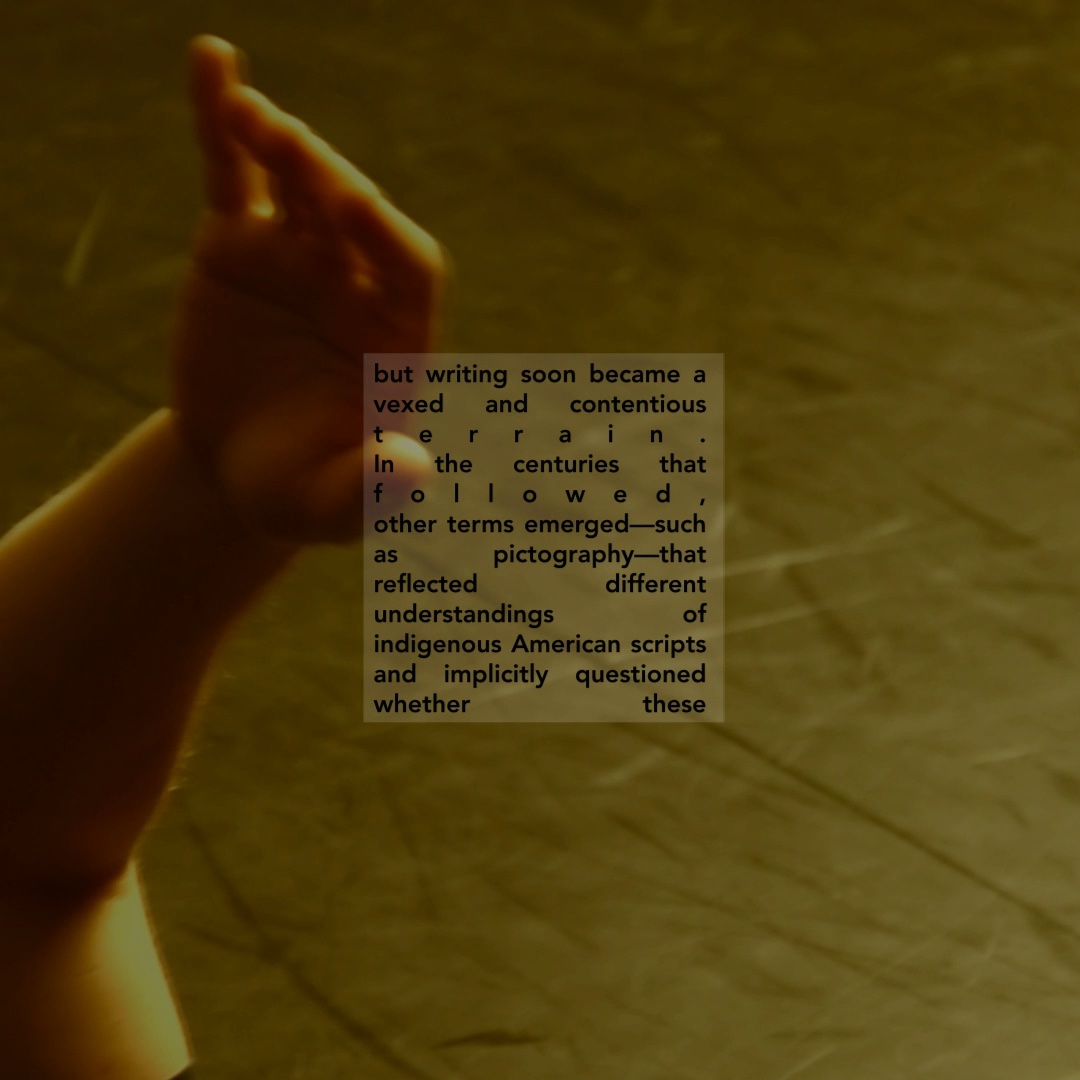
The original cryptojews were iberian converts or conversos, those who were compelled by the Inquisition to convert from judaism to christianity on pain of death. Janet Liebman Jacobs explains how a wave of “violence against the Jews began in 1391 in Seville,” quickly spreading to other towns “as homes were burned, businesses looted, synagogues destroyed, and Jews murdered.”
As the religious persecution escalated, large numbers of Jews acquiesced to the demands of forced conversion, while others voluntarily chose to become Christian. The result of these events was the creation of a disparate and varied convert population whose different approaches to Christian assimilation transformed the religious culture of medieval Spain. Amid the diverse reactions to the widespread policies of forced conversion was a strategy of resistance that came to be known as crypto-Judaism. This practice, which was adopted by a proportion of the Jewish converts, involved the clandestine observance of Judaism among individuals and families who had undergone conversion but who secretly remained faithful to Jewish beliefs and traditions.55
The most significant feature of cryptojewish identity is that it refers by definition to what is practiced in secret and without being named. This hiddenness resonates with current slippages and contestations over the meaning of jewishness and with deconstructive understandings of identity more broadly, highlighting the impossibility of reducing identity to a formal or explicit label. Also in this passage, we find a recognition of “diverse reactions” to an overwhelmingly christian-supremacist environment. The spectrum of cryptojewish relations to power contrasts it with figures of abjection like the death camp victim or the enslaved. While conversion to christianity was often a matter of life and death, as refusal could mean being imprisoned, tortured, or burned to death, there is scope here to acknowledge that conversion in some cases might also be motivated by complex social or economic factors, more along the lines of what we would now call assimilation or even complicity with whiteness. Unlike enslaved africans, jews in the early modern period often had the option to convert to christianity and thereby to access the growing political formation of whiteness.56 The cryptojew enacts a “strategy of resistance” insofar as they keep outlawed jewishness alive through covert embodied practice. But not all converts were cryptojews, which is why the term was originally a deadly accusation.
Unlike the death camp victim, the cryptojew does not embody jewishness at the nadir of its abjection from whiteness, when the extent of its racialization reaches genocidal depths. Yet neither does the cryptojew simply align jewishness with white patriarchy and coloniality, as does, for example, the proto-fascist figure of the “muscle-jew.”57 Moreover, the cryptojew belongs not to a narrow historical period, but to the general rise of christian and later white supremacy since at least the fourteenth century. This means it can be traced, across both oppression and complicity, in the context of the long history of colonial modernity that black studies articulates as the necessary background of any planetary story expressed today. The crime of secretly “Judaizing” persisted into the eighteenth century, when refusing to repent could still result in being burnt to death.58 Later on, the rise of modern race science redefined jewishness in biological terms, but the capacity of many jews to pass as white meant that accusations of secret jewishness could still be deadly. Precisely because it names that which is unnamed and exposes that which is secret, the term cryptojew has been taken up more recently as a critical cipher for the general impossibility of coherent identity.
As Dalia Kandiyoti suggests, in a study of recent literature featuring the converso, there is an ongoing tension between the historical cryptojew as a marked point of descent and the figural cryptojew as a metonym for unknown or unknowable identity. Between these two contemporary notions of the cryptojew lies “a tremendous gulf,” as those who claim descent from cryptojewish ancestors may seek “a recovery of authentic identity” that stands in contrast to the critical indeterminacy of the cryptojew as a figure.59 The former would include people uncovering lost cryptojewish lineages, including families in the american southwest who may also identify as christian, latin american, and/or indigenous.60 Yet all cryptojewish identities are necessarily fragmentary. Thus, Erin Graff Zivin has studied the portrayal of cryptojews in film and literature as a figure that “exposes the fault line in the modern subject,” insofar as even the most violent “inquisitional” logic can never finally determine the presence or absence of secret jewishness.61 In a philosophical register, Agata Bielik-Robson traces a jewish lineage of “counter-philosophy” that she calls “philosophical Marranism,” reclaiming marrano, a derogatory Spanish word for cryptojew.62 And Slabodsky writes of the marrano as a border thinker, one who “creatively develops identities” through a strategy of “epistemic disobedience.”63 Both meanings of the cryptojew—as claimed heritage and as key to non-identity—open new ways of situating jewishness in a black planetary context, and of conceptualizing the “encoding and decoding” of identity through various forms of mediation and figuration.64
I am not a historian and cannot provide a comprehensive introduction to the cryptojew as a historical figure. Nor am I descended from spanish or other cryptojews. Nevertheless, the term “cryptojew” speaks to me. I am neither a jewish nationalist nor religiously observant. I am what has been called “culturally” jewish, yet I reject the reduction of my jewish embodied knowledge to culture, for the reasons elaborated above. My strongest jewish identification is with the jewishness of critical theory: I am at my most jewish when I am reading critical black studies. I live in the UK, where identifying myself as jewish rarely seems to carry much weight, so far. The most common response, when I name myself jewish, is that people spontaneously share their own histories: Did you know, one of my grandfathers . . . one part of my family on my mother’s side . . . one branch of my ancestry . . . It is true that in Birmingham, where I work, a recent BBC article has declared a sharp rise in antisemitic hate crimes.65 But the article describes a handful of recent events involving harassment of jews, illustrated throughout with photos of antizionist and Palestine solidarity graffiti that are not antisemitic in any way. In my own life and on the stage of international geopolitics, the figure of jewishness seems to mean everything and nothing at the same time. Why are people so keen to name their jewish lineage, if no associated practices attend this link? On the other hand, how might acknowledging those lineages help us to reframe certain unnamed practices and commitments that do persist in the present? What ethical possibilities and demands might an acknowledgment of jewish ancestry activate today? Does it matter, after all, whether Christopher Columbus was jewish?66
As I write these words, news arrives of an antisemitic attack taking place halfway around the world. Eighteen people are killed in Sydney, Australia, while celebrating Hannukah. It is not easy to articulate the meaning of this fact, given its massive overdetermination. What is certain is that the violence in Sydney cannot be understood in isolation. The murder of jews, and the way it is received and discussed across media, takes place in the context of a white planetary order. It is only in relation to that order that we can hope to say something meaningful about such an event. Some people will take the violence in Sydney as a reason to hide their jewishness; they will be cryptojews. Others will use the same event to justify their support of zionism and white supremacy, ignoring the many thousands killed in Palestine and the very different way those deaths are acknowledged or ignored. Perhaps they are conversos, but not cryptojews: willing converts to whiteness, their own histories and vulnerabilities disavowed. For some of us, an event like this redoubles our commitment to antiracism, anticapitalism, anticolonialism. We are also in a sense cryptojews, because the jewishness we practice is not legible as such. We are conflict-avoidant revolutionaries. We believe in a radical overturning of the world, but we are too cognizant of history’s whiplash turn, from the Holocaust to Zionism, to accept easy answers. We are militant, but not militaristic. You will find us organizing, teaching, and, above all, reading and writing: decoding and re-encoding the figure of the world; decrypting and re-encrypting the sign of the jew.
This multifaceted yet historically grounded quality is what makes the cryptojew a challenging, provocative, and generative problem in the present. Like the enslaved historical figures to whom Hartman reaches out through a methodology of “critical fabulation,” the truth of the cryptojew can never be positively located in the archive.67 One may learn what kinds of jewish practices were historically practiced in secret, for example, by consulting the archives of the Inquisition, which catalogued such acts in order to ban and punish them. Yet, as noted above, the cryptojew occupies a different position from the enslaved or the fugitive. A similarly complex but differently located and historicized figure, we might say that the cryptojew operates along a spectrum: from forced conversion, through more or less willing assimilation, to fully desiring complicity. At one end, the cryptojew is a victim, compelled on pain of death to renounce their deepest faith. At the other, they become a perpetrator, taking up the mantle of power through christianity and/or whiteness. Between these poles, we can locate a range of negotiations that come under the rubric of assimilation, where languages and embodied techniques are more or less willingly traded for a variety of powers and privileges. Today, figures like that of the jewish death camp victim must have as their corollary that of the cryptojew, who stands on a razor’s edge separating the more or less complicit citizen from the racialized and the genocided.
The figure of the cryptojew can be activated to read crucial ambiguities back onto earlier varieties of “jewish theory.” Derrida’s infinite deferral of presence in signification; Adorno’s focus on the technologies by which subjection is ingrained into citizens through ideology; even Freud’s painstaking examination of the contradictions of the interior self—such theories are not elaborated from a position of total abjection, but from an ambiguous and double-edged standpoint that is both inside and outside: not always in danger, but always at risk. We should reclaim the cryptojewishness of critical theory, to understand both the ongoing transmission of this work in fields like critical black studies and the extent to which nominal, official jewishness has departed from critique. We should reread historiographic and ethnographic studies of cryptojewish communities, recontextualizing them in a modernity that is defined not only by secularism and feats of engineering but also by the transatlantic slave trade and multiple indigenous genocides. We should, in other words, develop a critical lexicon of the cryptojew, inventing concepts that not only help us to understand the role, potentialities, and limitations of “jewish” thought and politics, but also make those very lineages of thought and politics available in new ways. Such a lexicon can be used to reframe past and present jewish theoretical contributions in a way that more adequately responds to the planetary situation and participates in a black planetary to come.
We can use the alleged invisibility of jewishness, the purported phenotypical hiddenness that enables cryptojewish existence, to think through other allegedly invisible identities. How can the figure of the cryptojew help us think about secrecy, hiddenness, opacity, invisibility, and passing, as well as the complex relations between conversion, assimilation, and complicity? Perhaps most speculatively, we should attempt to reimagine cryptojewish futures away from capitalism and the nation-state, theorizing the “crypto” at its most technological—as in cryptography, and even cryptocurrency—in search of a cryptojudaic racial hacking that could make a modest but vital contribution to a black planetary. Such cryptojudaic speculations must embrace both sides of the identitarian coin. Following the lead of black studies, we must release the most sacred elements of judaism into the commons, refusing a proprietary relation to jewishness, while at the same time reclaiming the real and profound jewishness of much that has been hidden by a whiteness both claimed and imposed. In the end, we might even build upon the hallucinatory conspiracy theory according to which “Jews” and “Blacks” are working together to bring about the end of the world. Of course, the world imagined by cryptojewish studies, in apprenticeship to critical (cryptojewish) black studies, is not the violent chaos of warring tribes, racial horrors, and fortress borders that alt-right conspiracy thinkers concoct. What we imagine is a world after the world; a world that exists already in this one, but only in code—encrypted.
Notes
- My lowercasing of jewishness, judaism, and other terms of identity and place follows ongoing discussion of the uppercase/lowercase status of various racial and ethnic terms; see Ben Spatz, Race and the Forms of Knowledge: Technique, Identity, and Place in Artistic Research (Northwestern University Press, 2024), ix. An early version of this paper was presented at “Race and Resistance,” Oxford University, March 2025. ↩
- See Shona N. Jackson, Beyond Constraint: Middle/Passages of Blackness and Indigeneity in the Radical Tradition (Duke University Press, 2024); Tiffany Lethabo King, The Black Shoals: Offshore Formations of Black and Native Studies (Duke University Press, 2019); Tiffany Lethabo King, Jenell Navarro, and Andrea Smith, eds., Otherwise Worlds: Against Settler Colonialism and Anti-Blackness (Duke University Press, 2020); Mark Rifkin, Fictions of Land and Flesh: Blackness, Indigeneity, Speculation (Duke University Press, 2019). On black jewish indigeneity, see Noah Tamarkin, Genetic Afterlives: Black Jewish Indigeneity in South Africa (Duke University Press, 2020). ↩
- Santiago Slabodsky, Decolonial Judaism. On third world jewishness, see forthcoming work by Clive Gabay (personal correspondence). ↩
- Cedric Robinson in Chuck Morse, “Capitalism, Marxism, and the Black Radical Tradition: An Interview with Cedric Robinson,” Perspectives on Anarchist Theory 3, no. 1 (1999): 8. ↩
- David S. Marriott, Whither Fanon? Studies in the Blackness of Being (Stanford University Press, 2018), xviii. ↩
- Fred Moten, “Blackness and Nothingness (Mysticism in the Flesh),” South Atlantic Quarterly 112, no. 4 (2013): 749. ↩
- Kate Brown, “‘Black People Figured Out How to Make Culture in Freefall’: Arthur Jafa on the Creative Power of Melancholy, Artnet, February 20, 2018, https://news.artnet.com/art-world/arthur-jafa-julia-stoschek-collection-1227422 (apostrophe added). ↩
- Moten, “Blackness and Nothingness,” 737. ↩
- King, The Black Shoals, 132. ↩
- Daniel Boyarin, Unheroic Conduct: The Rise of Heterosexuality and the Invention of the Jewish Man (University of California Press, 1997). However, it is notable that Boyarin’s reference to Spillers goes unacknowledged. Chapter 5 is titled “Freud’s Baby, Fliess’s Maybe,” a riff on Spillers’ now canonical essay, “Mama’s Baby, Papa’s Maybe.” Yet, in a book with dense citational apparatus, the sole explicit reference to Spillers (193) lacks a citation and Spillers is not found in the list of works cited. ↩
- Daniel Boyarin, The No-State Solution: A Jewish Manifesto (Yale University Press, 2023). ↩
- Nicholas Mirzoeff, ed. Diaspora and Visual Culture: Representing Africans and Jews (Routledge, 2000); The Right to Look: A Counterhistory of Visuality (Duke University Press, 2011); Nicholas Mirzoeff, The Appearance of Black Lives Matter (Name Publications, 2017); White Sight: Visual Politics and Practices of Whiteness (The MIT Press, 2023). ↩
- Michael Rothberg, Multidirectional Memory: Remembering the Holocaust in the Age of Decolonization (Stanford University Press, 2009); and see Michael Rothberg, The Implicated Subject: Beyond Victims and Perpetrators (Stanford University Press, 2019). ↩
- Paul Gilroy, The Black Atlantic: Modernity and Double Consciousness (Harvard University Press, 2003), 205–16. ↩
- Moten, “Blackness and Nothingness,” 739. I return to Moten’s engagement with Levinas and Arendt in the third section of this essay, where I consider it part of the cryptojewish lineage of critical black studies. ↩
- Benjamin Schreier, The Impossible Jew: Identity and the Reconstruction of Jewish American Literary History (New York University Press, 2015), 13. Schreier himself aims to destabilize the grounding formulation of the jewish subject, and asks why jewish studies “has had such a difficult and unsatisfying relationship with multiculturalism, with critical identity studies, and with critical theory more generally” (22). Yet, because he lacks a serious critique of whiteness (51)—of the kind provided by critical black studies—Schreier falls into the same traps of parallelism that I criticize below, misunderstanding the relationship between jewishness and other “special identity groups” that make “special minority identity claims” (35) within and outside academia. ↩
- The conference was organized by Terrence L. Johnson and Shaul Magid; see the event page (visited 20 November 2024): https://cjs.fas.harvard.edu/calendar_event/jews-and-black-theory-conceptualizing-otherness-in-the-twenty-first-century. Magid’s own work, despite his explicit engagement with black theory, similarly lacks a substantive critique of whiteness and therefore has no way to get beyond liberal multiculturalism. As a result, he cannot understand the role played by antizionism in today’s radical jewish movements. See Shaul Magid, “Beyond Zionism and Anti-Zionism: A Future of the American Jewish Left and the Negation of the ‘Negation of the Diaspora,’” Critical Research on Religion 12, no. 2 (2024): 215–26, https://doi.org/10.1177/20503032241267244. ↩
- Adam Zachary Newton, Jewish Studies as Counterlife: A Report to the Academy (Fordham University Press, 2019) names some of the limitations of “Jewish Studies (JS)” as a field, although without drawing on the theoretical potential of, e.g., critical black studies or critical indigenous studies. ↩
- I am not primarily a jewish studies scholar and I am certain that my discussion of the field here leaves out important contributors. (I thank an anonymous peer reviewer for pointing me to the work of Benjamin Schreier, for example. Additional sources in jewish studies are cited in Spatz, Race and the Forms of Knowledge, Chapter 3.) However, the examples discussed below reveal that seriously problematic views are not only present in jewish studies, as may be the case in any area of study, but are given major platforms through which they both represent and construct the field. My critique therefore deserves consideration by those who care about the future of jewish studies. ↩
- David Schraub, “White Jews: An Intersectional Approach,” AJS Review 43, no. 2 (2019): 379–407, https://doi.org/10.1017/S0364009419000461. ↩
- Schraub, “White Jews,” 392. ↩
- Schraub., “White Jews,” 399. ↩
- Susannah Heschel, “Antisemitism, Sexuality, and Sadism,” Birkbeck Institute for the Study of Antisemitism, May 11, 2024, 2:40, 8:20, 25:45, https://www.youtube.com/watch?v=ZOBcbpiLYI4. For a detailed account of sexual violence on October 7 that does not fall into this trap, see Anwar Mhajne, “Understanding Sexual Violence Debates Since 7 October: Weaponization and Denial,” Journal of Genocide Research 28, no. 1 (2026), https://doi.org/10.1080/14623528.2024.2359851. ↩
- Roderick A. Ferguson, The Reorder of Things: The University and Its Pedagogies of Minority Difference (University Of Minnesota Press, 2012). ↩
- A peer reviewer asked that I clarify the meaning of the phrase “aggressively whitening institutions.” One can simply substitute “zionist” for “whitening” and the point becomes clear. In the present context, I do not believe it is necessary to demonstrate that political zionism is largely a project of becoming-white, as there is ample evidence of this; but, for example, see Boyarin, Unheroic Conduct, 304–10. ↩
- Christina Sharpe, In the Wake: On Blackness and Being (Duke University Press, 2016), 13. ↩
- See Asad Haider Mistaken Identity: Race and Class in the Age of Trump (Verso, 2018); Anthony Appiah, The Lies That Bind: Rethinking Identity, Creed, Country, Color, Class, Culture (Liveright Publishing Corporation, 2018); A. Sivanandan, “RAT and the Degradation of Black Struggle,” Race & Class 26, no. 4 (1985): 1–33. I am grateful to Adam Elliott-Cooper for introducing the last of these to me, during an online course on British Black Politics at the Brooklyn Institute for Social Research (2024). ↩
- Musab Younis, On the Scale of the World: The Formation of Black Anticolonial Thought (University of California Press, 2022); Stuart Hall, Selected Writings on Race and Difference (Duke University Press, 2021), 239. ↩
- Zakiyyah Iman Jackson, Becoming Human: Matter and Meaning in an Antiblack World (New York University Press, 2020), 45. ↩
- Denise Ferreira da Silva, Toward a Global Idea of Race (University of Minnesota Press, 2007), 150. ↩
- Saidiya V. Hartman, Scenes of Subjection: Terror, Slavery, and Self-Making in Nineteenth-Century America (Oxford University Press, 1997); Hortense J. Spillers, Black, White, and in Color: Essays on American Literature and Culture (The University of Chicago Press, 2003); King, The Black Shoals; Jackson, Beyond Constraint; Fred Moten, The Universal Machine (Duke University Press, 2018); Alexander G. Weheliye, Habeas Viscus: Racializing Assemblages, Biopolitics, and Black Feminist Theories of the Human (Duke University Press, 2014); Sharpe, In the Wake; Kathryn Yusoff, A Billion Black Anthropocenes or None (University of Minnesota Press, 2018). My own project over the past decade, through the concept of “technique” and increasingly in conversation with black studies, has been to explore the practical and political implications of the argument that culture is knowledge. See Ben Spatz, What a Body Can Do: Technique as Knowledge, Practice as Research (Routledge, 2015); Ben Spatz, Blue Sky Body: Thresholds for Embodied Research (Routledge, 2020); Spatz, Race and the Forms. ↩
- Hugo Ka Canham and Mohamed Seedat, “Coordinates of Black Planetary Studies,” Critical African Studies 17, no. 3 (2025): 259–75. ↩
- Canham and Seedat, “Coordinates of Black Planetary Studies,” 4, 5, 10. ↩
- Antawan I. Byrd, Elvira Dyangani Ose, Adom Getachew, and Matthew S. Witkovsky, eds., Project a Black Planet: The Art and Culture of Panafrica (Art Institute of Chicago, 2025); Public Enemy Fear of a Black Planet (Def Jam Recordings, 1990). ↩
- The phrase “political blackness” was once used in the United Kingdom to name a solidarity that went beyond racial blackness. This usage has fallen out of favor, because of failures to address anti-blackness within such solidarities. What I am suggesting here could perhaps involve a reimagining of political blackness. ↩
- Mark Fisher, Capitalist Realism: Is There No Alternative? (John Hunt Publishing Limited, 2022). Fisher attributes this phrase to both Fredric Jameson and Slavoj Žižek. ↩
- Frank B. Wilderson, Red, White & Black: Cinema and the Structure of U.S. Antagonisms (Duke University Press, 2010), 74, 337. ↩
- Tapji Garba and Sara-Maria Sorentino, “Slavery Is a Metaphor: A Critical Commentary on Eve Tuck and K. Wayne Yang’s ‘Decolonization Is Not a Metaphor’,” Antipode 52, no. 3 (2020): 764–82. ↩
- On the latter, see Jackson, Beyond Constraint; and Robtel Neajai Pailey, Development, (Dual) Citizenship and Its Discontents in Africa: The Political Economy of Belonging to Liberia (Cambridge University Press, 2022). Jackson’s account importantly illuminates the ways in which concepts of labour, production, and the working class can enable black forms of anti-indigeneity. ↩
- Enzo Traverso, The end of Jewish modernity (Pluto Press, 2016). On pre-1948 jewish whiteness in north america, see Ben Ratskoff, “‘Improbable Spectacles’: White Supremacy, Christian Hegemony, and the Dark Side of the Judenfrage,’ Studies in American Jewish Literature 39, no. 1 (2020): 17–43. ↩
- Achille Mbembe, Necropolitics (Duke University Press, 2019), 80. ↩
- For an alarming example of how indigeneity can align itself with global white supremacy, see “Indigenous Embassy Jerusalem,” https://www.indigenousembassy.org. ↩
- Jewish studies, as a discipline, has a very different history than fields like black studies, native studies, ethnic studies, queer and feminist studies, as shown by Ferguson and Schreier in the works cited above. ↩
- Mark Rifkin, The Politics of Kinship: Race, Family, Governance (Duke University Press, 2024), 30. One recent book that does attempt to think “Jewishness, Blackness, and Indigeneity in the Cultural Imaginary of the Americas” is Stephanie M. Pridgeon, Absorption Narratives: Jewishness, Blackness, and Indigeneity in the Cultural Imaginary of the Americas (University of Toronto Press, 2025). ↩
- Jack Lester Jacobs, The Frankfurt School, Jewish Lives, and Antisemitism (Cambridge University Press, 2015), 3, 4. ↩
- Isaac Deutscher, The Non-Jewish Jew and Other Essays (Verso, 2017), 26, 28. Deutscher’s study of the non-jewish jew bears similarities to mine. The key difference is that, for Deutscher, “the influences of Spain, Holland, Germany, England, and the Italy of the Renaissance” comprise “all the trends of human thought.” ↩
- Jacobs, The Frankfurt School, 6. ↩
- Indeed, it transpires that, after much lengthy discussion of the meaning of Marxism in the contemporary moment, Derrida offers to translate his concept of “spectrality” into nothing other than the figure of the cryptojew—even going so far as to suggest that “not only Spinoza but Marx himself, Marx the liberated ontologist, was a Marrano.” Jacques Derrida, Terry Eagleton, Fredric Jameson, Antonio Negri, Ghostly Demarcations: A Symposium on Jacques Derrida’s Specters of Marx (Verso Books, 2008). ↩
- See Eric L. Goldstein, The Price of Whiteness: Jews, Race, and American Identity (Princeton University Press, 2008); Karen Brodkin, How Jews Became White Folks and What That Says About Race in America (Rutgers University Press, 1998); and Traverso, The End of Jewish Modernity. The process of jewishness becoming figurally white is independent of the fact that many jews are still not and have never been white. Foregrounding the racial and ethnic diversity of jewishness can be an important part of disentangling jewishness from whiteness; but Israel’s cynical mobilisation of this diversity also demonstrates the insufficiency of that strategy. ↩
- If this comment seems frivolous, we should remember that Edward Said once declared: “I am the last Jewish intellectual . . . the only true follower of Adorno.” This statement can be read alongside Donald Trump’s recent comment on Senator Chuck Schumer: “Schumer is a Palestinian as far as I’m concerned. He’s become a Palestinian. He used to be Jewish. He’s not Jewish anymore. He’s a Palestinian.” In these diametrically opposed figurations, jewishness is wrenched out of its association with heritable (“blood”) lineage. For Said, a jewish intellectual is one who is committed to a critical reading of modernity. For Trump, a jew is one who acts in alignment with white supremacy in the US and Israel. Hence the palestinian becomes jewish and the jew becomes palestinian. Gil Z. Hochberg, “Edward Said: ‘The Last Jewish Intellectual’,” Social Text 24, no. 2 (2006): 47–65. Niha Masih, “Trump draws condemnation for using ‘Palestinian’ as a slur against Schumer,” Washington Post, 13 March 2025, https://www.washingtonpost.com/politics/2025/03/13/trump-schumer-palestinian-slur. ↩
- For current examples, see the organisation Svara; and Max K. Strassfeld, Trans Talmud: Androgynes and Eunuchs in Rabbinic Literature (University of California Press, 2022). I find that the flickering nature of cryptojudaic identity resonates with that of nonbinary gender, which is also ambiguous, illegible, and double-edged. But I am not yet aware of any conversations that put jewish historical and spiritual gender diversity in conversation with, e.g., Hartman, Scenes of Subjection; Riley C. Snorton, Black on Both Sides: A Racial History of Trans Identity (University of Minnesota Press, 2017). ↩
- Weheliye, Habeas Viscus, Chapter 4. While not all the so-called “Muselmänner” in the death camps were necessarily jewish, Weheliye draws on german sociologist Wolfgang Sofsky to confirm that “most Muselmänner were Russian and Polish Jews” (158n2). ↩
- Sarah Hammerschlag, The Figural Jew: Politics and Identity in Postwar French Thought (University of Chicago Press, 2010), 10. ↩
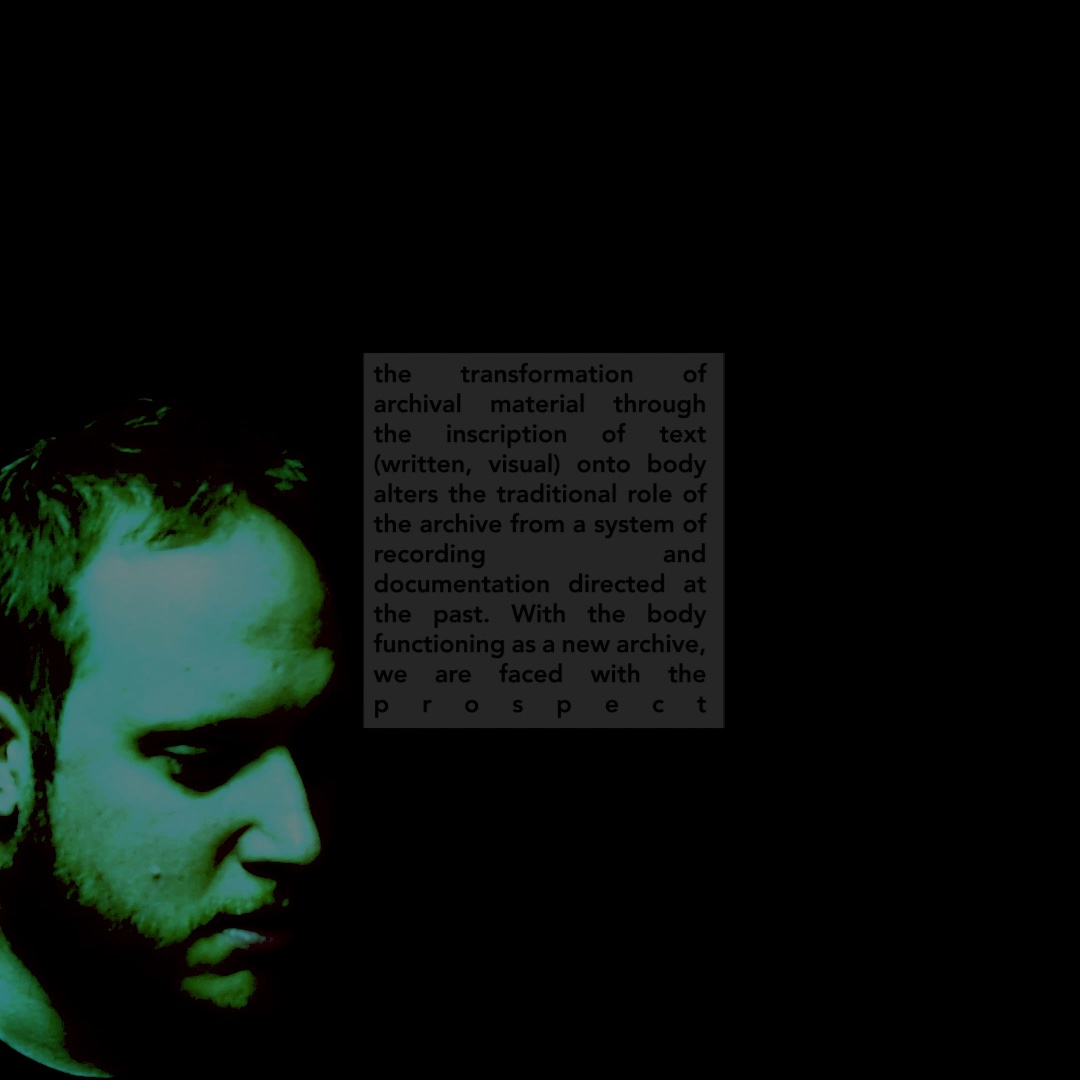
- Hammerschlag, The Figural Jew, 13. I am also interested in techniques of figuration that exceed language. The images illustrating this essay are stills from a series of video works in my ongoing @cryptojudaica experiment: Ben Spatz (@cryptojudaica), Instagram, https://www.instagram.com/cryptojudaica. These images layer texts from black studies, indigenous studies, critical whiteness studies, critical jewish studies, and my own writing as quasi-talmudic annotations, reinscribing and attempting to refigure my own audiovisual body. ↩
- Janet Liebman Jacobs, Hidden Heritage: The Legacy of the Crypto-Jews (University of California Press, 2002), 4. ↩
- On christianity as precedent to whiteness—including the fluid equation of jewish, black, and indigenous peoples by European colonial powers—see Jonathan Boyarin, The Unconverted Self: Jews, Indians, and the Identity of Christian Europe (University of Chicago Press, 2009). During this period, the question of whether indigenous peoples could be converted to christianity was intensely debated. ↩
- Todd Samuel Presner, Muscular Judaism: The Jewish Body and the Politics of Regeneration (Routledge, 2007). ↩
- Michael Alpert, Crypto-Judaism and the Spanish Inquisition (Palgrave, 2001), 5. ↩
- Dalia Kandiyoti, The Converso’s Return: Conversion and Sephardi History in Contemporary Literature and Culture (Stanford University Press, 2020), 9. ↩
- Seth Daniel Kunin, Juggling Identities: Identity and Authenticity among the Crypto-Jews (Columbia University Press, 2009), 3. Another history follows the journeys of cryptojews from Mashhad, Iran, as they traverse jewish, persian, american, and other identities; see Hilda Nissimi, The Crypto-Jewish Mashhadis: The Shaping of Religious and Communal Identity in Their Journey from Iran to New York (Sussex Academic Press, 2021). ↩
- Erin Graff Zivin, Figurative Inquisitions: Conversion, Torture, and Truth in the Luso-Hispanic Atlantic (Northwestern University Press, 2014), 117. ↩
- Agata Bielik-Robson, Jewish Cryptotheologies of Late Modernity: Philosophical Marranos (Routledge, 2014), 4. Although he does not refer to cryptojews, Sergey Dolgopolski makes a related point about the unnamed jewishness of critical philosophy in What Is Talmud? The Art of Disagreement (Fordham University Press, 2009). ↩
- Slabodsky, Decolonial Judaism, 35. ↩
- Hall, “Encoding and Decoding in the Television Discourse,” in Essential Essays (Duke University Press, 2019). ↩
- David Lumb, “City’s Jewish community left ‘terrified’ by antisemitic threats.” BBC, December 18, 2025, https://www.bbc.co.uk/news/articles/cpvdxrr0mxpo. ↩
- Alex Smith, “Columbus probably Spanish and Jewish, study says.” BBC, October 13, 2024, https://www.bbc.co.uk/news/articles/ckg2049ezpko. ↩
- Saidiya Hartman, “Venus in Two Acts,” Small Axe 12, no. 2 (2008): 1–14, 11. ↩