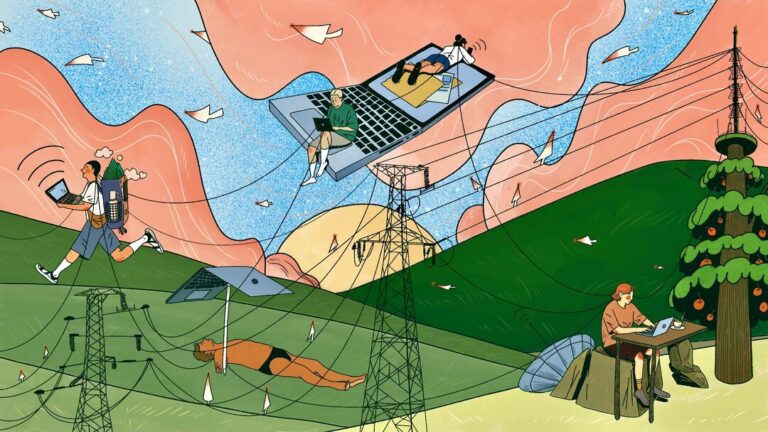
This piece introduces a special section on digital platforms and agency. It unpacks the tension between, on the one hand, the imposition of digital platforms upon cultures by immensely-powerful technology companies, and on the other hand, the emergence of possibilities as people work, play, and express themselves on platforms. Cultural studies, which has always concerned itself with structure, culture, and agency, is well-positioned to work through this tension in order to orient scholars of platform studies toward radical critique and political action. The introduction situates the invited works of “Digital Platforms and Agency” in this context, elaborates upon cultural studies’ charge toward the emerging field of platform studies, and summarizes the individual and collective contributions of the special section authors.
Keyword: agency
Alexa’s Monstrous Agency: The Horror of the Digital Voice Assistant

First released by Amazon in 2014, the digital voice assistant Alexa allows users to connect and automate their smart home devices through the sound of their voice. Alexa’s automation of domestic spaces comes, however, with its own set of anxieties. How much data does Alexa sense and capture, and how is this data used? How is agency distributed between humans and the machines surrounding them? Is Alexa an empowering tool, or an invasion of privacy that undermines human agency? In this paper, we trace the ways in which the anxieties surrounding the blurred boundaries of human and non-human agencies introduced by the Alexa interface are represented and negotiated across different narrative forms and archives. Firstly, we turn to the corporate promotional media produced by Amazon in selling its assistant. Secondly, we analyze Alexa’s representation in the web horror genre known as “creepypasta”—first-person narratives written in and for online communities. We frame the interplay between these archives as an entangled narrative field of contestation, which we engage with through a practice of diffractive reading. The images and ideas of each narrative corpus adapt to and are affected by the materials and tropes forwarded by the other. As a result of this interplay, Alexa becomes a monstrous placeholder for the anxieties of its users, whose erratic and pervasive agency endangers every facet of their existence. The analysis of these narratives provides valuable insights into the anxieties surrounding the ongoing encroachment of digital platforms into the lives of humans.
Review of Just Kids: Youth Activism and Rhetorical Agency by Risa Applegarth (Ohio State University Press)

Risa Applegarth’s Just Kids: Youth Activism and Rhetorical Agency is a three-part analysis of adolescent activism over the last thirty years. The analysis centers on their activist rhetorical agency so as to reframe youth efforts as not just emblematic of the movements they represent, but as symbols of embodied power in their own right. Each of the three parts is developed around a specific case study set in the United States. Reflexive interviews complement the research and enable participant consideration of subsidiary concepts such as temporality, memory, and materialism.
UBI as a Tool for Solidarity: A Response to Richard Todd Stafford

I am examining UBI in order to imagine a more egalitarian democracy under capitalism through the redistribution of national wealth that all labor, paid and unpaid, create. I maintain that the redistribution of capital through a UBI cannot be completely dismissed; however, the key would be to remain dedicated to emboldening individual economic agency through bottom-up initiatives while battling for infrastructural changes in a governmental, top-down fashion.
“Up for Grabs”: Agency, Praxis, and the Politics of Early Digital Art
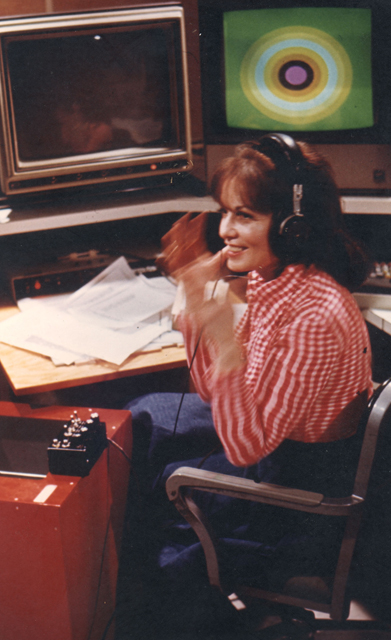
In its infancy, digital art was, as artist and writer Anne M. Spalter enthusiastically put it, “up for grabs.” But how did women artists overcome the fallacy that computer technology was inherently masculine? And why did computing become a kind of sanctuary for some women artists? I will show that the indeterminacy and flux that permitted freer agency, was reflected in the computing field as a whole. Over time, anti-computer sentiment, which affected all artists using the medium, would prove so pervasive that it often eclipsed the sexism later suffered by women.