
This paper explores how Black women on TikTok activate platform affordances to make themselves visible within the search engine. Specifically, we offer #BlackGirlPilates as a case study, given the increased interest following socialite Lori Harvey’s endorsement of the exercise at the 2022 Met Gala. Both Pilates and Western Technoculture have been studied in regards to its centrality of whiteness as normative. Thus, we conduct a comparative analysis of #pilates and #BlackGirlPilates in TikTok’s search engine to see how the addition of a racial qualifier changes results. Our analysis reveals that the “anonymous” user within a search for content on Pilates is white, demonstrating that the use of racial qualifiers in hashtags intentionally marks visibility around racial identity. We argue that Black women’s use of hashtags in this way is an agentic praxis and form of digital Black feminism wherein they can circumvent white perspectives to create culturally relevant results within the platform. #BlackGirlPilates constructs a community that centers and supports Black women’s experience and expertise.
Keyword: Black feminism
Baldwin’s Balls: Sensuality, Profanity, and the Testicular Fortitude to Reckon with Race
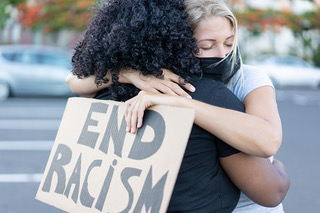
Both sensuality and profanity dwell within love’s truthful self-expression. James Baldwin’s oeuvre reads race relations in the United States, revealing a skewed balance between sensuality and profanity rectified through authentic sensual connections across racial lines. This essay introduces Baldwin’s work as an exemplar of world reading, an ingredient of cultural literacy, to argue that sensuality prevents society from dismissing negative emotions as merely symptomatic of race or class resentment. Centering on profanity, the argument relies on how Baldwin deftly constructs sensuality as an inversive emotional balm for healing the US race problem through the feminine energeia found in his pervasive testicular discourse.
Review of The Terrible We: Thinking with Trans Maladjustment by Cameron Awkward-Rich (Duke University Press)
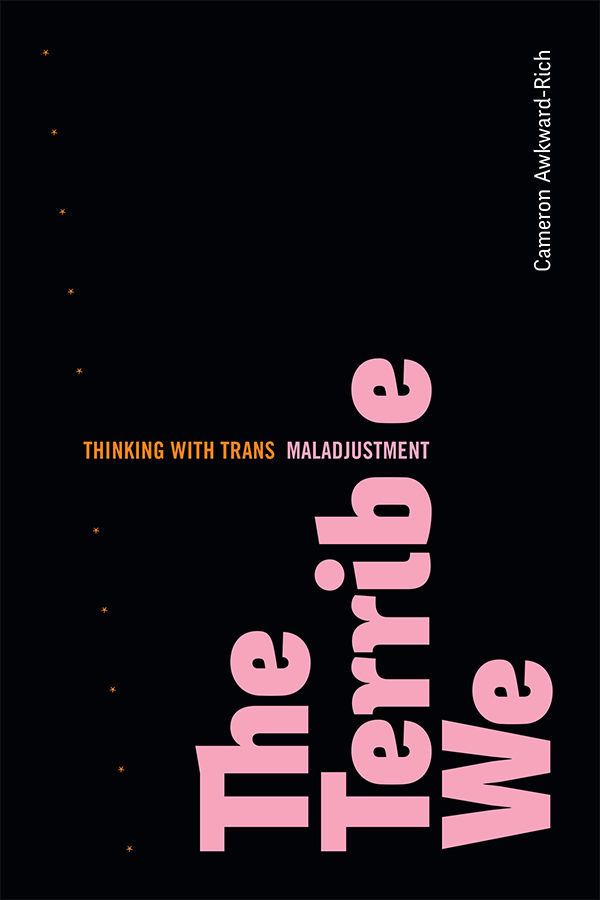
Simultaneously a project of metacritical reflections about disciplinary foundations at the intersections of the academic fields of transgender studies, disability studies, and Black feminist studies, and a series of close readings of cultural texts and artifacts central to those disciplinary developments, Awkward-Rich’s book is intellectually generous, beautifully written, and deftly argued. Critically investigating the production of disability and transgender theories, forged interdependently and through distancing trans authority from the specter of madness and disability, The Terrible We traces conflicts among trans, queer, and feminist perspectives in closely reading foundational texts and cultural contexts. It presents an invitation to consider forms of maladjustment a productive resource rather than an impediment to trans life, thought, and creativity.
Alter Egoing: The Shifting Affects of Janelle Monáe
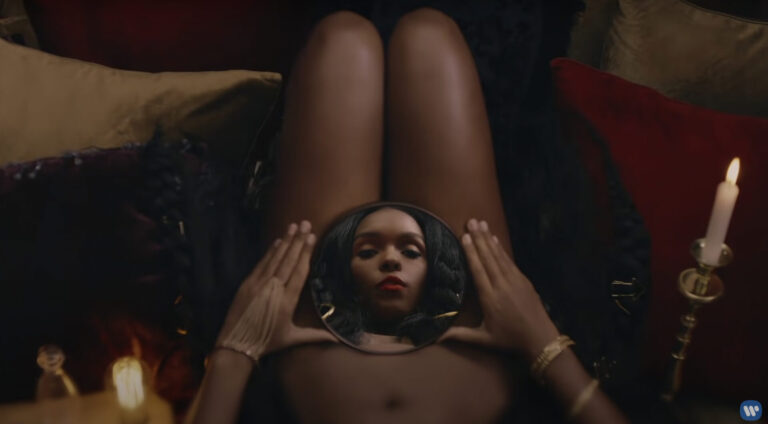
In this article, I use alter egoing as a heuristic, a method for solving the problem of the evolving alter egos of Black women in popular music. When alter egos are analyzed through this lens, the refashioning of artistic imaginaries become legible as intellectual labor. The intellectual labor that Janelle Monáe primarily provides are critiques of notions of womanhood and Blackness in the United States. I understand Monáe’s alter egoing as a reaction to the affective political strategies mobilized in US electoral politics. Former President Barack Obama developed an affective strategy based on his personal brand of optimism, first presented in his book The Audacity of Hope (2006). He developed his signature optimistic politics while he was a senator and he continued to promote his “audacious hopefulness” into his 2008 presidential campaign. Former President Donald Trump’s 2016 presidential campaign also utilized an affective political strategy, as he rallied his supporters around culturally white (male) nostalgia with the cry, “Make America Great Again.” I track the affective evolution of Monáe’s alter egoing from pessimism to optimism in the context of the anti-Black populisms of the post-Obama era (2016–), culminating in a close reading of her 2018 album, Dirty Computer. In identifying Monáe’s troubled relationship with notions of normative identity through her first alter ego, I evaluate the relevance of posthumanism and Afrofuturism, which scholars have used to critique American notions of race, gender, and sexuality. In analyzing the shift in affect from her first alter ego to her most recent, I detect in Monáe’s alter egoing a critical optimism, a disidentifying strategy that begins to take shape in Dirty Computer.
Review of Wayward Lives, Beautiful Experiments: Intimate Histories of Social Upheaval by Saidiya Hartman (W. W. Norton & Company)

This review considers how Wayward Lives, Beautiful Experiments: Intimate Histories of Social Upheaval poses a challenge to the reader. The invitation is to stay immersed within the everyday lives of Black women and girls, who navigated the terrains of New York City and Philadelphia at the turn of the twentieth century, without fleeting into spectacle or pathology. One may assume that such is an effortless proposition that is carried simply by the desire to think about Black women. However, Hartman tacitly demonstrates that a tremendous counter-historiography must be amassed to write the stories of those who have been underwritten by the tales of politics, great Black men, shining Black starlets, or the widely pathologized Black female figure. Thus, Wayward Lives weaves together a beautiful narrative of the social upheaval of Black women and girls at the dawning of Northern urban space, and what would later become known as the Black ghetto. At the same time, Hartman exposes the limits of the official record and narratives which relegate the lives of Black women as tertiary, as opposed to an integral political history in its own right.