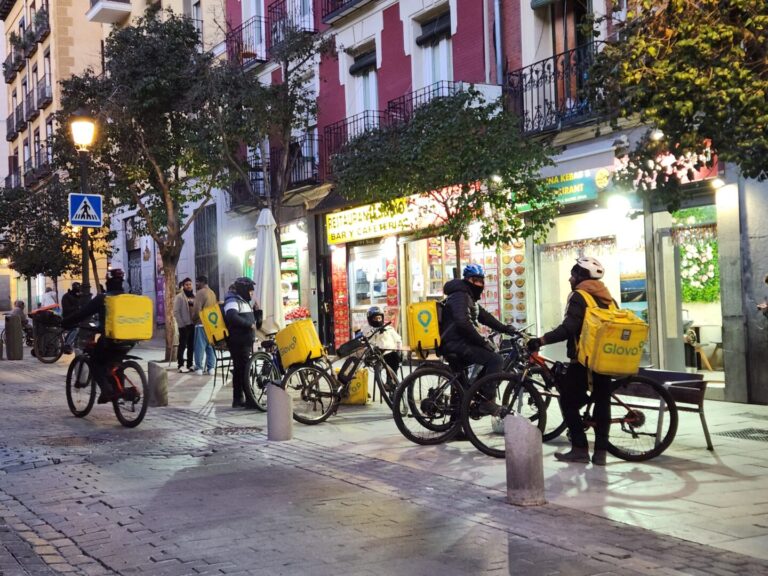
Bicycle couriers are key contributors to urban food delivery platforms. This article outlines the multiple and uneven ways in which delivery riders are “put to work” in the platform economy. Using the vignette of a single delivery by a bicycle courier working in Los Angeles, I illustrate some of the processes contained in platform labor. By breaking down in detail the economics behind platform food delivery, which is commonly performed at a loss, other forms of accumulating value beyond the delivery itself, such as being available, contributing advertising, and generating data become visible. Finally, exploring the history of the sandwich on one hand and the practice of employing human billboards, called “sandwichmen,” on the other helps highlight the ways in and conditions under which bicycle delivery riders are being put to work. Among other contributions, I conclude that bicycle couriers are the twenty-first century’s sandwichmen in both senses: delivering sandwiches to the wealthy and human billboards traversing urban space.
Keyword: data
Target Markets and Logistical Management
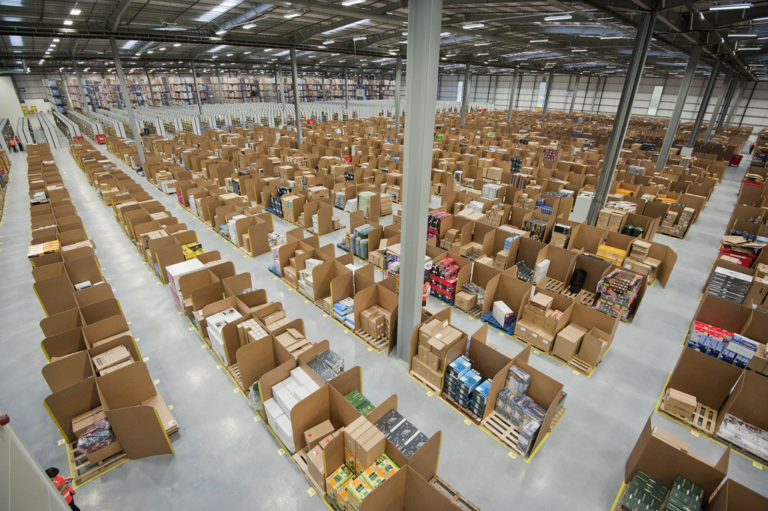
This paper demonstrates how target marketing provides valuable point-of-sale and point-of-interaction insights, and argues that the labor theory of value is untenable for understanding the conditions of leisure-time surveillance and data aggregation. It then provides a close reading of an Amazon affiliated fulfillment center exposé in order to examine precisely how the information produced during leisure-time surveillance intensifies the exploitation of fulfillment center labor. Target marketing is part of a larger apparatus that aggregates data for the purposes of assigning risk, differentiating prices, and managing supply chains and labor costs.