Issue 14.2 (Fall 2025)

Editors’ Introduction
By Yumi Pak, Robert F. Carley, Eero Laine, SAJ, Alyson K. Spurgas & Chris Alen Sula
Editorial work is, by definition, a collective work of community, amplification, and world-building. Read more >

Spectacle, Surveillance, and Discipline: Synopticism at the Angola Prison Rodeo
The Angola Prison Rodeo is a distinctive penal spectacle that challenges conventional understandings of incarceration, visibility, and institutional legitimacy. While modern punishment typically conceals violence, the rodeo publicly stages inmate bodily harm as entertainment. Drawing on ethnographic data from the 2023 and 2024 rodeos, this research explores how such visibility paradoxically reinforces carceral authority. Spectators interpret the event through familiar cultural narratives of traditional rodeo culture and dominant rehabilitation narratives, transforming penal violence into a palatable and even celebrated ritual. Inmates, meanwhile, navigate the rodeo as a space of constrained agency, motivated by financial incentives and opportunities for self-representation. Yet… Read more >

Generationality, Desirability, and Redemption: How Aziz Ansari and Hasan Minhaj Articulate New Desi Masculinities in Stand-Up Comedy
Desi creators in US culture continue to work within—and against—the white gaze, which divides them into sexless sidekicks or threatening terrorists. Two comedians who have defied these stereotypes and built their own expressions of Desi masculinity are Aziz Ansari and Hasan Minhaj. Ansari’s comedic persona is informed by his work in film and television, while Minhaj’s comedic persona is situated within his work on political news satire. While Ansari is known for his “funny cute” persona, Minhaj portrays himself as a steady family man. Despite these contrasting groundings in comedy, they are comparable in their shared use of the stand-up… Read more >
Randy Martin Prize 2025
Dr. Randy Martin (October 5, 1957 – January 28, 2015) was a professor of Art and Policy at New York University’s Tisch School of the Arts. The Cultural Studies Association created the Randy Martin Prize in his honor for the best student paper presented at the annual CSA conference. The winning paper may deal with any aspect of cultural studies, but should reflect the robust interdisciplinary perspective and historical materialist approach so central to the scholarship of the late Randy Martin.

21st-Century Sandwichmen: How Bicycle Couriers Contribute to Urban Food Delivery Platforms
Bicycle couriers are key contributors to urban food delivery platforms. This article outlines the multiple and uneven ways in which delivery riders are “put to work” in the platform economy. Using the vignette of a single delivery by a bicycle courier working in Los Angeles, I illustrate some of the processes contained in platform labor. By breaking down in detail the economics behind platform food delivery, which is commonly performed at a loss, other forms of accumulating value beyond the delivery itself, such as being available, contributing advertising, and generating data become visible. Finally, exploring the history of the sandwich… Read more >
Aporias
Edited by Joshua Falek
Aporias invites emerging scholars to write about the contemporary or historic controversies or lacunae within cultural studies or related fields that have yet to be properly synthesized, countenanced, or come to resolution.
What Does Black Protest Appear to Be?
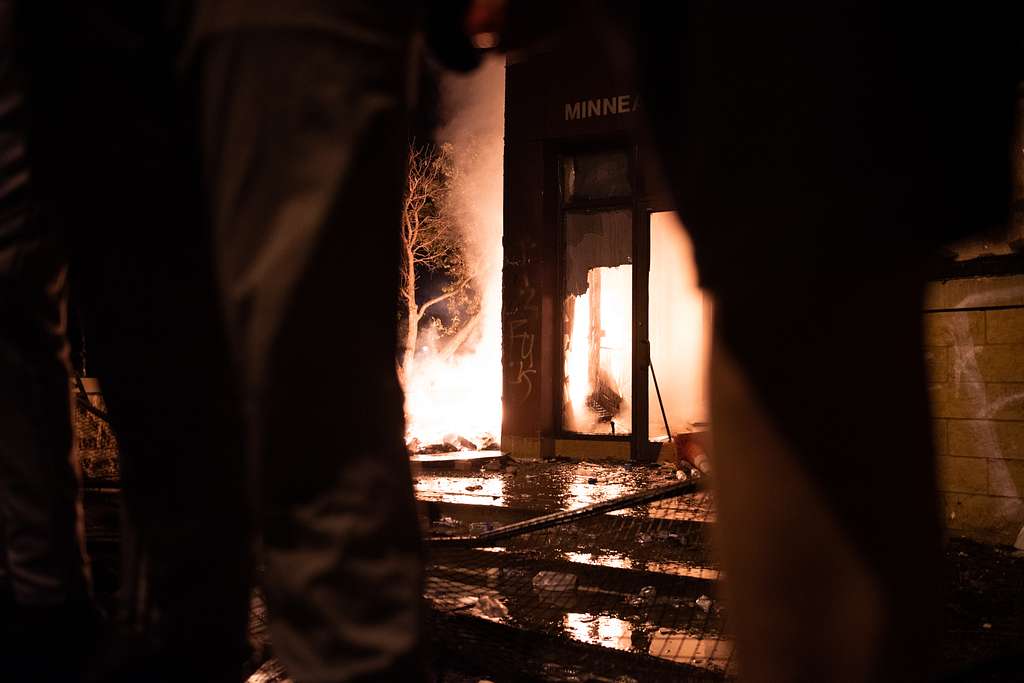
This article interrogates the visual and political logics that make black protest intelligible within modern regimes of political appearance. Focusing on the Black Lives Matter movement and the 2020 Minneapolis uprising, the essay draws on Afropessimist and psychoanalytic theory to examine how the riot unsettles the frameworks that render Blackness legible only through vulnerability, loss, or redemptive spectacle. Against interpretations that recuperate black protest as democratic renewal or moral claim, it theorizes black protest as a site of rupture rather than representation, and as an encounter that exposes the limits of visibility politics and gestures toward a mode of relation… Read more >

Negative Evidence: The Critical-Clinical Diagnosis of Fatigue in Copjec’s Kiarostami
This literary essay examines and rehearses the conceptual challenge fatigue poses to diagnosis in its clinical and critical registers. Taking as its case study Joan Copjec’s essay “Battle Fatigue: Kiarostami and Capitalism”—wherein fatigue, conceptually declined from Levinas’ weariness of existence and the psychoanalytic death drive, is deployed as a theoretical lens through which to read Abbas Kiarostami’s film Taste of Cherry—this essay argues that Copjec’s diagnosis of Badii’s unexplainable suicidality qua fatigue mirrors the clinic’s insofar as both render fatigue into a diagnosis of exclusion predicated on forensic registers of negative evidence. For Copjec, fatigue is a symptom of Badii’s… Read more >
Digital Platforms and Agency
Edited by Reed Van Schenck and Elaine Venter
New platforms always invite new subversions of human agency, from Facebook spying on us to AI taking our jobs. This special section invited scholars in media and cultural studies to interrogate that tension.

Introduction – Digital Platforms and Agency
This piece introduces a special section on digital platforms and agency. It unpacks the tension between, on the one hand, the imposition of digital platforms upon cultures by immensely-powerful technology companies, and on the other hand, the emergence of possibilities as people work, play, and express themselves on platforms. Cultural studies, which has always concerned itself with structure, culture, and agency, is well-positioned to work through this tension in order to orient scholars of platform studies toward radical critique and political action. The introduction situates the invited works of “Digital Platforms and Agency” in this context, elaborates upon cultural studies’… Read more >

The Platform-Enabled Durability of Colonial Racial Capitalism in Washington DC’s Wards 7 and 8
This article explores how platforms reinforce structures of racism and coloniality in Washington DC’s majority-Black Ward 7 and Ward 8. Drawing on ethnographic research with Black hosts who short-term rent on Airbnb, I follow how Black residents’ imaginaries of space are superseded by platform-enabled white users’ imaginaries through Airbnb’s “Location” star ratings. This rating draws down hosts’ overall ratings based on guests’ racist experiences of feeling “unsafe” in majority-Black working-class neighborhoods—resulting in lower visibility on Airbnb’s app, decreased bookings, and financial losses. Using a geopolitical conception of racism on platforms which I call the Colonial Racial Capitalist Stack (CRCStack), I… Read more >

Searching for Blackness: #BlackGirlPilates and Racialized Hashtags as Agentic Praxis on TikTok
This paper explores how Black women on TikTok activate platform affordances to make themselves visible within the search engine. Specifically, we offer #BlackGirlPilates as a case study, given the increased interest following socialite Lori Harvey’s endorsement of the exercise at the 2022 Met Gala. Both Pilates and Western Technoculture have been studied in regards to its centrality of whiteness as normative. Thus, we conduct a comparative analysis of #pilates and #BlackGirlPilates in TikTok’s search engine to see how the addition of a racial qualifier changes results. Our analysis reveals that the “anonymous” user within a search for content on Pilates… Read more >

Alexa’s Monstrous Agency: The Horror of the Digital Voice Assistant
First released by Amazon in 2014, the digital voice assistant Alexa allows users to connect and automate their smart home devices through the sound of their voice. Alexa’s automation of domestic spaces comes, however, with its own set of anxieties. How much data does Alexa sense and capture, and how is this data used? How is agency distributed between humans and the machines surrounding them? Is Alexa an empowering tool, or an invasion of privacy that undermines human agency? In this paper, we trace the ways in which the anxieties surrounding the blurred boundaries of human and non-human agencies introduced… Read more >
The Platformized Matchmaking Labor: What Do Prosumers Do in Dating Apps
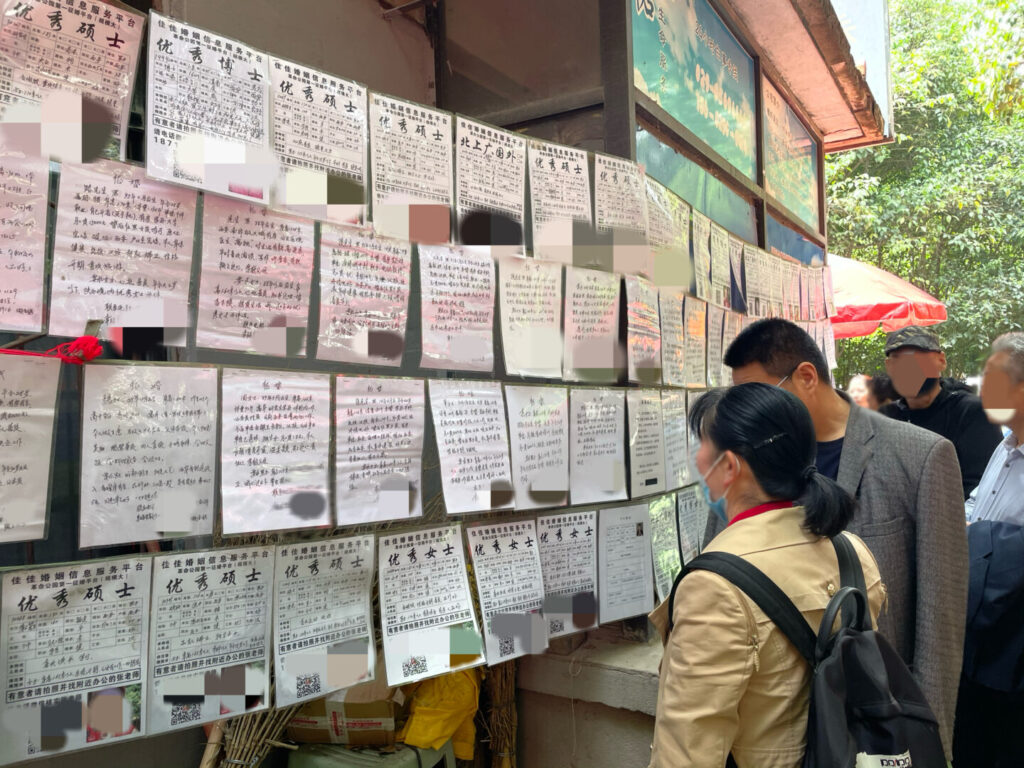
Across a wide range of cultural and socio-political contexts, matchmaking has been valued as a legitimate profession that involves labor and remuneration in cultures. It represents the long-lasting commercialization of effective intimacy building. In the era of algorithms and platforms,the emergence of modern matchmaking, such as in mobile dating apps (MDAs), showcases the impact of platformization and suggests that traditional matchmaking labor relations have shifted in MDAs and modern matchmaking approaches. Thus, with this paper, we ask in what ways contemporary dating practices essentially reinterpret the dated pattern of matchmaking in digital environments and shift its labor aspects. We aim… Read more >

“Help Them Keep Doing What They’re Doing”: Intersections of Agency, Affect, and Capital in the Twitch Subscription System
With live streaming capabilities becoming increasingly important to the success of social media applications and representing central modes of engagement for popular digital platforms, the economic and socio-political functions of live streaming are critical to an understanding of changing new media landscapes. The existing scholarship on Twitch and similar live streaming platforms has demonstrated the importance of both financial investments and affective labor to these digital spaces. Building from existing scholarship, this article will apply a critical-cultural lens to analyze the ways in which Twitch’s interface mediates users’ agency through mechanics centered on affect, capital, and their intersections. How do… Read more >

Call the (Bot-)Police: User-Led Platform Governance of “(In)Authenticity” on Instagram
The pervasive practice of botting by using fame-enhancing bots and operating porn bots, and Instagram’s opaque and unreliable authenticity governance, has evoked human Instagram users to actively police and govern botting and other bot activity. Botting describes repetitive and quantitative posting, messaging and engaging on social media platforms to provoke reciprocal engagement. Running bot police accounts, Instagram users engage and try to play an active role in the authenticity governance process of Instagram. The article investigates why and how Instagram users govern two types of “inauthentic” Instabots, which concentrate on detecting automated interactions by fame-enhancing bots and reporting porn bots.… Read more >
Mind the Gab: A Racial Rhetorical Criticism of an “Alt-Tech” Complaint Against “Big Tech” Content Moderation
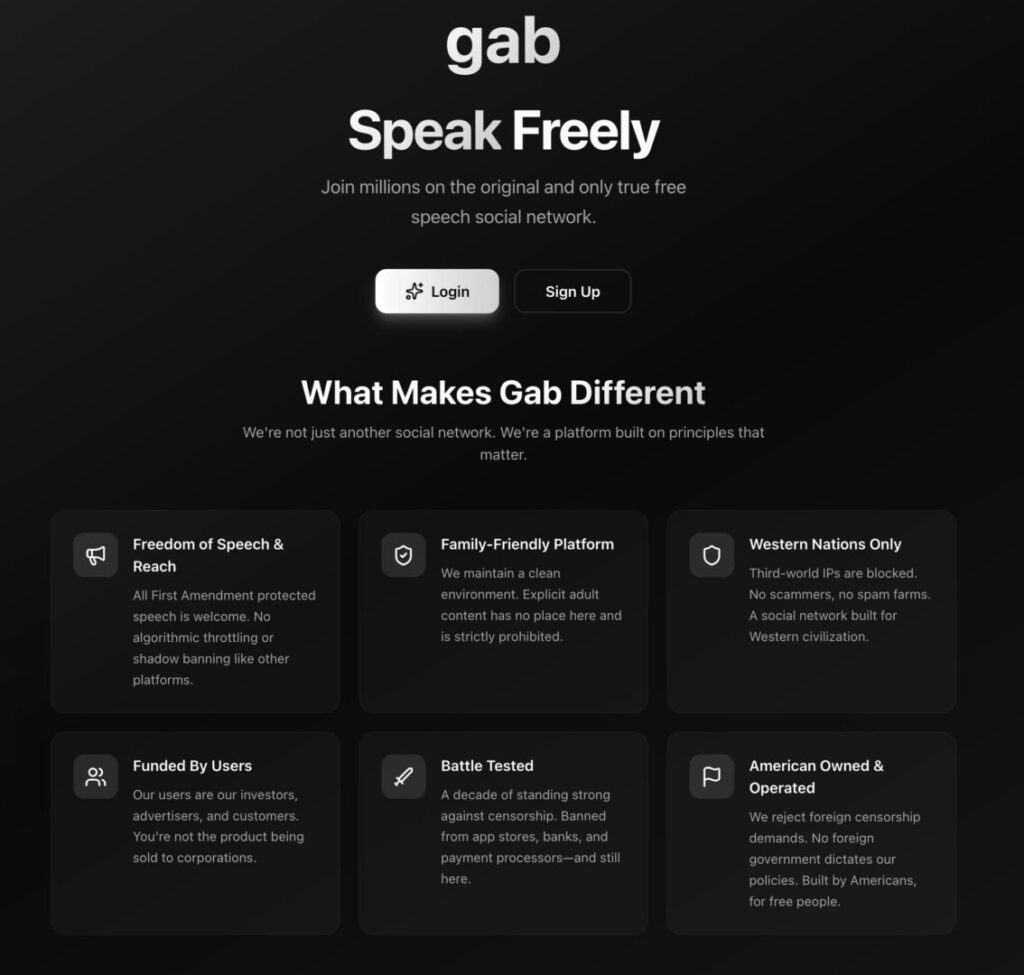
This article analyzes the role of race in the branding rhetoric of the “free speech software company” Gab AI Inc. as found in the X/Twitter and blog posts promoting its products. This analysis aims to assess conservative anxieties about content moderation which drive the creation of alternative social media platforms like Gab. The article argues that the point of stasis, or core set of issues in a debate, in Gab’s branding rhetoric between the company and its audience is a shared fantasy of white enslavement/abjection by the content moderation policies of “Big Tech” companies. This point of stasis is extended… Read more >

Digital Agents: The New Politics of Recognition in Contemporary “Post-Race” Fiction
What are the new racial politics of individual agency and collective recognition in a putatively “post-race” era defined, in large part, by platform capitalism’s increasingly pervasive technologies for identity management and securitization? This essay begins with Apple’s highly publicized 2016 counterterrorism dispute with the FBI and the company’s subsequent marketing campaign for facial recognition-based password encryption (Face ID) before turning at length to recent anglophone novels of ethnicity—by Bharati Mukherjee, Mohsin Hamid, and Teju Cole—that lend narrative expansion to the “post-racial” racializing logics that Apple’s litigation and campaign materials reveal. A cathexis for Big Tech’s identity politics as a whole,… Read more >
Positions
Produced by Mark Nunes and Elaine Venter
Positions aims to provide critical reflection and examination on topics in cultural studies for scholars, students, and a general audience.

Crip Silences, Crip Futurities, Crip Joy
Delores Phillips and Cultural Studies Association’s Crip Cultures/Critical Disability Studies Working Group Co-Host Theodora Danylevich discuss crip silences, crip futurities, and crip joy with authors Alyson Patsavas (University of Illinois, Chicago), Alyson K. Spurgas (Trinity College), and Jess Whatcott (San Diego State University). This podcast is accompanied by a scholarly commentary by Angela Carter. Read more >