Launching from recent interest in disabled people’s livelihoods in the context of global Northern societies, this paper theorizes interview descriptions of livelihoods from 20 disabled, mad, and Deaf artists in Ontario, Canada. Drawing on a critical sustainable livelihoods framework, we observe that the lives of disabled artists play out in an ethos of neoliberal-ableism that has resulted in an accelerated impetus toward death for disabled people, specifically through the advancement of Medical Assistance in Dying (MAiD). Interviews reveal themes of disposability, dignity, and art-as-resistance that are deeply entrenched in disabled artists’ livelihood experiences and the complexities of their artistry and involvement in wider, contemporary disability arts communities. This paper responds to Stienstra and Lee’s 2019 call in Societies to begin “widening our gaze in concrete terms” as we explore disabled people’s livelihoods, contending that discussions of disabled artists’ livelihoods must be situated in the social and material realities of their current contexts. We argue that the lived experiences of disabled people in Canada are also death experiences, and therefore a sustainable livelihoods approach to disabled artists’ experiences must account for Canada’s necropolitical realities.
Keyword: necropolitics
Autistic, Surviving, and Thriving Under COVID-19: Imagining Inclusive Autistic Futures—A Zine Making Project
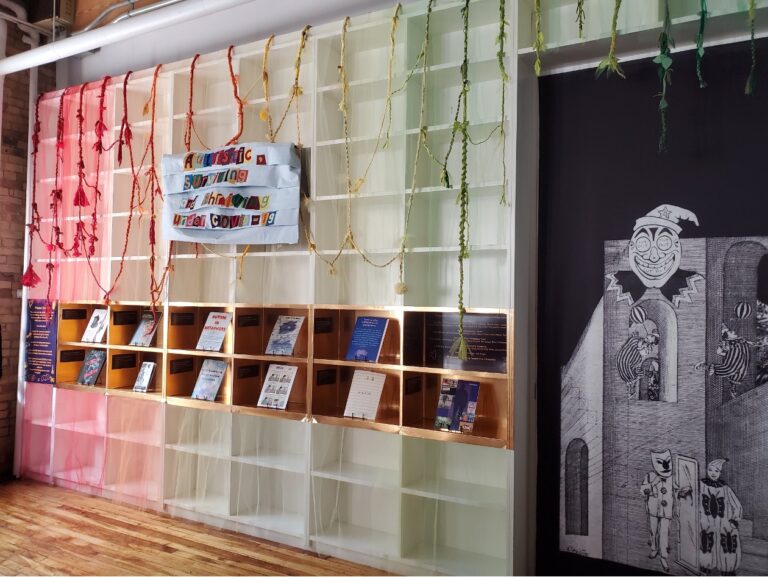
This article takes up Mia Mingus’ call to “leave evidence” of how we have lived, loved, cared, and resisted under ableist neoliberalism and necropolitics during COVID-19 . We include images of artistic work from activist zines created online during the COVID-19 pandemic and led by the Re•Storying Autism Collective. The zines evidence lived experiences of crisis and heightening systemic and intersectional injustices, as well as resistance through activist art, crip community, crip knowledges, digital research creation, and the forging of collective hope for radically inclusive autistic futures—what zine maker Emily Gillespie calls “The neurodivergent, Mad, accessible, Basic Income Revolution.” We frame the images of artistic work with a coauthored description of the Collective’s dream to create neurodivergent art, do creative research, and work for disability justice under COVID-19. The zine project was a gesture of radical hope during crisis and a dream for future possibilities infused with crip knowledges that have always been here. We contend that activist digital artmaking is a powerful way to archive, theorize, feel, resist, co-produce, and crip knowledge, and a way to dream collectively that emerged through the crisis of COVID-19. This is a new, collective, affective, and aesthetic form of evidence and call for “forgetting” ableist capitalist colonialism and Enlightenment modes of subjectivity and knowledge production that target different bodies to exploit, debilitate, and/or eliminate, and to objectify and flatten what it means to be and become human and to thrive together.
The Necropolitics of Liberty: Sovereignty, Fantasy, and United States Gun Culture
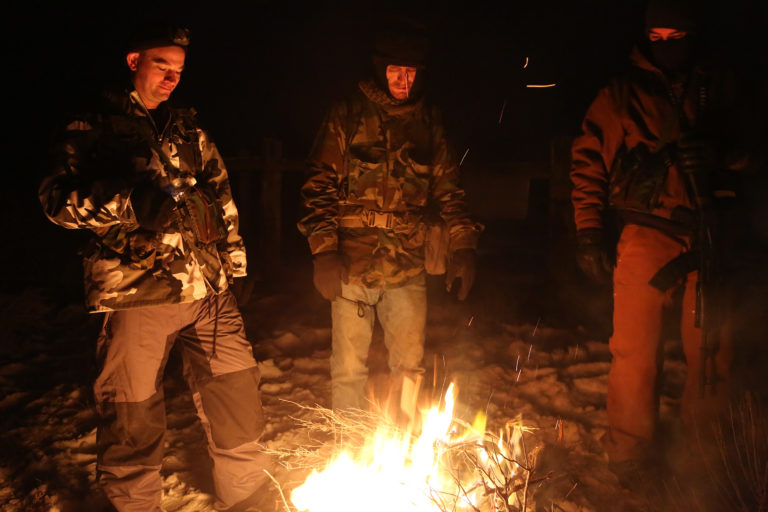
This article approaches the speculative fiction of the survivalist right as an archive that can illuminate the continuities between the fantasies of necropolitical power that animate the radical right and undergird the sovereignty of the United States. Focusing on Malheur National Wildlife Refuge occupier LaVoy Finicum’s 2015 novel Only by Blood and Suffering: Regaining Lost Freedom, this essay argues that such survivalist fiction, in imagining a future civil conflict that enables the reinstatement of Lockean property rights, should be understood as settler colonial rather than anti-statist. In representing the dystopian future in which “public lands” are reopened as a frontier, survivalist novels like Finicum’s reaffirm, rather than challenge, the fantasy that produces the constituted power of the United States.